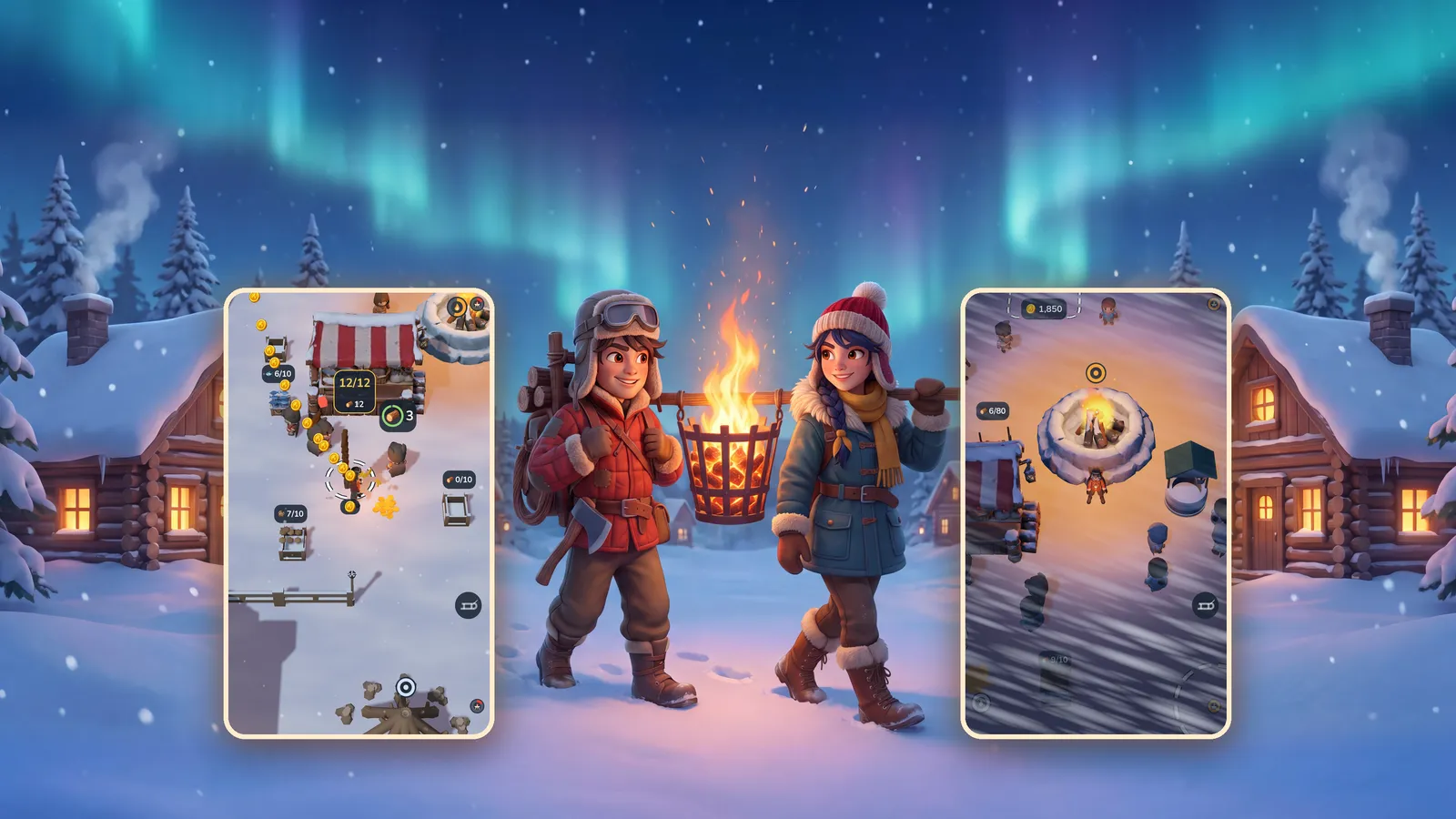
Cozy survivalGame design5 min read
What makes a survival game cozy?
Cozy survival sounds like a contradiction. Here is how a survival game can keep real pressure and still feel warm, and the rules we followed when we made EmberFrost.
Survival games are built on pressure. Hunger, cold, the dark, something in the woods. Cozy games are built on comfort: a warm room, small routines, nothing urgent. Put the two words together and they seem to cancel out.
They do not. Some of the most loved games of the last few years live exactly in that overlap, and players have a name for it: cozy survival. This post looks at what that means, why it works, and the rules we set for ourselves when we made EmberFrost, a cozy winter survival village builder for iPhone.
Pressure without punishment
The key difference between a cozy survival game and a classic one is not how much pressure there is. It is what happens when you fail.
In a classic survival game, failure is often total. You die, you lose your inventory, you start the run again. That loss is the point: it makes every decision heavy.
A cozy survival game keeps the pressure but softens the fall. You can still get it wrong, and getting it wrong should still sting, but you never lose hours of work in a second. Things get harder, not over.
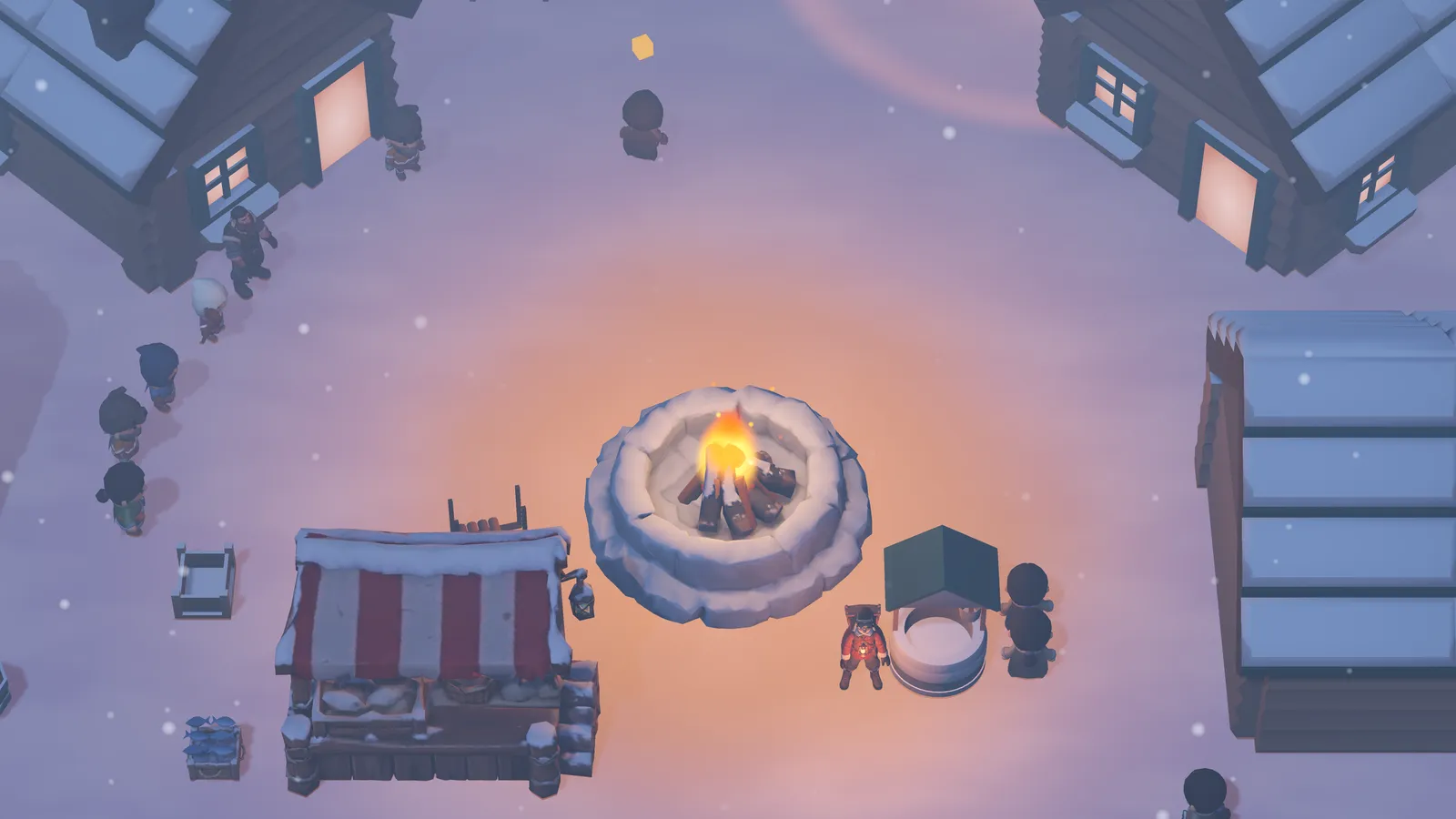
In EmberFrost the pressure is the cold. The temperature drops all the time, and the fire you keep alive is the only safe ring in the village. If you let it run low, your villagers get cold, then freezing, then ill. A villager who stays ill with nowhere to recover may pack up and leave.
What does not happen is just as important:
- Nobody dies. Not the villagers, not your character. Losing a neighbour to the road is the worst outcome in the game.
- The fire never goes out for good. Run it dry and it sinks to embers. Add a log and it catches again.
- Nothing is lost while you are away. When you close the game, the village waits for you exactly as you left it. Nobody freezes overnight because you went to sleep.
A good cozy survival game asks you to care, not to be afraid.
A small world you can hold in your head
Cozy games usually take place somewhere small: a farm, an island, a street, a village. Survival games often go the other way, with huge maps that reward wandering into danger.
Cozy survival games tend to pick the small world. One place you return to again and again, which slowly changes because of you. That is where the comfort comes from. You know every corner of it, and every change is one you made.
EmberFrost happens in one village, Tamarisk, buried in snow when you arrive. The map is built in three rings around the fire: the warm centre, a middle ring of workshops and homes, and a cold outer ring with the forest, the quarry and the frozen lake. You always know which way home is. Leaving the warmth is a choice you make for wood or stone or fish, and walking back into the firelight is its own small reward.
Routines that feel good on their own
The heart of a cozy game is a loop that is pleasant even when nothing big is happening. Watering crops. Fishing. Tidying a room.
In EmberFrost the loop is physical and simple. Walk to a tree and stand next to it, and your character chops on their own. Logs stack up on your back. Carry them to the fire and it flares. Carry the rest to the market and coins come back. Stand on a ruin and it becomes a cabin.
Each step is short, readable and satisfying. You can do one loop while waiting for a coffee, or lose an evening to fifty of them.
People to come home to
A survival game alone in the wild can be lonely by design. Cozy survival games usually put people at the centre, and the reason to survive is them.
In EmberFrost you start alone and the village fills up as you rebuild it. Granny Maud opens an infirmary for anyone who falls ill. Bram the smith gets his forge back and starts making better tools. Lily keeps turning up with new pieces of an old map and news from beyond the valley. New families move into the cabins you put back, and some of them start working with you: a woodcutter, a fisher, a stonecutter, a carrier.
Keeping the fire high is never abstract. It is keeping specific people warm.
A story with an ending
Many survival games are endless. You survive until you stop playing. Cozy survival games more often have an arc, a season or a story that builds to something.
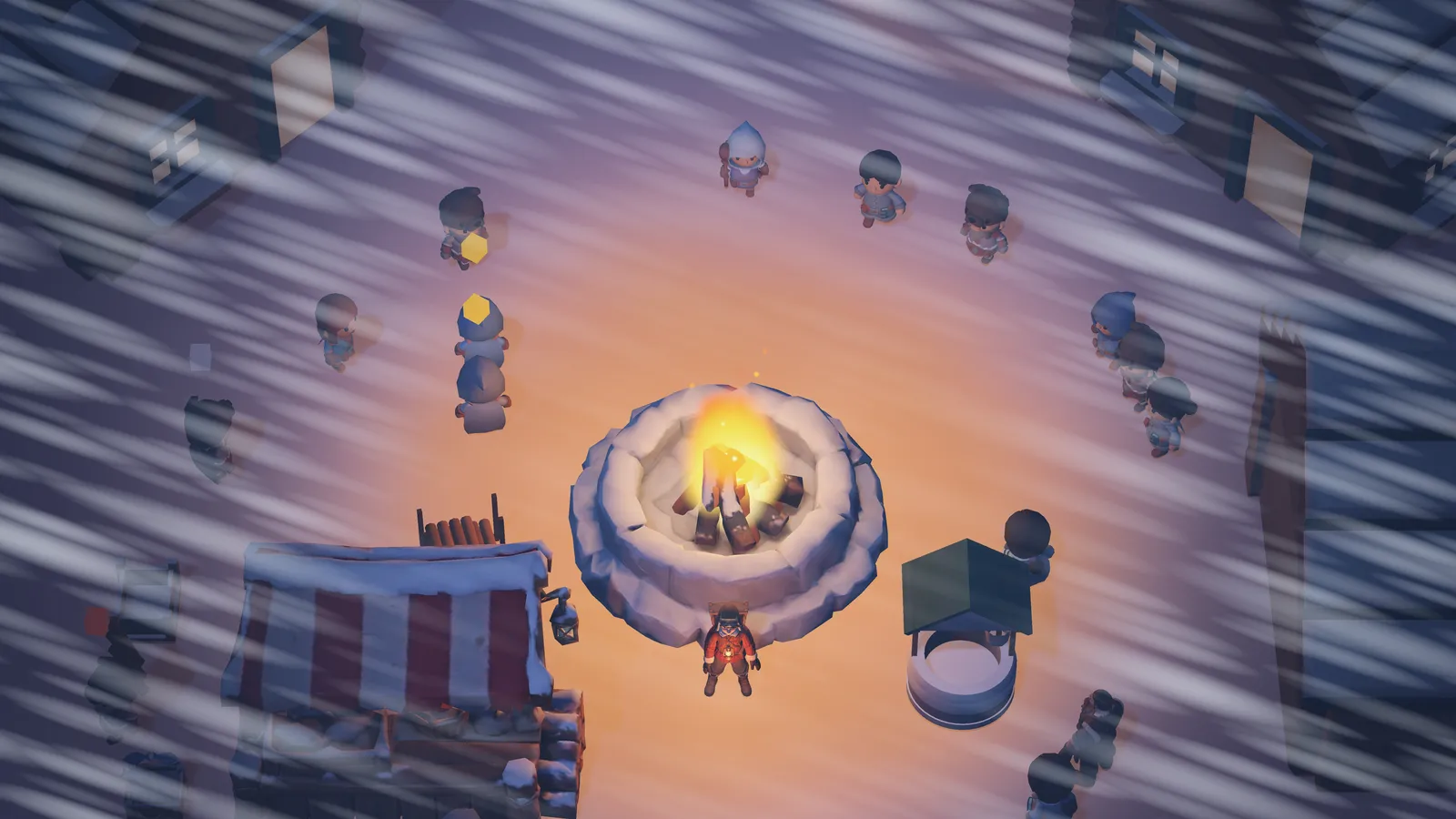
Everything in EmberFrost builds toward the Great Blizzard, a storm big enough to decide whether the village makes it. When it comes, the villagers gather in a circle around the fire, and everything you built is tested at once. It is the tensest moment in the game, and it is still, at its core, a scene about people huddled together around something warm.
Fair by design
Coziness is also about trust. A game that keeps nudging you to pay, or that stops you from playing until a timer runs out, is hard to relax into.
So EmberFrost has no ads, no energy bar and no waiting timers. It plays offline and needs no account. The beginning is free; the rest of the story is a single purchase, with no subscription. Optional coin packs appear later, and the game is fully playable without them. Nothing you can buy makes you faster.
Cozy survival, in short
If you are looking for a cozy survival game, these are the signs to look for:
- Real pressure, soft failure. Things can go wrong, but you never lose everything at once.
- A small world that changes because of you.
- A loop that feels good even on a quiet day.
- People worth protecting, not just a health bar.
- An arc that builds toward a moment.
- A fair deal, with no tricks around money or time.
That is the list we built EmberFrost against. If it sounds like your kind of game, read the launch post or get EmberFrost on the App Store. It is free to start.