Village buildersGame design4 min read
How to build a winter village that survives the cold
Village builders with winter survival ask one question: how far does the warmth reach? A look at heat, layout and planning in winter village builder games, with examples from EmberFrost.
Winter changes how a village builder plays. In a normal city builder, space is the limit: where can the next building go? In a winter survival builder, the limit is warmth. Every building, every worker and every trip out for supplies depends on how far the heat reaches and how long it lasts.
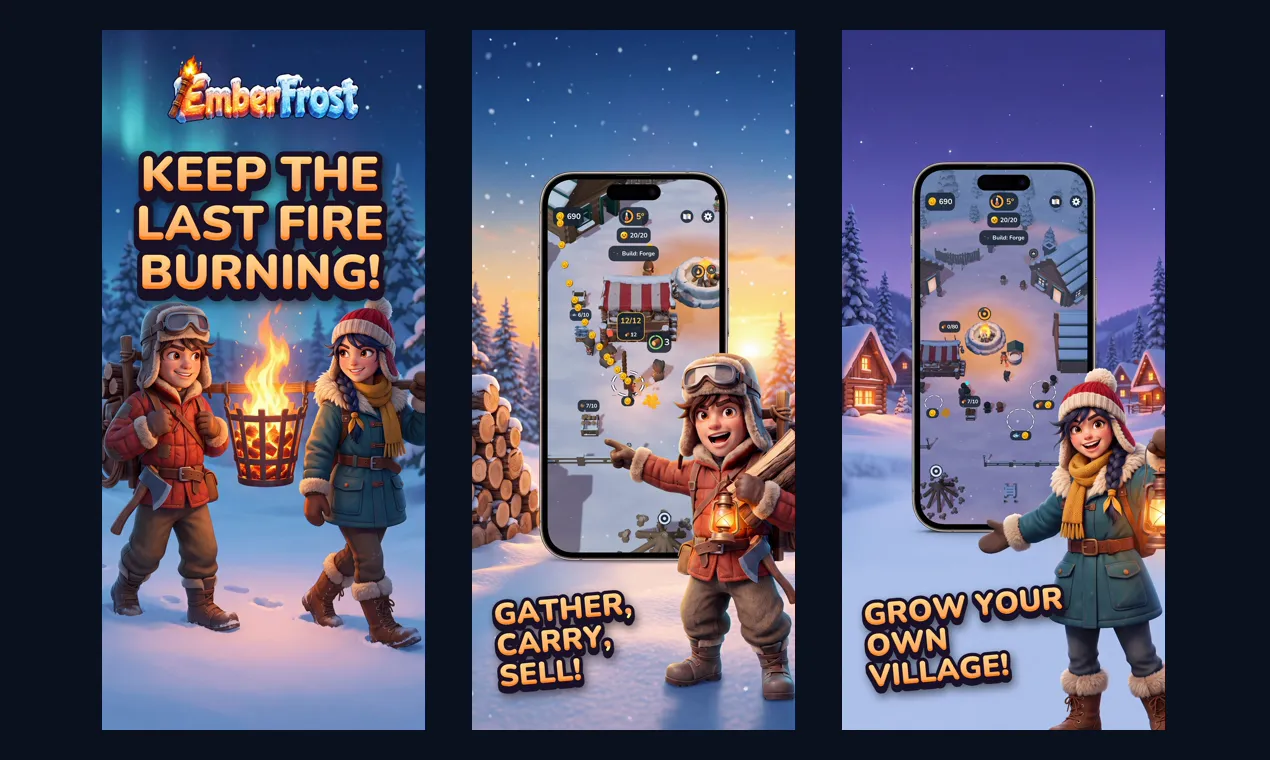
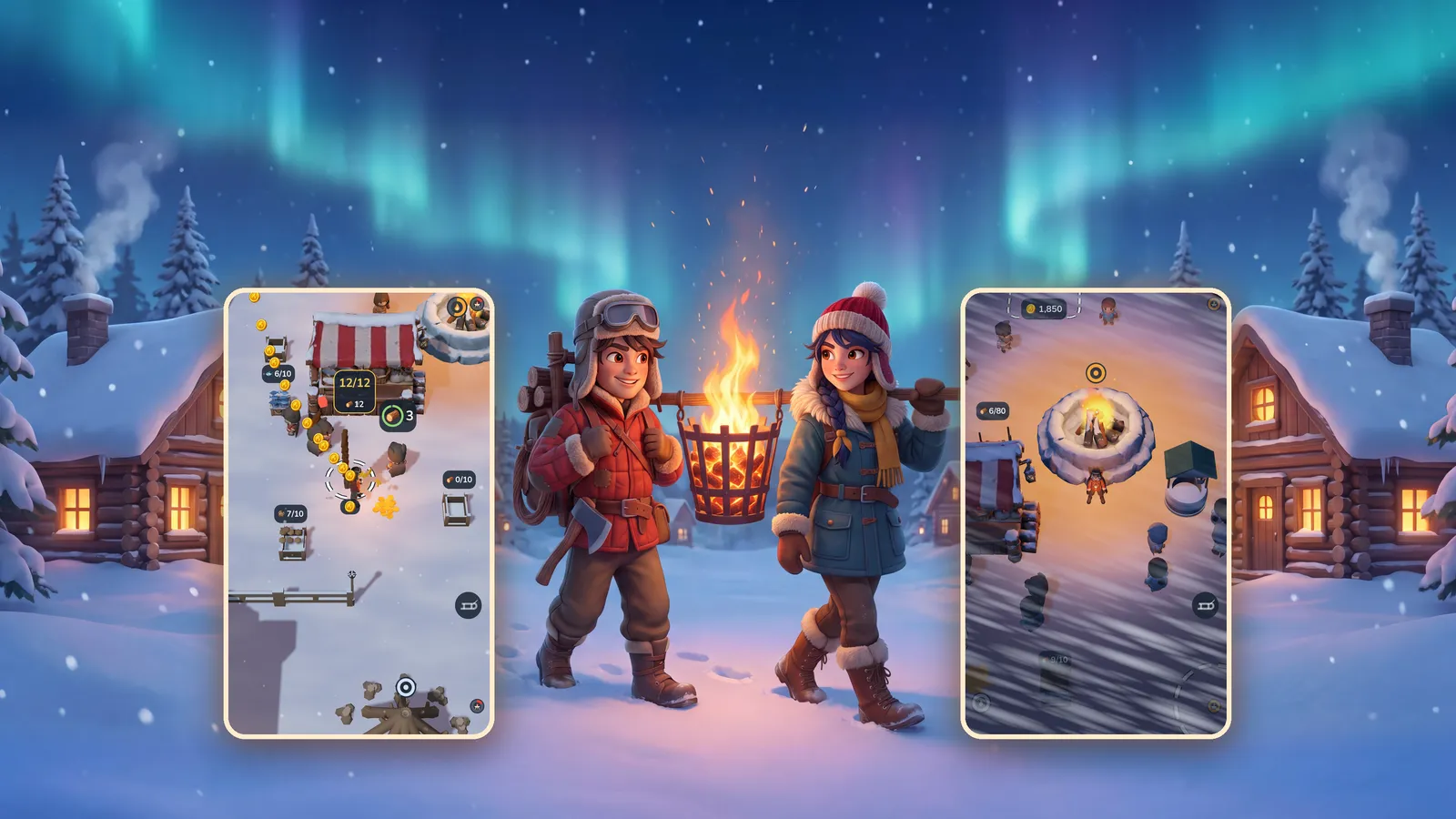
This post looks at how winter village builders work, the planning ideas that carry across the genre, and how they play out in EmberFrost, our cozy winter survival game for iPhone.
Warmth is the real resource
Most builders ask you to manage wood, stone and food. Winter builders add a resource you cannot pick up: heat. It is produced by fires and spent by everyone near them.
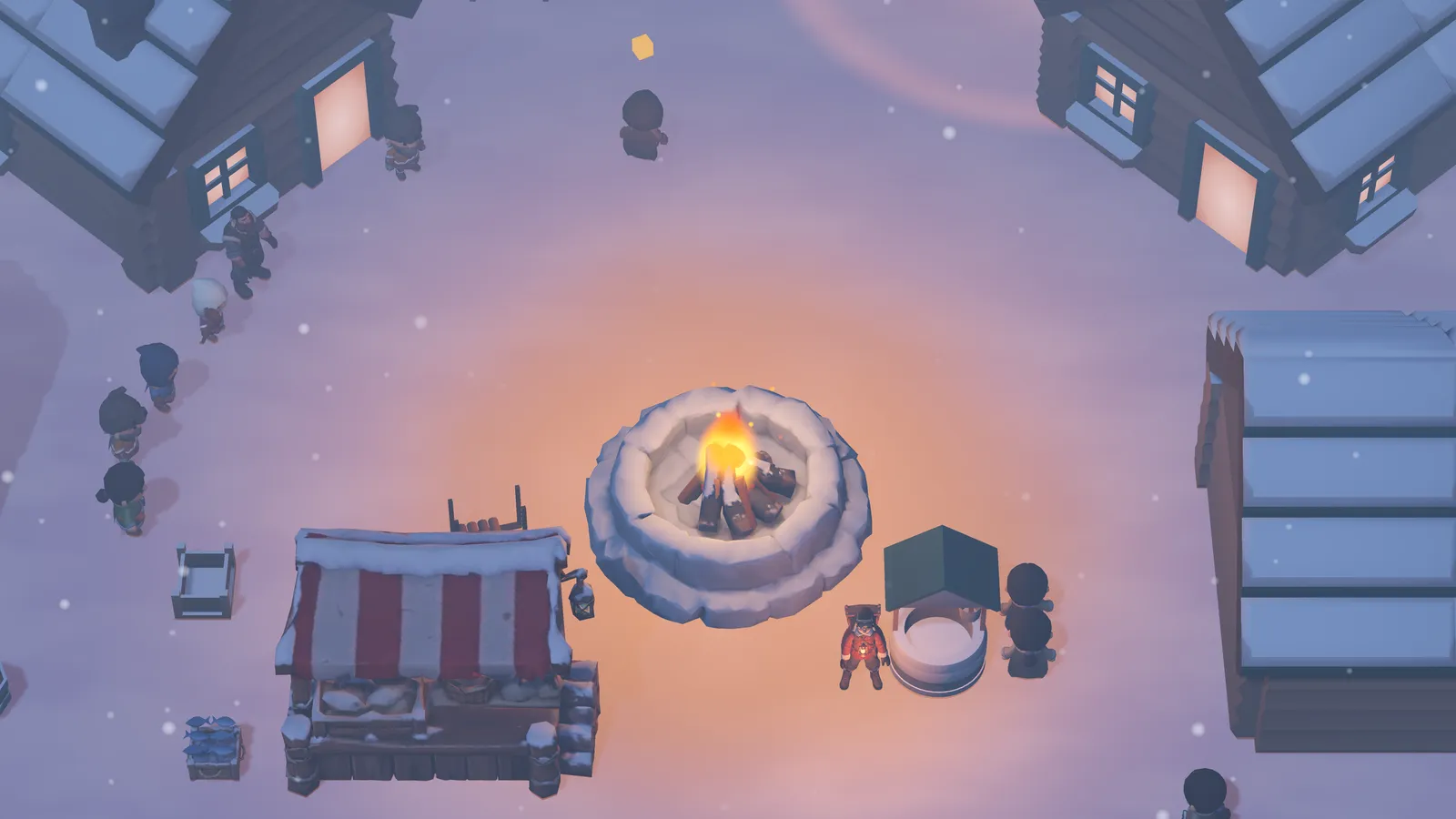
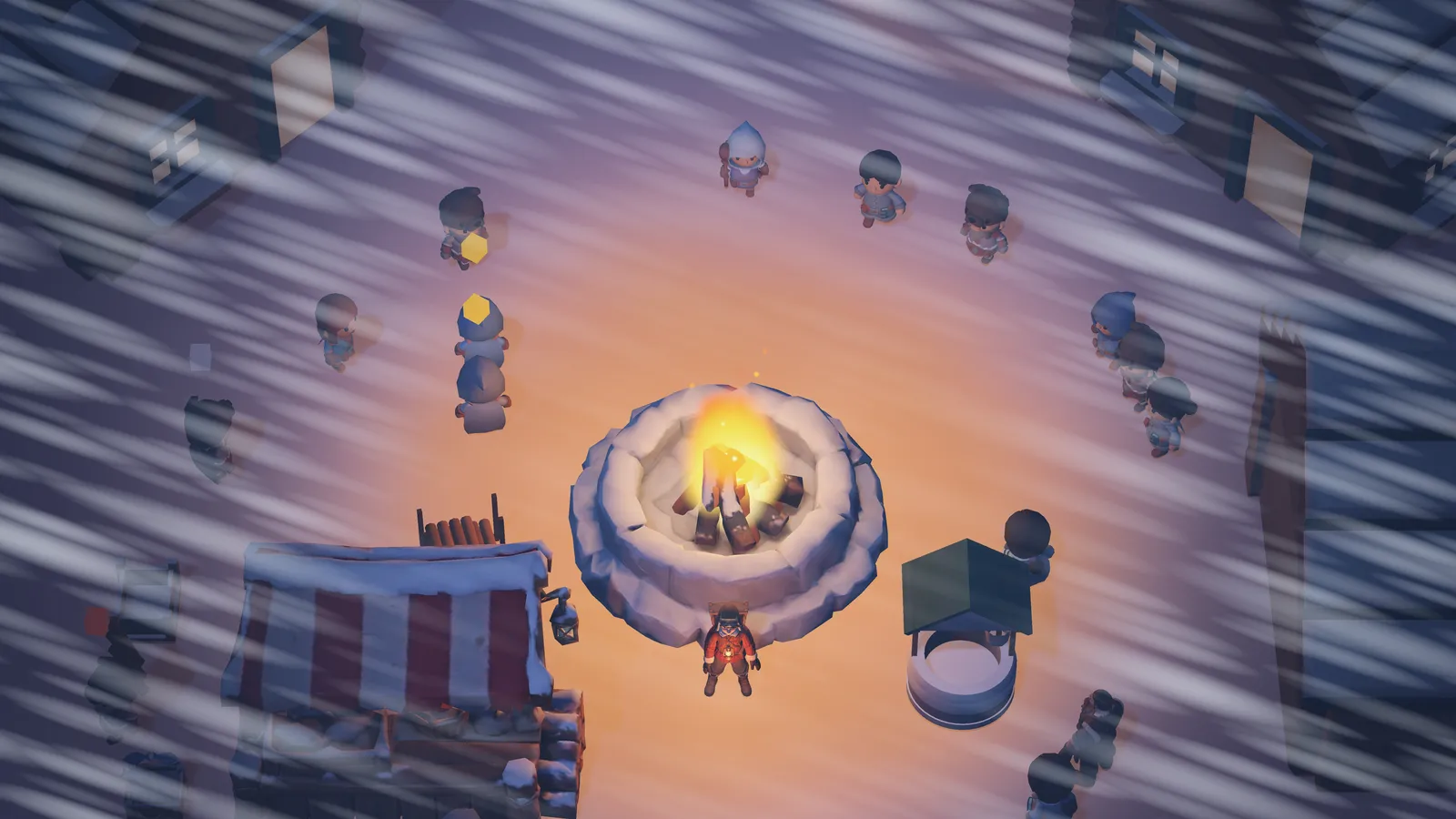
In EmberFrost, heat comes from the fire pit in the middle of the village. It warms a ring around it, and the further you are from its centre, the colder it gets. Outside the ring, the winter takes over. That one rule shapes everything else:
- Where you build matters, because homes and workshops near the fire stay warm.
- Who works where matters, because a worker out at the quarry spends the day in the cold.
- When you act matters, because nights are colder than days and storms make every fire weaker.
Think in rings
A good way to plan any winter village is in three rings.
| Ring | What belongs there | Why |
|---|---|---|
| Inner ring | The fire, homes, the market, the infirmary | People spend the most time here and need constant warmth |
| Middle ring | Workshops, storage, the forge | Visited often, close enough to warm up quickly |
| Outer ring | Forest, quarry, lake, anything you gather from | Rich in resources, cold, best reached in short trips |
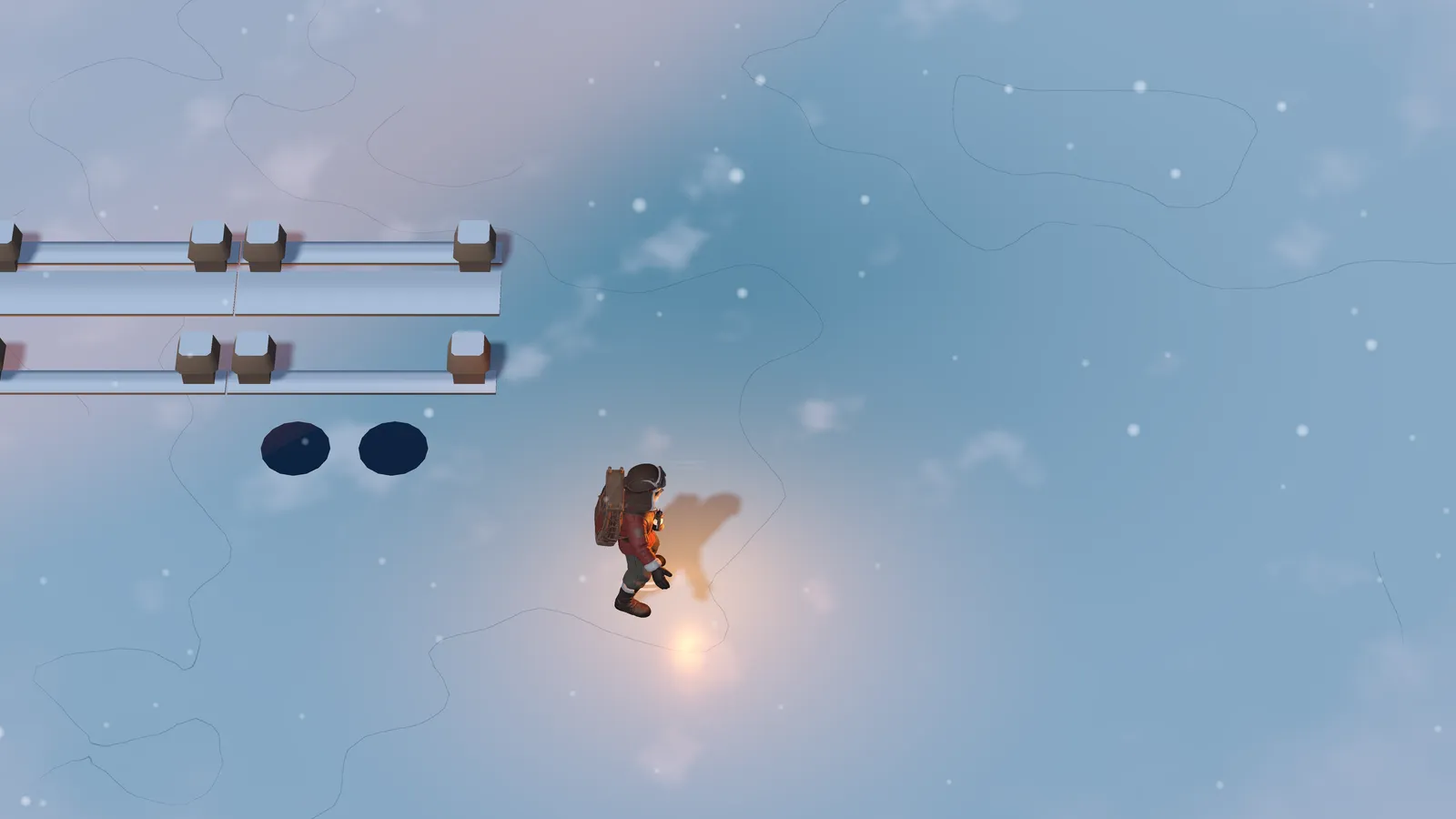
Tamarisk Village in EmberFrost is laid out exactly like this. The forest, the quarry and the frozen lake sit in the cold outer ring, so every log, stone and fish means stepping out of the warmth and coming back. That push and pull, out into the cold and home to the fire, is the rhythm of the whole game.
Grow the warmth, not just the village
The trap in winter builders is growing faster than your heat. More people means more mouths, and in EmberFrost more people also means a hungrier fire: it burns wood faster the more villagers it keeps warm.
So the warmth has to grow with the village:
- Upgrade the central fire. EmberFrost's fire grows from a campfire to a stone hearth, a great hearth and a beacon fire, each warming a wider ring and holding more wood.
- Add satellite heat. Braziers at the forest edge and by the lake push warm pockets into the outer ring, so workers can stay out longer.
- Cut the losses. Wind screens halve how much heat a storm steals.
Automate the cold jobs
In the early game you do every cold job yourself. That is fine for a while, but it does not scale. The turning point in most winter builders is handing the outdoor work to others.
In EmberFrost that means workers: a woodcutter for the forest, a fisher for the lake, a stonecutter for the quarry and a carrier to bring it all back to the square. Once they are in place, your own time goes to the things only you can do: building, selling, upgrading and keeping the fire fed. The forge then makes everyone better at their jobs, with better tools and bigger crates.
Plan for the bad nights
Every winter builder has its bad nights: storms, cold snaps, a final test. The difference between surviving them and scrambling is preparation.
Some rules that hold across the genre:
- Stock up before, not during. A storm is the worst time to walk to the forest.
- Fill the fire early. In EmberFrost, storms are announced before they hit. Top up at the warning, not when the fire is already low.
- Have a place to recover. People will get cold. An infirmary turns a bad night into a setback instead of a loss.
- Know your finale. EmberFrost builds toward the Great Blizzard, which starts when you finish the lookout tower. You choose when it begins, so be ready.
What happens when it goes wrong
Winter builders differ most in how they treat failure. Some are harsh: people die, the colony collapses, you restart. Others keep the stakes but soften the fall.
EmberFrost is the second kind. If the cold wins for a while, villagers fall ill, and an ill villager with nowhere to recover may leave the village. Nobody dies, and the fire never goes out for good: even run dry, it glows as embers and catches again when you add wood. We wrote more about that choice in what makes a survival game cozy.
Build your own winter village
If you want a winter village builder you can play with one thumb, with a story, no ads and no timers, EmberFrost is free to start on the App Store. Before your first night, read our beginner's guide.