AuraAura colors7 min read
Aura colors meaning: what each color is said to reveal
Aura colors meaning, color by color: what red, orange, yellow, green, blue, purple, pink, white and gold traditionally symbolize, and how to use them.
In aura reading, each color stands for a mood or quality: red for energy and drive, orange for creativity, yellow for optimism, green for growth and healing, blue for calm and honesty, purple for intuition, pink for tenderness and white for clarity. These meanings come from spiritual tradition, not science, and work best as a prompt for reflection.
This guide goes through the most common aura colors one by one, explains where the idea comes from, and suggests a few honest ways to use color to understand how you feel. It is the color side of what we built into Aura, our iPhone app that turns your mood into a daily aura color.
What do aura colors mean?
An aura, in spiritual and New Age traditions, is described as a field of light around a person, and its color is said to reflect their mood, temperament or energy at a given moment. Most readers use a similar palette. Warm colors (red, orange, yellow) are linked to action, creativity and confidence. Green sits in the middle and is tied to growth, balance and care. Cool colors (blue, indigo, purple) are linked to calm, communication and intuition. Pink is usually read as love and gentleness, white as clarity, and gold as wisdom or a sense of purpose. Darker or muddier shades are often read as tiredness or stress rather than anything bad about the person. Meanings vary between books and practitioners, and an aura is not something science has been able to measure. The most useful way to treat aura colors is as a vocabulary: a quick, visual way to name how you feel today.
Where does the idea of aura colors come from?
The modern idea of a colored aura was popularized around the turn of the twentieth century by the Theosophist C. W. Leadbeater. His book "Man Visible and Invisible", subtitled "Examples of Different Types of Men As Seen by Means of Trained Clairvoyance", described what auras were said to look like to a trained clairvoyant, and a 1903 edition is free to read on the Internet Archive. Later writers and, from the 1980s, the New Age movement built on his ideas.
It is worth being clear about the science. The encyclopedia entry on the aura in parapsychology notes that claims about auras are not supported by scientific evidence, and that in controlled tests aura readers did no better than chance. Kirlian photography, often shown as "aura photos", was later explained by moisture on the photographed object rather than by any hidden energy.
So when we talk about what aura colors mean, we mean what they mean inside a tradition of symbolism. That does not make them useless. People have used color to describe feeling for a very long time: we feel blue, see red, go green with envy. Aura colors take that everyday instinct and give it a fuller palette.
Aura colors meaning, color by color
Here is a quick reference. The meanings below are the ones most often repeated in aura-reading books and guides; individual readers add their own nuances.
| Aura color | Traditional meaning | Often linked with |
|---|---|---|
| Red | Energy, passion, drive | Action, courage, strong feelings |
| Orange | Creativity, warmth, pleasure | Social energy, adventure |
| Yellow | Optimism, curiosity, confidence | Learning, playfulness |
| Green | Growth, healing, balance | Nature, care for others |
| Blue | Calm, honesty, expression | Communication, trust |
| Indigo | Intuition, depth, perception | Inner focus, imagination |
| Purple / violet | Spirituality, vision, insight | Reflection, big-picture thinking |
| Pink | Love, tenderness, compassion | Gentleness, romance |
| White | Clarity, openness, a fresh start | Peace, simplicity |
| Gold | Wisdom, purpose, inner strength | Guidance, generosity |
| Silver | Sensitivity, receptiveness, change | Dreams, new ideas |
| Gray or brown | Tiredness, caution, grounding | A need for rest |
Red
Red is the color of energy. In aura reading it describes someone moving fast: motivated, passionate, maybe impatient. A bright red is read as healthy drive; a deep, heavy red as anger or stress that needs an outlet.
Orange
Orange is creativity with a social side. It is linked to pleasure, play, new experiences and the confidence to try them. Readers often describe an orange aura on a day full of ideas and people.
Yellow
Yellow stands for optimism and a curious mind. It is the color of learning something new, of lightness and humor. A pale, washed-out yellow is sometimes read as overthinking.
Green
Green is growth and healing. It is associated with balance, patience, nature and caring for others, which is why it is often described in people who look after someone. It is a common "steady day" color.
Blue
Blue is calm and honest. It is tied to clear communication, trust and a quieter kind of strength. A light blue is read as peace; a deeper blue as loyalty and thoughtfulness.
Indigo and purple
Indigo and purple (or violet) are the intuitive colors. Indigo is linked to inner focus and imagination, purple to spirituality, vision and seeing the bigger picture. Many people are drawn to purple aura meanings because they describe reflective, searching moods.
Pink
Pink is love in its softer form: tenderness, compassion, affection and kindness toward yourself. It is often read as a sign of an open heart.
White, gold and silver
White is read as clarity and a fresh start, a mind with room in it. Gold is wisdom and a sense of purpose. Silver is linked to sensitivity, dreams and openness to change. These three are often described as rarer or as "highlights" on top of a main color.
Gray, brown and dark shades
Muddy or dark tones are usually read as tiredness, worry or a need for rest and grounding. In most traditions they are a note about the moment, not a verdict on the person, which is a healthy way to read them.
Can you have more than one aura color?
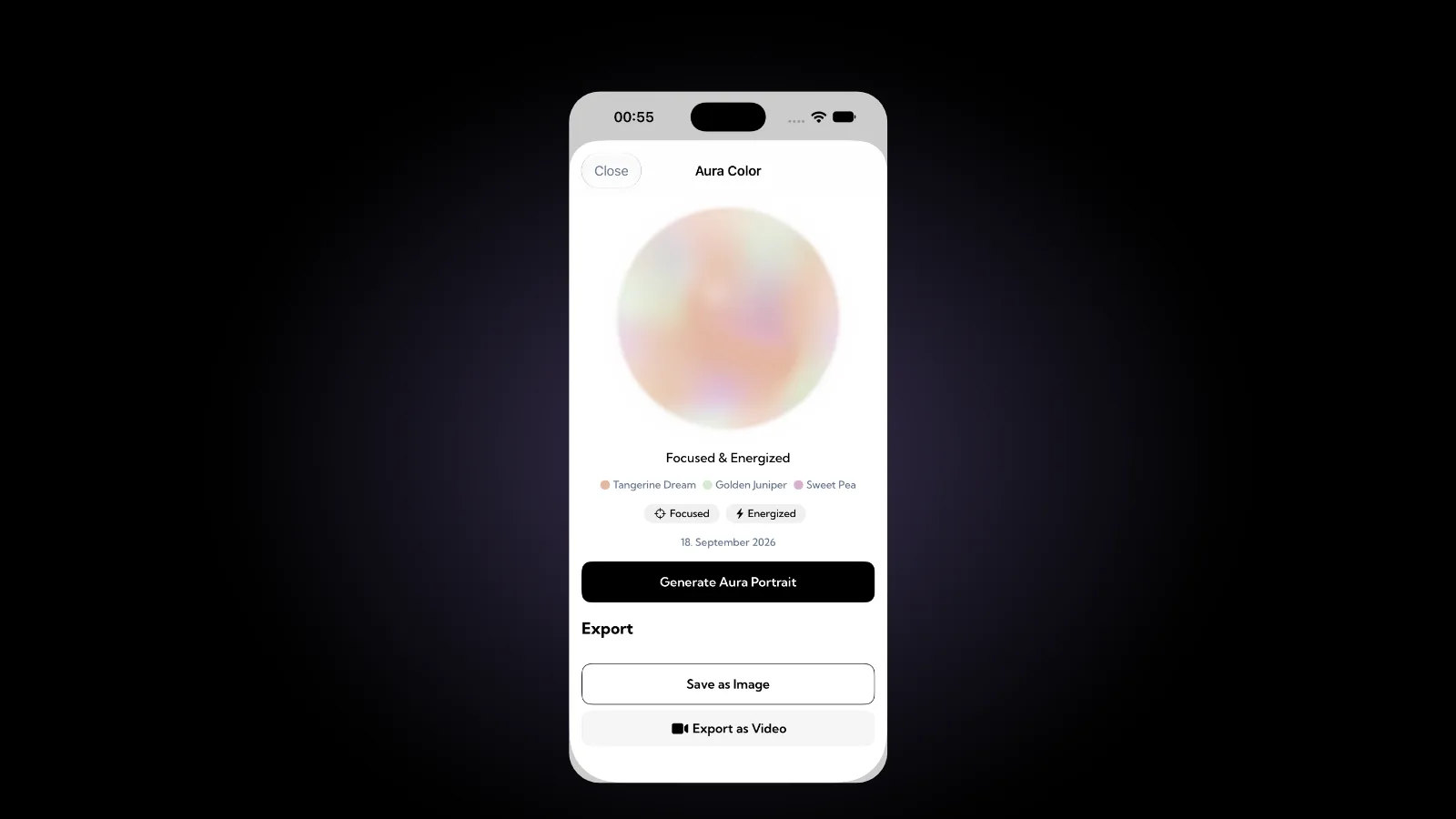
Yes. Most aura traditions describe a main color with secondary colors around it, and say colors shift with your mood over days and weeks. That is closer to how feelings actually work: you can be focused and anxious at the same time, or tired but content. Reading two or three colors together usually tells a more honest story than one.
How do you find your aura color?
There is no instrument that measures an aura, so every method is really a form of self-reflection. A few that work:
- Name your mood first. Pick one to three words for how you feel right now, then look up the colors that match them in the table above.
- Notice which color you reach for. The color you want to wear, paint with or look at today can say something about your state.
- Track it over time. A single color is a snapshot. A month of colors shows patterns: which weeks run warm, which run cool, what changes after a hard day.
- Write a line about it. Ask why that color fits today. The answer is often more useful than the color.
Tracking how you feel is the heart of a mood journal, and we cover it step by step in how to start a mood journal.
How Aura turns your mood into a color
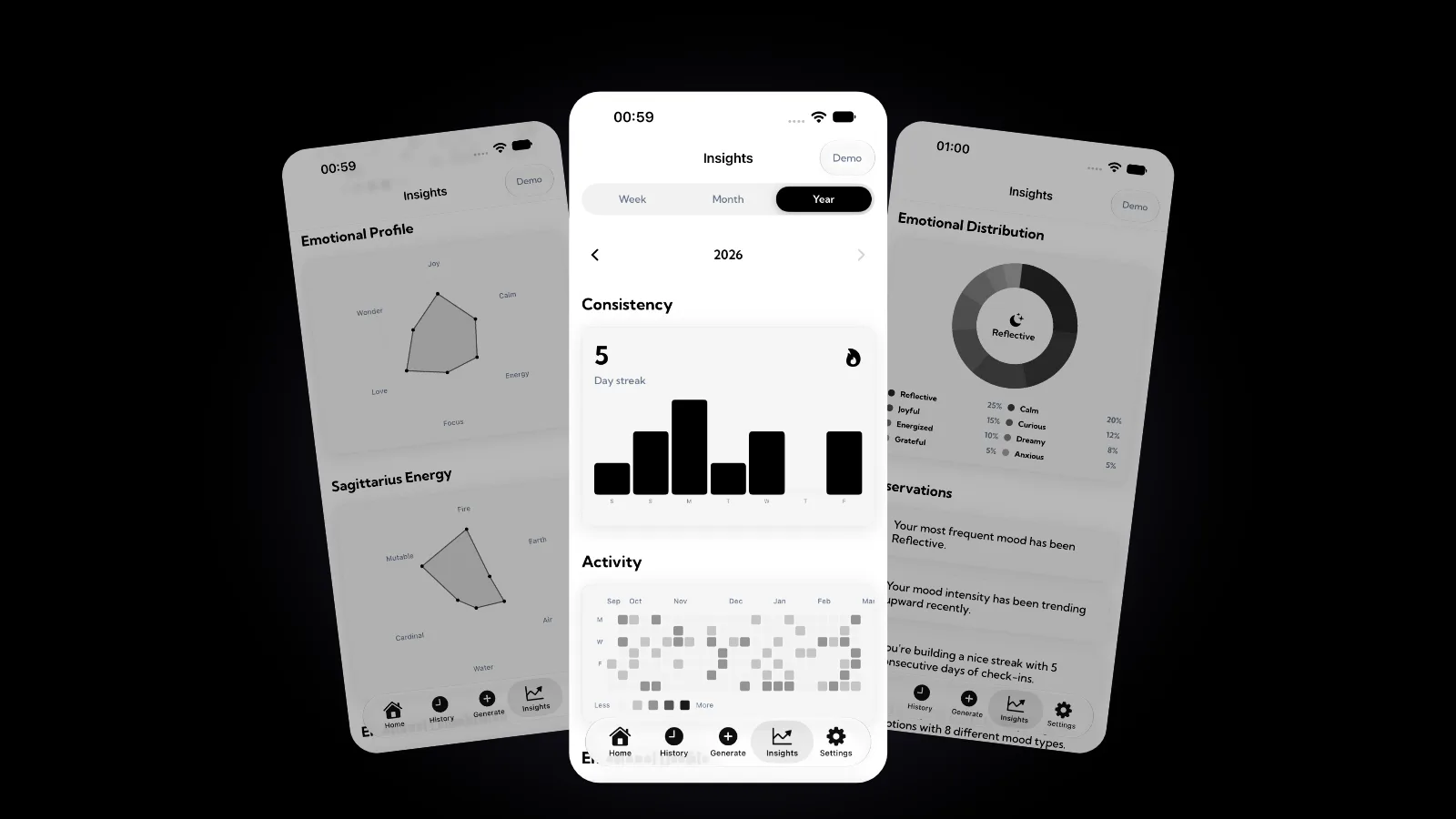
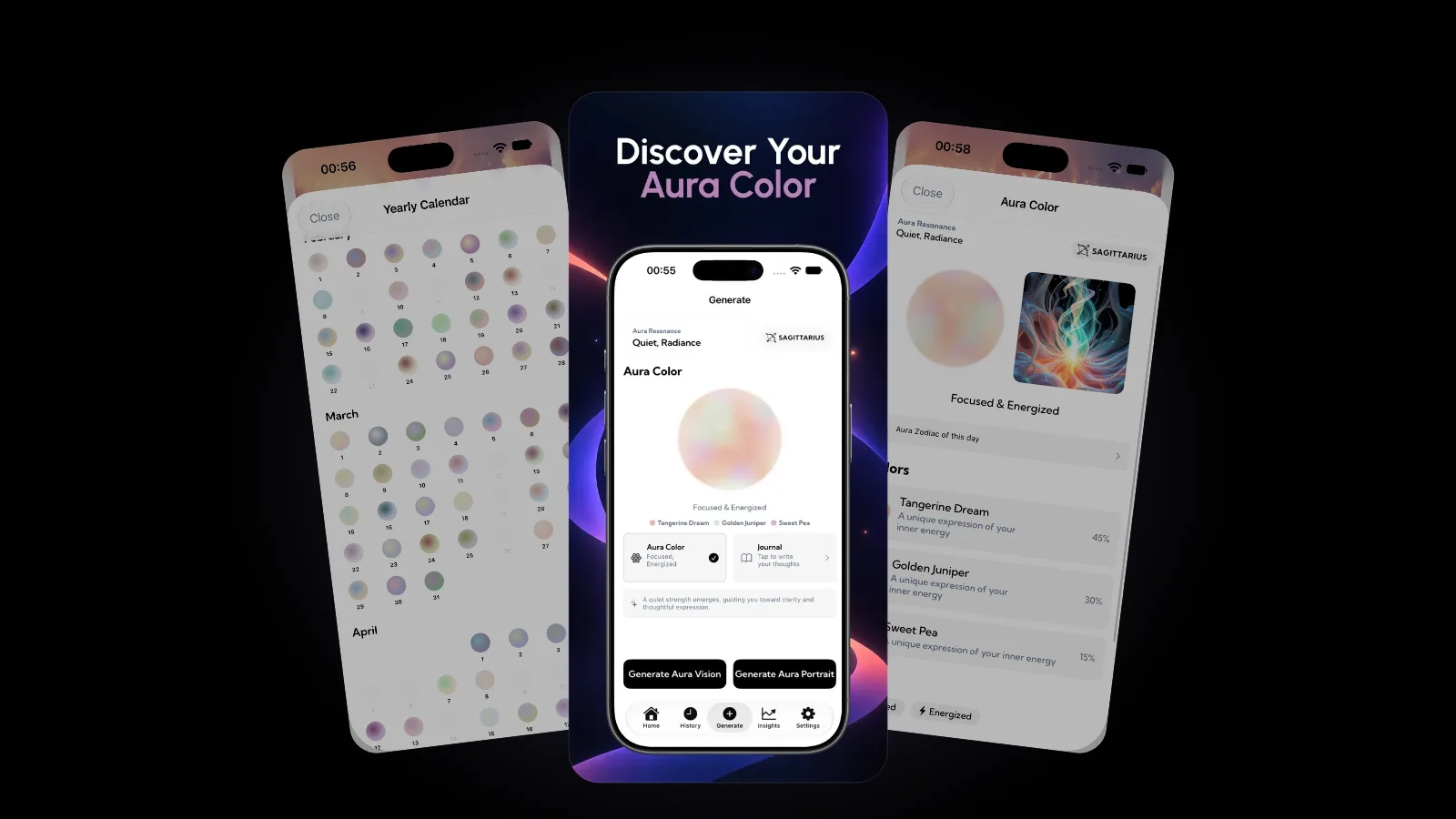
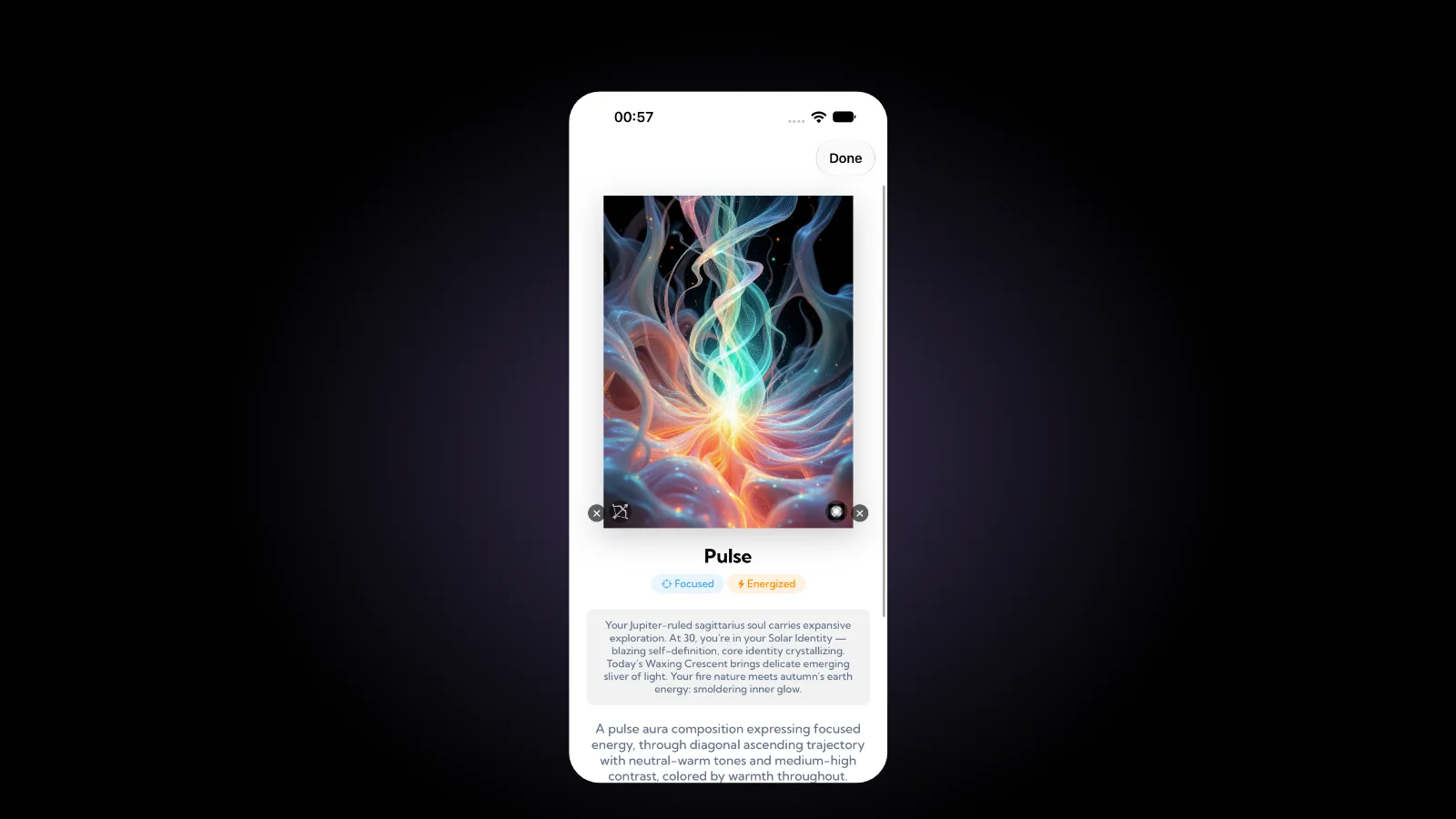
We built Aura around the idea that color is a quick, honest language for feeling. You log your mood, choosing from 28 moods and up to three at once, and every day Aura reads your mood, your zodiac sign and the sky above to give you an aura color. Your colors fill a calendar of your emotional year, and you can explore what each color means.
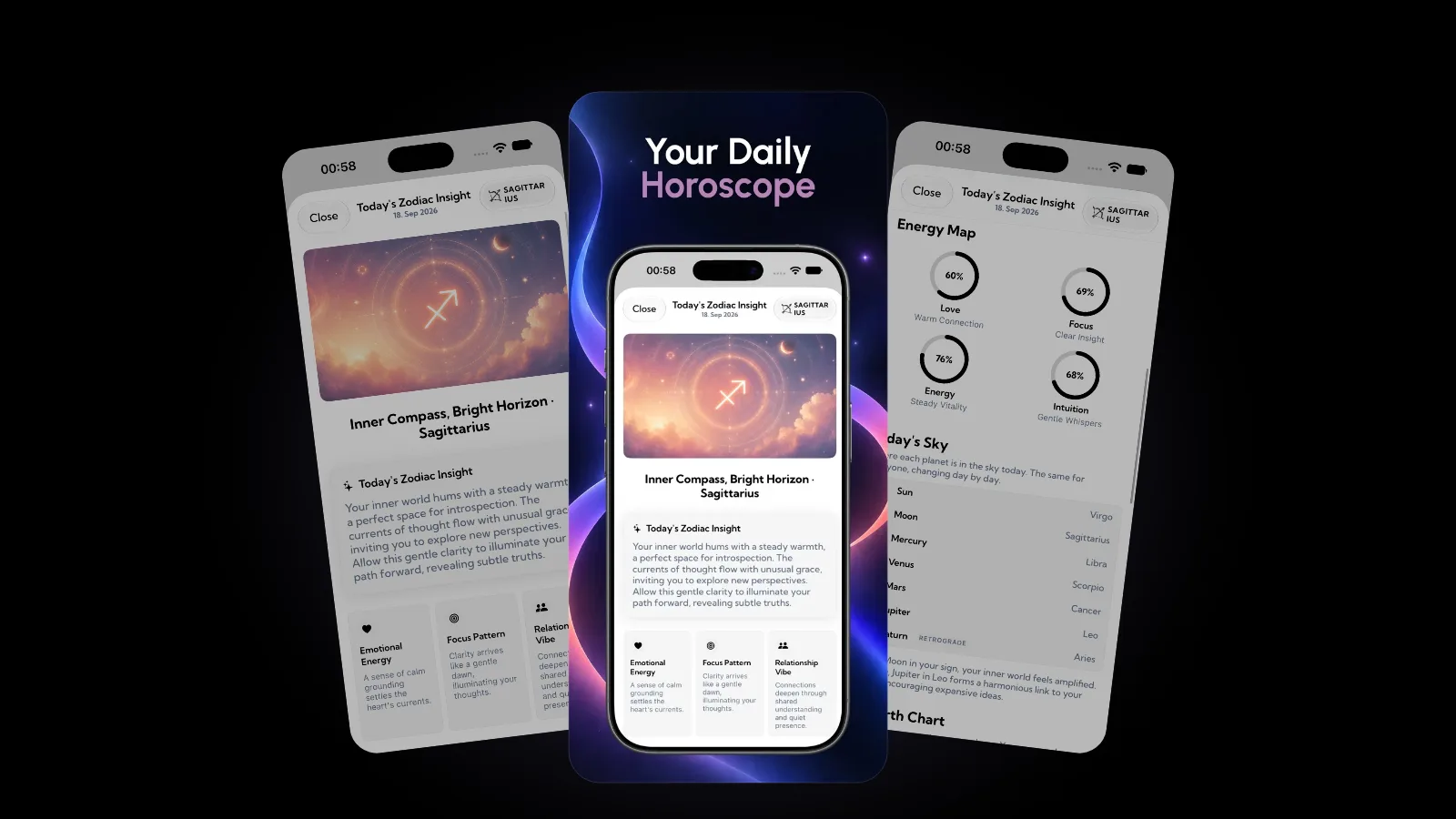
The same mood and energy also shape Aura Vision, a one-of-a-kind AI artwork made new each day. If you are curious how zodiac signs come into it, our guide to sun, moon and rising signs explains the "big three" from the beginning.
You can find more posts like this in the Aura category of our blog.
FAQ
What is the rarest aura color?
Many aura guides describe white, gold and silver as the rarest colors. There is no data behind that claim, since auras cannot be measured; it is part of the tradition rather than a fact.
What does a purple aura mean?
Purple is traditionally linked to intuition, spirituality and vision. It is often described in reflective, searching moods, when you are thinking about the bigger picture.
Can your aura color change?
In most traditions, yes. Aura colors are said to shift with your mood, your energy and what is happening in your life, which is why tracking them over days is more revealing than a single reading.
Is there scientific evidence for aura colors?
No. Controlled tests have not shown that people can see auras, and aura photography has ordinary physical explanations. Aura colors are best enjoyed as symbolism and as a prompt to reflect on how you feel.
Find your color
If you want a daily color that comes from how you actually feel, Aura is free to download on the App Store, with an optional Aura Pro subscription. No account is needed to start, and your data is never sold.