AuraAstrology8 min read
Sun, moon, rising meaning: the big three explained for beginners
Sun moon rising meaning for beginners: what your sun, moon and rising signs represent, how to find them from your birth details, and how a birth chart is read.
In astrology, your sun sign describes your core identity, your moon sign your emotional inner life, and your rising sign how you meet the world and how others first see you. Together they are called the "big three". You need your birth date, time and place to find all three. Astrology is a symbolic tradition, not a science.
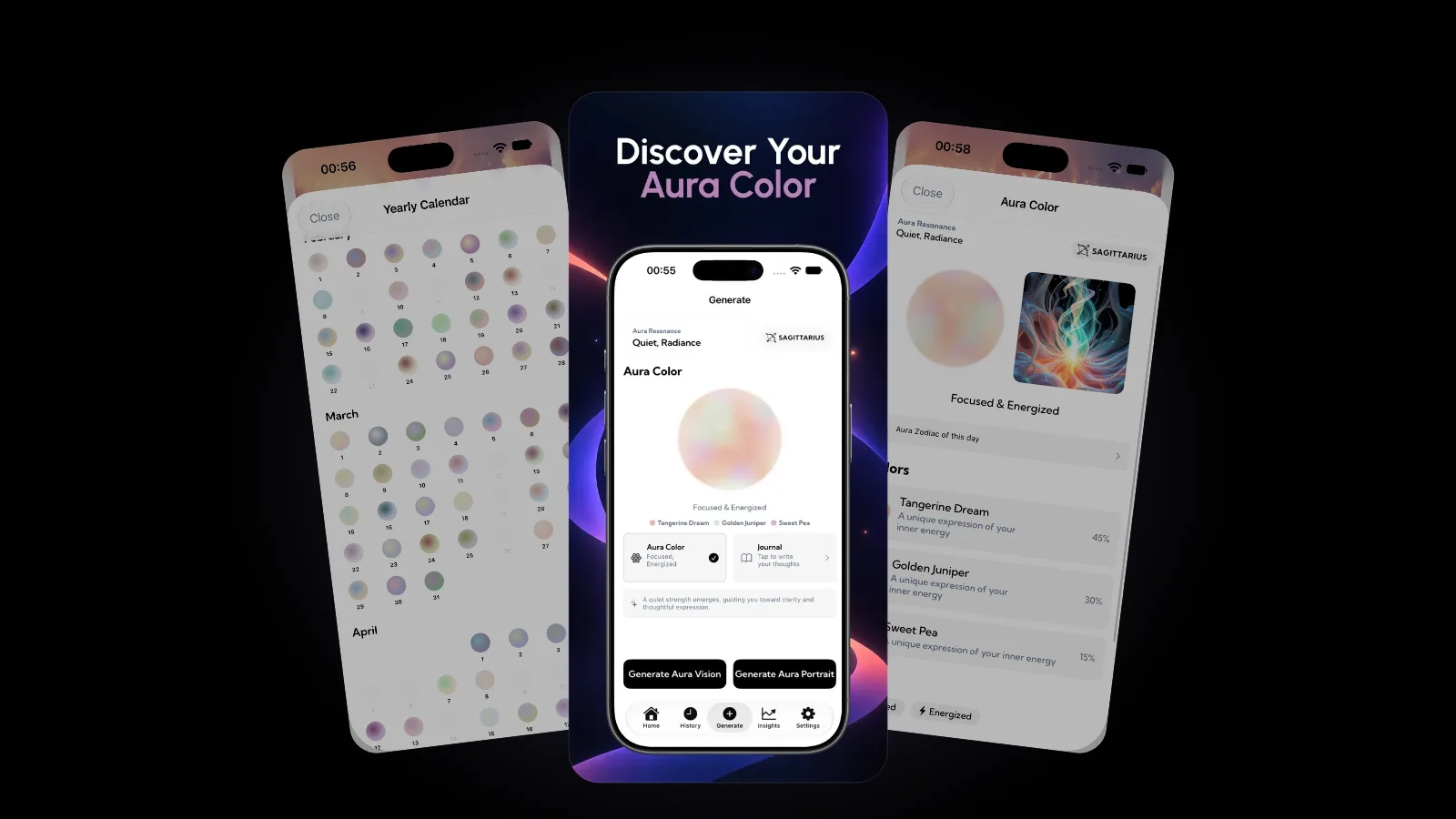
This guide explains each of the three for complete beginners, shows how they fit into a full birth chart, and is honest about what astrology can and cannot do. It is the kind of reading we built into Aura Zodiac, part of our iPhone app Aura.
What do the sun, moon and rising signs mean?
The sun, moon and rising signs are the three most personal parts of a birth chart, a map of where the sun, moon and planets were in the zodiac at the moment you were born. Your sun sign is the sign the sun was in, and it is the one most people mean when they say "I'm a Leo": it stands for your core self, your drive and what you are growing toward. Your moon sign is the sign the moon was in, and it stands for your emotions, instincts and what makes you feel safe. Your rising sign, or ascendant, is the sign rising on the eastern horizon at your birth, and it stands for your outward style and first impressions. A common shorthand: the sun is who you are, the moon is how you feel, and the rising sign is how you come across. Reading the three together gives a fuller picture than any one sign alone.
The sun sign: your core self
The sun spends about a month in each sign, so your sun sign depends only on your birth date. It is the sign used in most horoscope columns. In astrology it represents identity, vitality, willpower and the things that make you feel most alive. If you were born near the edge of two signs, check the exact date and year, because the change-over day can shift by a day.
The moon sign: your inner world
The moon moves much faster than the sun and changes sign every two days or so. That is why your birth date alone is sometimes not enough to know your moon sign: on some days the moon changes sign, and you need the time of birth to be sure.
Astrologers read the moon sign as your emotional nature: how you react, what comforts you, what you need when things are hard. Many people say their moon sign feels more accurate than their sun sign, because it describes the private side that horoscope columns never touch.
The rising sign: how you meet the world
The rising sign, also called the ascendant, is defined as the sign on the eastern horizon when you were born. As the Earth turns, a new sign rises roughly every two hours. The reference entry on the ascendant notes that this two-hour figure is only theoretical: depending on latitude, some signs rise in about an hour and others take close to three. Because it is specific to a time and place, you need your birth time and birthplace to find it.
In astrology, the rising sign describes your outward manner, your first impression and the way you approach new situations. It also sets up the rest of the chart: the ascendant marks the start of the first house, and the other houses follow from there.
The big three at a glance
| Placement | What it represents | What you need to find it | How often it changes |
|---|---|---|---|
| Sun sign | Core identity, drive, purpose | Birth date | About once a month |
| Moon sign | Emotions, instincts, comfort | Birth date, ideally time | About every two days |
| Rising sign | First impressions, outward style | Exact birth time and place | About every two hours |
The 12 signs: elements and modalities
The zodiac divides the sun's yearly path into twelve 30-degree sectors, one for each sign. Each sign belongs to one of four elements (fire, earth, air, water) and one of three modalities (cardinal, fixed, mutable), as the encyclopedic overview of astrological signs sets out. The element hints at temperament; the modality at how a sign acts.
| Sign | Approximate sun dates | Element | Modality | Traditional keywords |
|---|---|---|---|---|
| Aries | 21 Mar to 19 Apr | Fire | Cardinal | Bold, direct, starting things |
| Taurus | 20 Apr to 20 May | Earth | Fixed | Steady, sensual, patient |
| Gemini | 21 May to 20 Jun | Air | Mutable | Curious, talkative, quick |
| Cancer | 21 Jun to 22 Jul | Water | Cardinal | Caring, protective, home |
| Leo | 23 Jul to 22 Aug | Fire | Fixed | Warm, proud, expressive |
| Virgo | 23 Aug to 22 Sep | Earth | Mutable | Precise, helpful, practical |
| Libra | 23 Sep to 22 Oct | Air | Cardinal | Fair, social, harmony |
| Scorpio | 23 Oct to 21 Nov | Water | Fixed | Intense, private, loyal |
| Sagittarius | 22 Nov to 21 Dec | Fire | Mutable | Free, optimistic, seeking |
| Capricorn | 22 Dec to 19 Jan | Earth | Cardinal | Ambitious, disciplined |
| Aquarius | 20 Jan to 18 Feb | Air | Fixed | Independent, inventive |
| Pisces | 19 Feb to 20 Mar | Water | Mutable | Dreamy, empathetic, imaginative |
Exact dates can move by a day from year to year. Try reading your big three through this table: a fire sun with a water moon and an earth rising, for example, is often described as someone driven on the inside, sensitive underneath and calm on the surface.
How is a birth chart read?
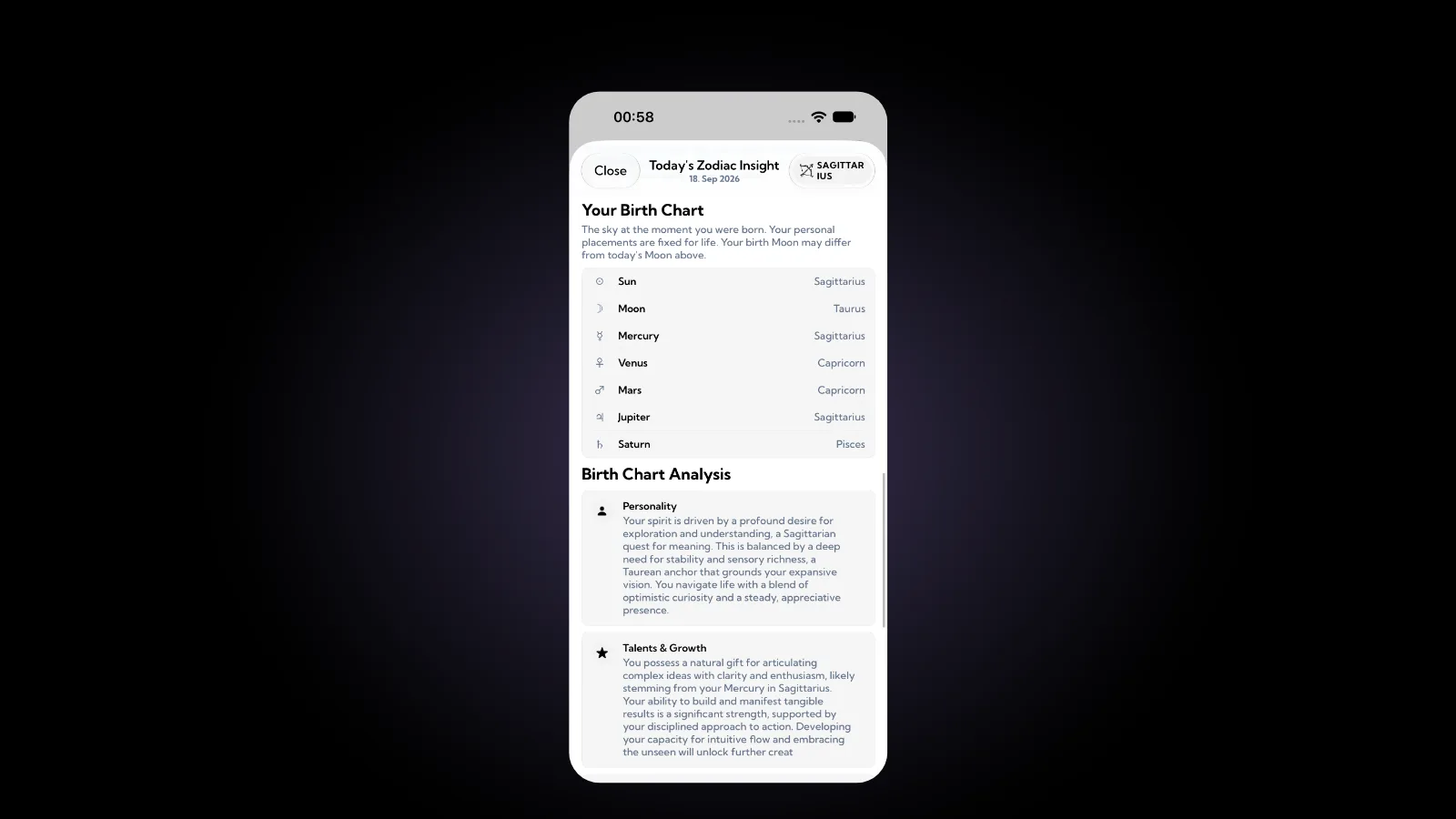
A full birth chart, also called a natal chart, has more in it than the big three. Astrologers usually read it in layers:
- Start with the big three. Sun, moon and rising give the outline of the person.
- Add the personal planets. Mercury is linked to thinking and communication, Venus to love and taste, Mars to energy and drive.
- Look at the outer planets. Jupiter, Saturn and beyond are slower and are read as broader themes, such as growth, discipline and change.
- Place everything in the houses. The chart is divided into twelve houses, each tied to an area of life such as home, work or relationships. The first house begins at the ascendant.
- Read the aspects. Aspects are the angles between planets. Some are read as easy and supportive, others as tension that pushes you to grow.
You do not need to learn all of this at once. Most people spend a long time with their big three before going further, and that is a good place to start.
Is astrology scientific?
No, and it is worth saying plainly. The encyclopedic summary of astrology and science states that astrology has not shown its effectiveness in controlled studies and has no scientific validity. In a well-known 1985 double-blind test published in Nature, physicist Shawn Carlson found that predictions based on natal astrology were no better than chance. Psychologists also point to the Barnum effect: people tend to rate general personality descriptions as highly accurate for themselves.
So why do so many people enjoy it? Because the signs give you a rich, shared language for talking about personality, mood and relationships. Read as symbolism rather than prediction, a birth chart can be a prompt to reflect: does this description fit me, and if not, what would? That is how we think about it in our own work.
How Aura shows your big three
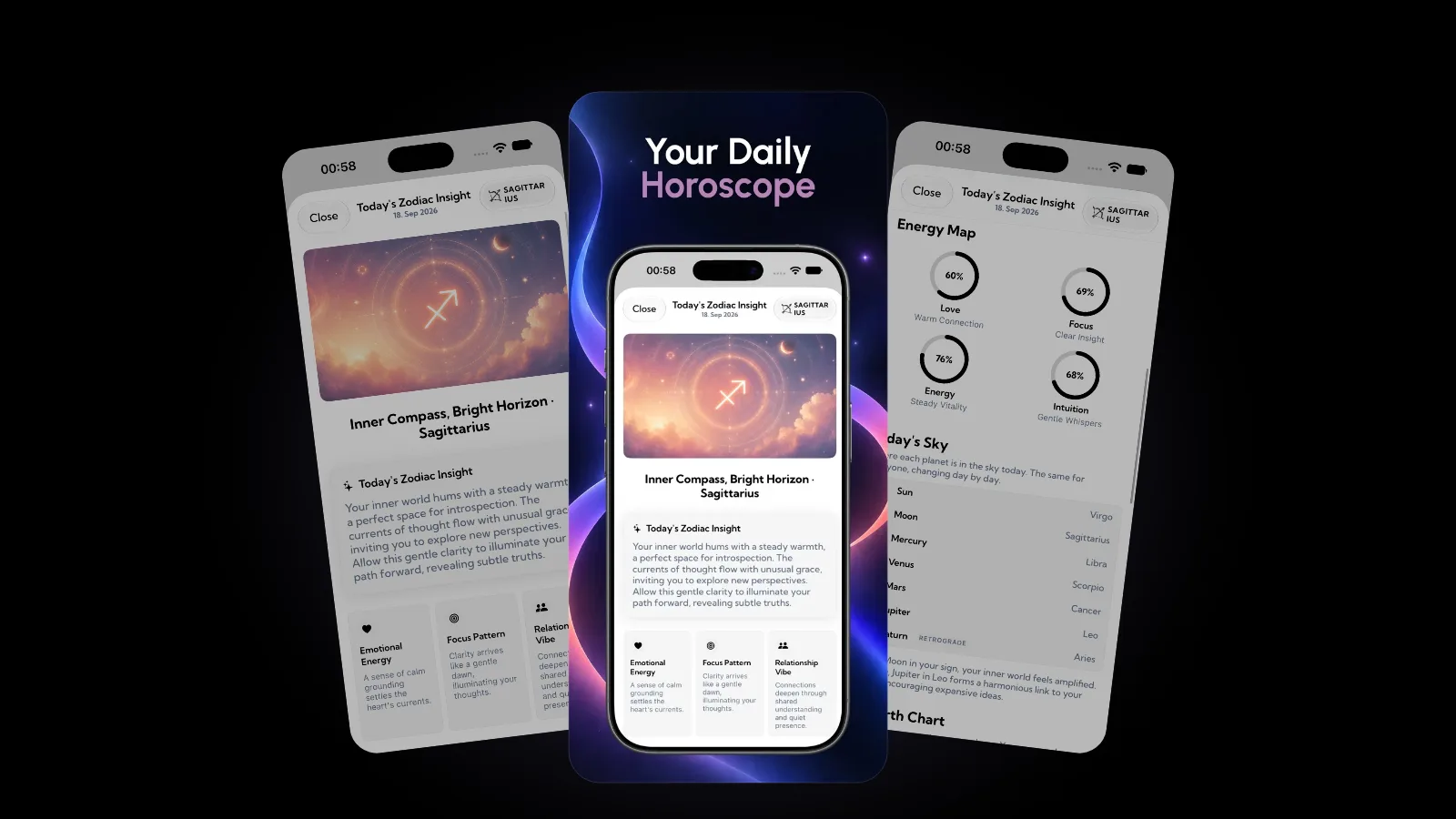
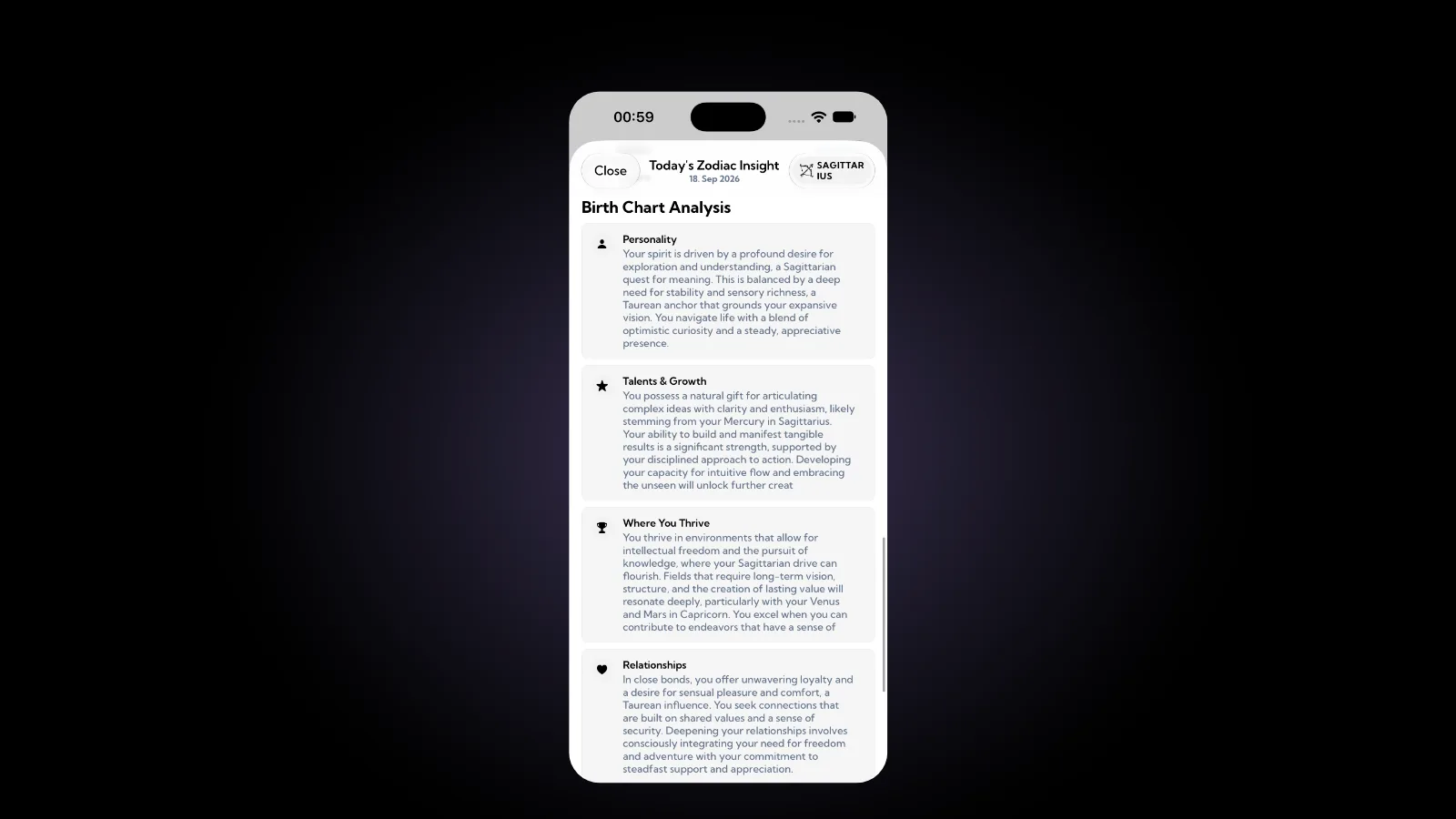
Aura Zodiac, inside Aura, gives you a personal daily horoscope based on real planetary transits, and your full birth chart. It shows your sun, moon and rising sign and your other planetary placements, natal insights on your personality, talents and relationships, and the moon phase, element, color and stone for your sign. You can save past readings and share them as cards.
Your sign also plays a part in your daily aura color, alongside your mood and the sky. If that idea is new to you, our guide to aura colors meaning explains what each color traditionally stands for. And if you would like to compare readings with how your days actually go, how to start a mood journal shows a simple way to track it.
For more, browse the Aura category of our blog.
FAQ
What if I don't know my birth time?
You can still find your sun sign, and usually your moon sign. Your rising sign and houses need an accurate time. A birth certificate or a family record is the best place to look.
Which of the big three matters most?
Astrologers read them together rather than ranking them. The sun is usually seen as the core, the moon as the emotional layer and the rising sign as the outer layer.
Why doesn't my sun sign horoscope sound like me?
Sun sign horoscopes describe only one part of a chart. Many people find their moon or rising sign fits them better, which is one reason the big three became popular.
Can astrology predict the future?
There is no scientific evidence that it can. Controlled tests of astrology's predictions have not done better than chance. It is best enjoyed as a tool for reflection and conversation.
Find your big three
Aura keeps your birth chart, your big three and a personal daily horoscope in one place. Aura is free to download on the App Store, with an optional Aura Pro subscription for complete Aura Zodiac readings.