PosturaEye health7 min read
The 20-20-20 rule for eye strain, and how to remember it
What the 20-20-20 rule is, what research says about screen breaks and digital eye strain, and simple ways to remember it through a long workday.
The 20-20-20 rule is a simple screen break: every 20 minutes, look at something at least 20 feet away (about 6 meters) for at least 20 seconds. The American Academy of Ophthalmology recommends it to ease digital eye strain. It costs nothing and takes no equipment, but it is easy to forget, so a reminder helps it stick.
This guide covers what the rule is, why it helps, what one study found when people used reminders, and practical ways to turn it into a habit. It is general information, not medical advice. If your eyes hurt or your vision changes, see an eye doctor.
What is the 20-20-20 rule?
The 20-20-20 rule is a break pattern for anyone who spends long hours looking at a screen. Every 20 minutes, you shift your gaze to an object at least 20 feet away and keep it there for at least 20 seconds. The American Academy of Ophthalmology recommends it as one way to prevent the tired, dry or watery eyes, blurred vision and headaches that can follow long periods of close work. The thinking is simple: your eyes work steadily to hold focus on something near, and you also tend to blink less while you concentrate on a screen. A short look into the distance interrupts that close focus and gives you a natural moment to blink. The rule needs no equipment and you do not have to leave your desk. A window, the far end of a room or a long hallway all work. If 20 feet is hard to find, look as far away as your space allows.
Why do screens cause eye strain?
The AAO describes eye strain as more of a symptom than an actual condition. Common signs include tired or watery eyes, blurred vision, headaches and tired facial muscles from squinting.
Two things play a big part at a screen. The first is close focus: looking at something near for a long stretch keeps your eyes working without a pause. The second is blinking. The AAO notes that people normally blink about 15 times a minute but blink less while using screens, which can leave eyes dry and stinging.
There is reassuring news in the same guidance. According to the AAO, eye strain does not injure the eye and does not cause permanent damage. It is uncomfortable and worth preventing, but it is not something to fear.
Does the 20-20-20 rule actually work?
The evidence is encouraging but small. In 2022, a team of researchers published a study in the journal Contact Lens and Anterior Eye that tested the 20-20-20 rule with 29 computer users who already had symptoms. Software on their laptops tracked their breaks and sent personalized reminders based on the rule for two weeks.
What the study reported:
- People took more breaks per day while the reminders were running.
- Digital eye strain and dry eye symptoms went down during the two weeks of reminders.
- One week after the reminders stopped, that improvement was no longer there.
The last point is the useful one. The rule seemed to help while people were following it, and the benefit faded when the prompts went away. Put simply, the rule only works if you keep doing it, and most of us need a nudge to keep doing it.
It is one small study without a control group, so read it as a hint rather than proof. It does line up with the AAO's practical advice: regular breaks, more blinking and a comfortable screen setup.
How do you do the 20-20-20 rule properly?
| Step | What to do | Why it helps |
|---|---|---|
| Every 20 minutes | Pause what you are reading or typing | Breaks up long stretches of close focus |
| Look 20 feet away | Pick a far point: a window, a doorway, the end of a corridor | Gives your eyes something distant to settle on |
| Hold for 20 seconds | Keep your gaze there and let your eyes relax | Long enough to be a real pause, short enough to keep your flow |
| Blink | Blink fully a few times while you look away | Counters the slower blinking that comes with screen work |
A few small details make it easier:
- Choose your far point in advance. If you already know where to look, the break takes no thought.
- Count, do not guess. Twenty seconds is longer than it feels. Count slowly, or take three or four calm breaths.
- Pair it with a stretch. While you look away, drop your shoulders and roll them back. Our routine of desk stretches for neck and shoulders has more moves that fit into the same pause.
How do you remember to take 20-20-20 breaks?
This is where most people struggle. Focused work makes time disappear, and an hour passes before you think to look up. Some options, from simplest to most automatic:
- A timer. A phone or kitchen timer works, but you have to restart it every time.
- A habit anchor. Tie the break to something you already do: sending an email, ending a call, saving a file.
- Calendar blocks. Useful for longer breaks, though too blunt for every 20 minutes.
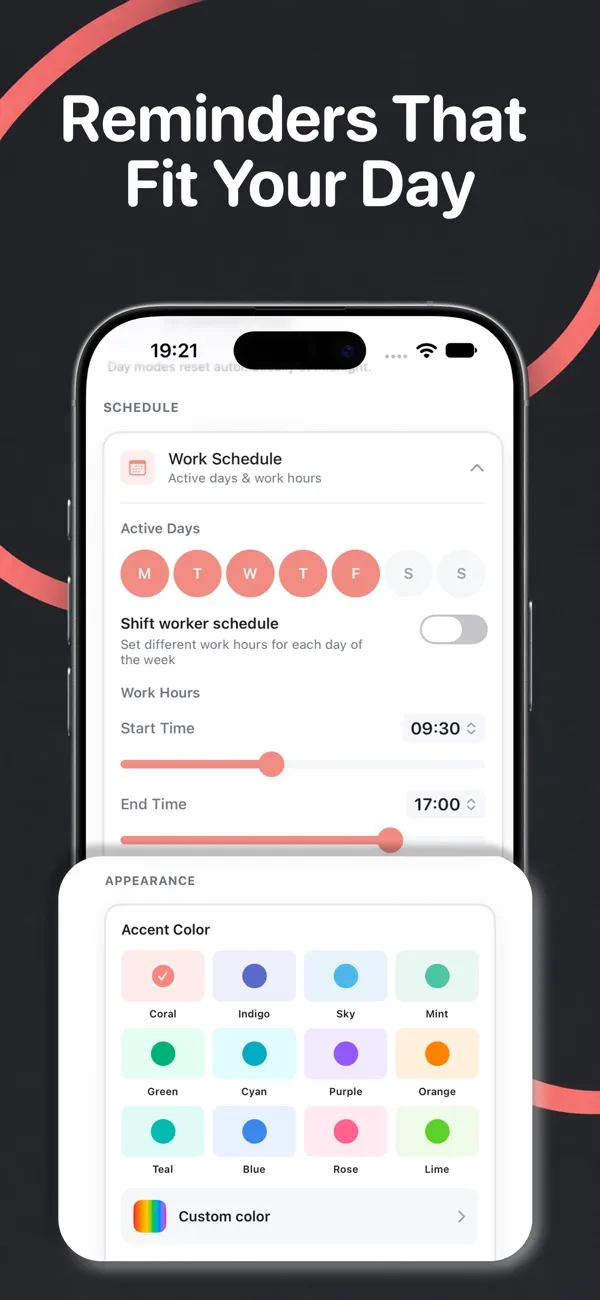
- A reminder app that knows your schedule. Reminders that start and stop with your working hours are the easiest to keep.
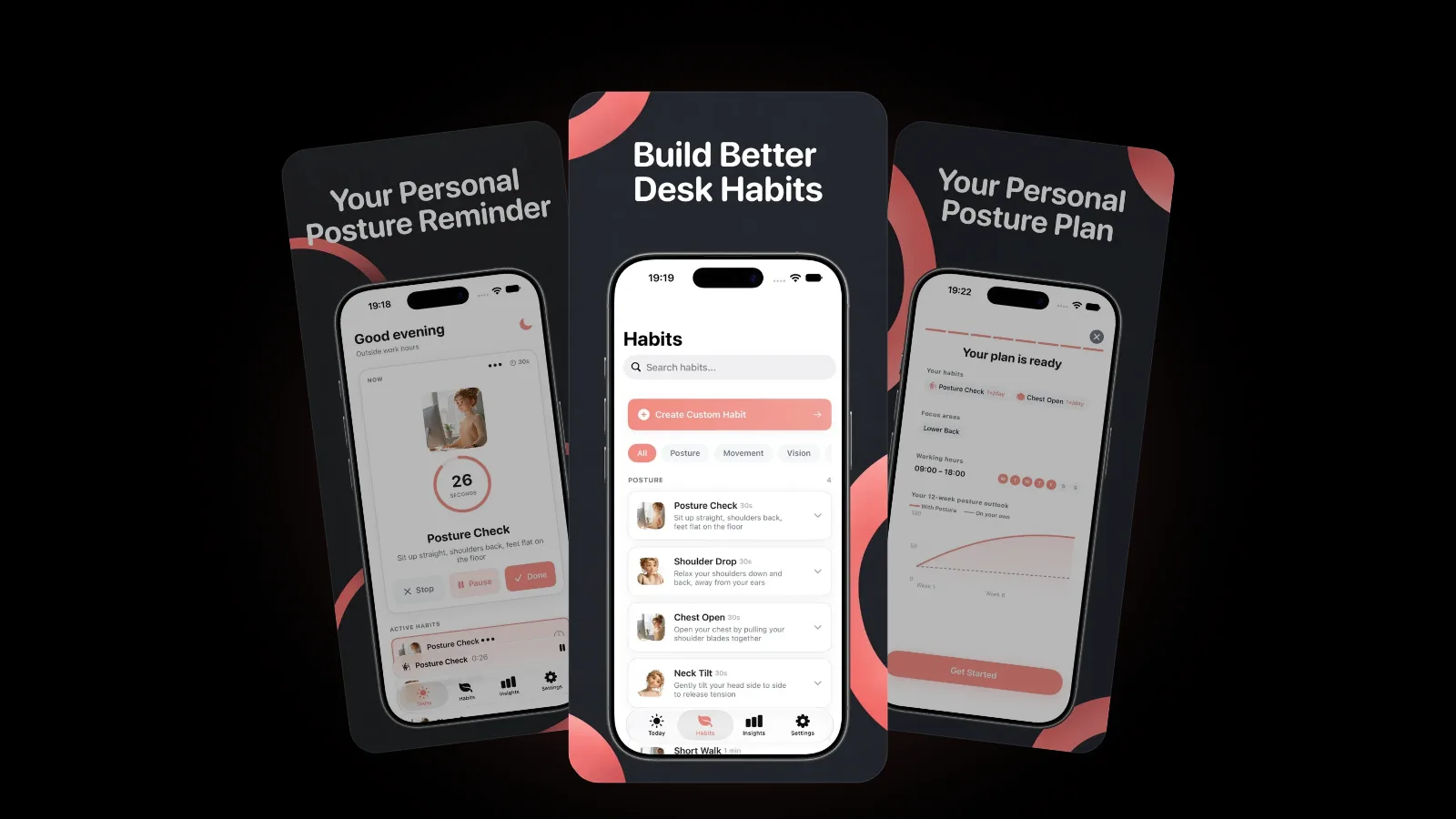
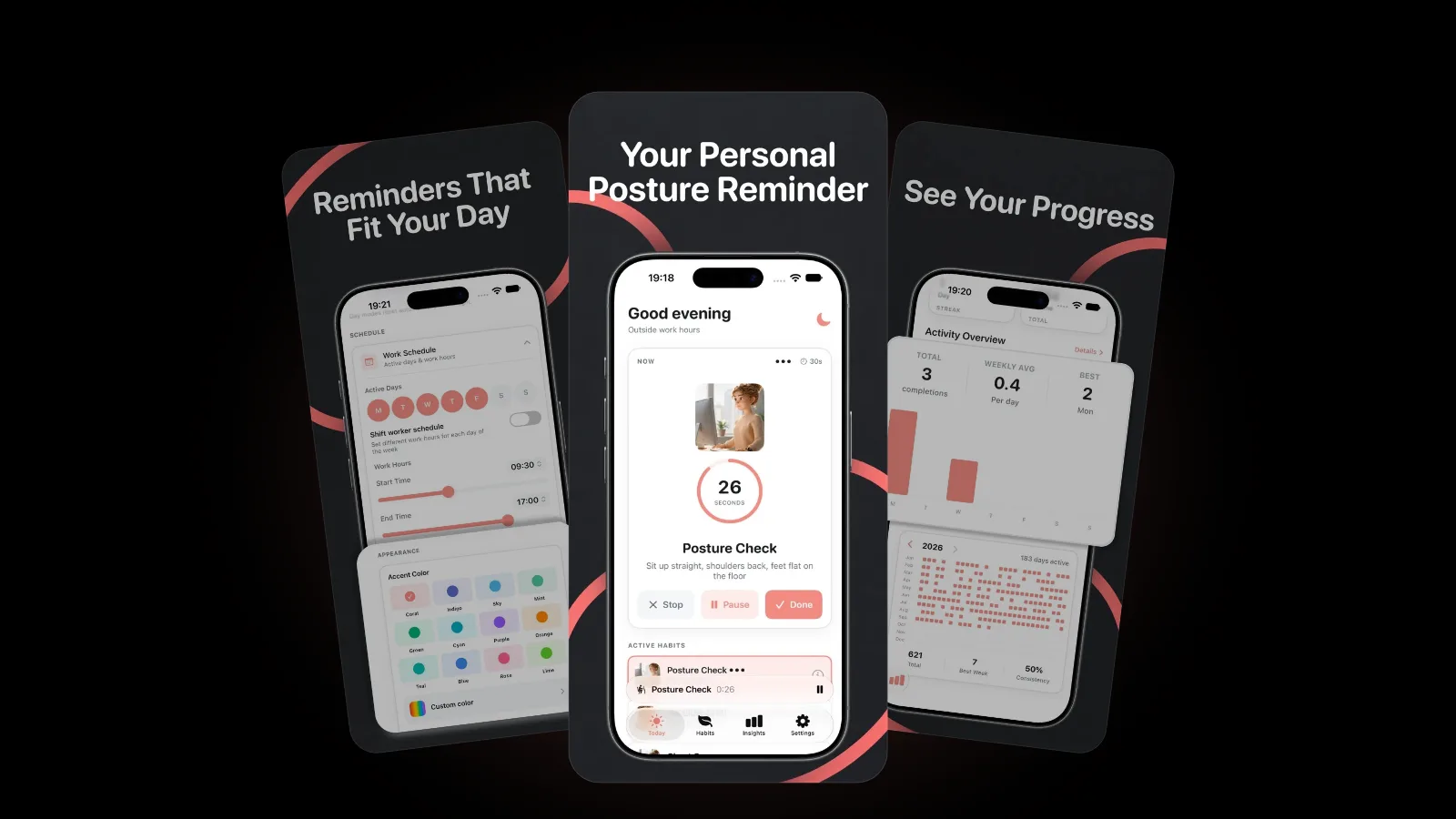
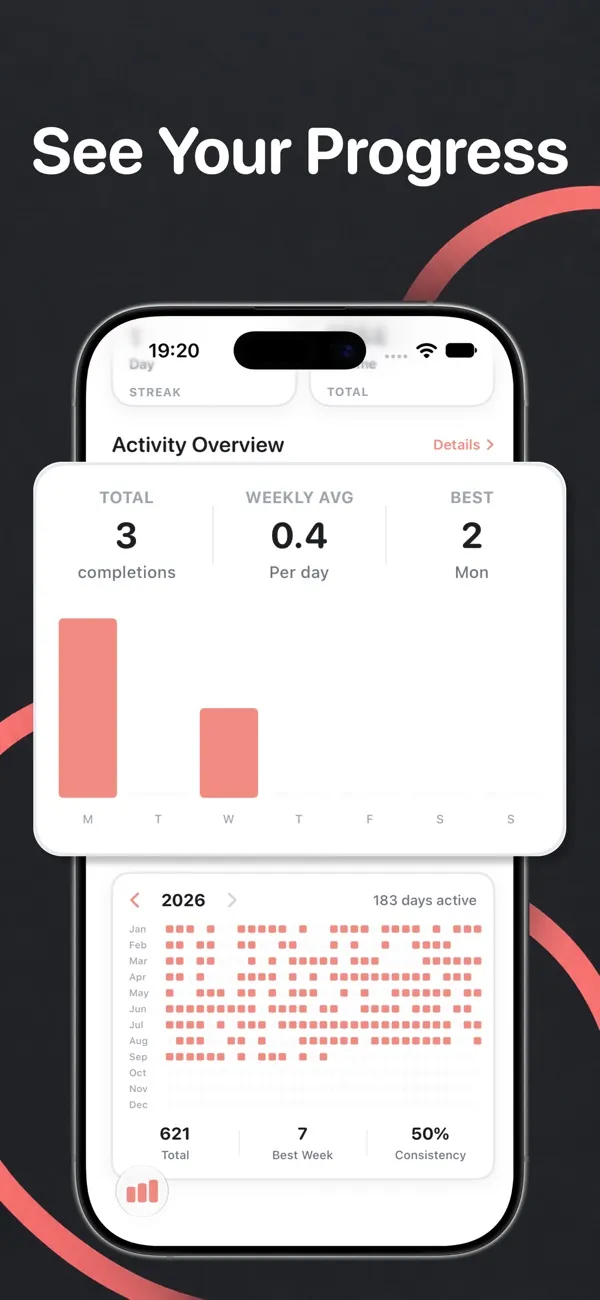
We built Postura around the fourth option. It includes the 20-20-20 rule as a built-in habit, next to Eye Relief and Screen Pause. You set your working hours and active days, adjust how often and how strongly you are reminded, and reminders pause automatically when you reach your goals. Notifications are scheduled locally on your iPhone, and there is no account to create.
If you would rather not get notifications at all, you can turn them off and open the app whenever you want to take an eye break or a posture check.
Other ways to reduce screen eye strain
The 20-20-20 rule works best alongside a comfortable setup. The AAO suggests:
- Sit about 25 inches from your screen, roughly arm's length, with your gaze angled slightly down.
- Match screen brightness to the light around you, and increase contrast if text is hard to read.
- Make a conscious effort to blink more often.
You may also wonder about blue light glasses. The AAO is clear here: it does not recommend any special blue light-blocking eyewear for computer use. Breaks and blinking matter more.
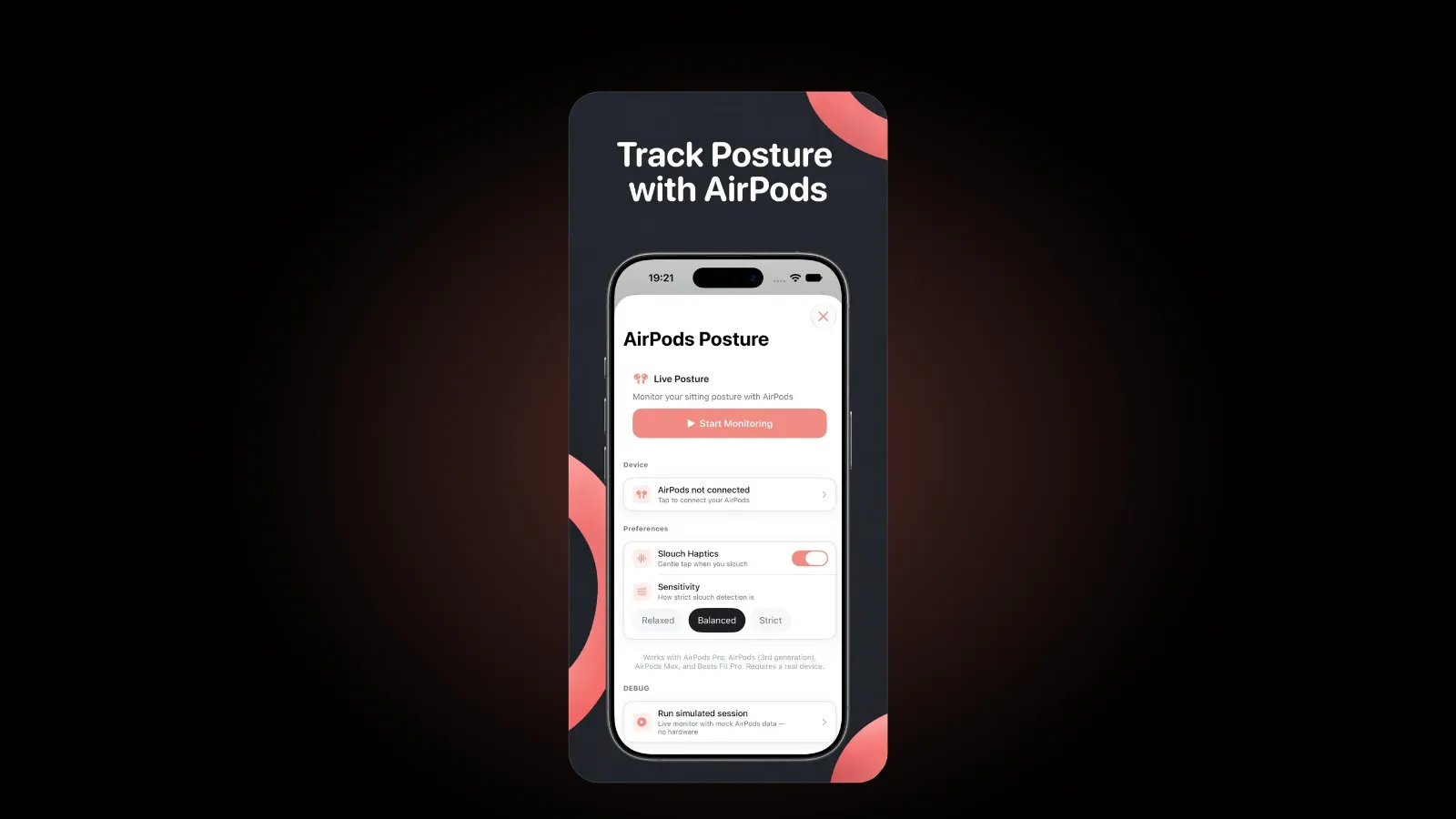
An eye break is also a good moment to check how you are sitting. If you wear AirPods while you work, AirPods posture tracking can let you know when your head drifts forward, something that is easy to miss during the same long focus sessions that tire your eyes.
FAQ
Is the 20-20-20 rule scientifically proven?
It is widely recommended by eye doctors, including the American Academy of Ophthalmology. Research on it is still limited: a 2022 study found that 20-20-20 reminders reduced eye strain symptoms over two weeks, but the benefit did not last once the reminders stopped.
What if I cannot see anything 20 feet away?
Look as far away as your space allows, such as across the room or out of a window. The point is to move your focus from near to far and let your eyes relax for a moment.
Can looking at screens permanently damage my eyes?
According to the AAO, eye strain does not injure the eye or cause permanent damage. If discomfort continues after you change your habits and workspace, an ophthalmologist can help.
Do I need an app for the 20-20-20 rule?
No. Any timer will do. An app helps when you want reminders that follow your work hours and pause on their own, so you do not have to manage them yourself.
Get started
Postura is free to download on the App Store, with an optional Pro subscription. It brings 20-20-20 eye breaks, posture checks, stretches and breathing moments together on a schedule you set. Postura is not a medical app; it is a gentle way to build better desk habits. Learn more on the Postura page or read all our Postura articles.