PosturaDesk stretches7 min read
Desk stretches for neck and shoulders: a short daily routine
Desk stretches for your neck and shoulders that take a few minutes: a simple seated routine with hold times, posture tips and how to remember to move.
Desk stretches are short, gentle movements you can do in your chair to ease stiffness from sitting still. For the neck and shoulders, a good routine takes a few minutes: a posture reset, neck turns and tilts, shoulder drops and rolls, a chest stretch and an upper-body twist. Move only as far as is comfortable.
Below is the routine we use, with hold times taken from NHS guidance where it gives them, plus ergonomics basics from OSHA and ideas for remembering to do it. This is general information, not medical advice. If you have pain, numbness or an injury, talk to a doctor or physiotherapist before you start.
What are the best desk stretches for neck and shoulders?
The best desk stretches for the neck and shoulders are simple ones you will actually repeat through the day. A useful set covers four things: resetting how you sit, moving the neck through comfortable turns and tilts, letting the shoulders drop away from the ears, and opening the chest and upper back that round forward at a keyboard. The NHS sitting exercises include a neck rotation held for five seconds each side, a chest stretch held for five to ten seconds, and an upper-body twist held for five seconds each side, all done upright in a stable chair. Add a shoulder drop and a few slow shoulder rolls and you have a routine that fits into a short break. Each move should feel easy. The NHS advice is to go only as far as is comfortable and to build up slowly, adding repetitions over time rather than pushing range on day one.
Why do the neck and shoulders get stiff at a desk?
Sitting is not the problem on its own. Staying in one position for a long time is. The NHS advice on neck pain includes not keeping your neck in the same position for a long time, for example when sitting at a desk.
At a screen, the head often drifts forward to read, the shoulders creep up toward the ears while you type, and the upper back rounds. None of that is dangerous in a single moment. It is the hours of it, without a change, that leave muscles feeling tight by the afternoon.
OSHA describes a more neutral seated position in its computer workstation guidance: the head level, forward facing and balanced, the torso and neck roughly vertical and in line, and the shoulders relaxed with the upper arms hanging normally at your sides. The same page says to change your working position frequently through the day and to stand up and walk around for a few minutes from time to time.
A short desk stretch routine for neck and shoulders
Sit near the front of a stable chair with your feet flat on the floor. Breathe normally through every move.
| Stretch | How to do it | Hold or repeats |
|---|---|---|
| Posture reset | Sit up straight, roll your shoulders back gently and bring your neck back so your head sits over your shoulders | 3 slow breaths |
| Neck rotation | Look straight ahead, turn your head toward one shoulder as far as is comfortable, then return to centre | Pause 5 seconds, 3 times each side |
| Neck tilt | Keep your shoulders down and gently tilt your head so one ear moves toward that shoulder, then switch | A slow tilt to each side, 2 or 3 times |
| Shoulder drop | Let your shoulders relax down and back, away from your ears | About 30 seconds of easy breathing |
| Shoulder roll | Lift your shoulders, draw them back, then let them fall in a slow circle | 5 slow circles |
| Chest stretch | Pull your shoulders back and down, and push your chest forward and up until you feel a stretch across the front | Hold 5 to 10 seconds, 5 times |
| Upper-body twist | Cross your arms, hands on your shoulders, and turn your upper body to one side without moving your hips | Hold 5 seconds, 5 times each side |
The neck rotation, chest stretch and upper-body twist follow the NHS sitting exercises. The posture reset uses the NHS neck pain advice to roll your shoulders back gently and bring your neck back. The tilt, drop and roll are gentle mobility moves that slot in between; keep them slow and small.
Tips for stretching safely at your desk
- Stay in a comfortable range. You should feel a gentle stretch, never pain.
- Move slowly. Smooth movements are easier to control than quick ones.
- Use a stable chair. The NHS suggests a solid chair without wheels for seated exercises.
- Build up over time. Start with fewer repetitions and add more as they feel easy.
- Stop if something hurts. Pain, tingling or dizziness are signs to stop and get advice.
How often should you do desk stretches?
There is no single number that suits everyone. The common thread in the guidance above is frequent change: OSHA says to change position frequently and to get up and walk around periodically, and the NHS warns against holding your neck in one position for a long time.
In practice, short and often beats long and rare. A one-minute reset every so often during the workday tends to be easier to keep than a single long session at the end of it. A natural time is when you pause for your eyes: the 20-20-20 rule already asks you to look away every 20 minutes, and you can drop your shoulders or turn your neck during those 20 seconds.
How do you remember to stretch at work?
Knowing the stretches is the easy part. Remembering them in the middle of a busy day is harder. Some approaches that help:
- Link stretches to events. After every call, before every coffee, when you send an important email.
- Make the routine visible. A sticky note with three moves is enough.
- Use reminders that follow your hours. A prompt during work time, and silence after.
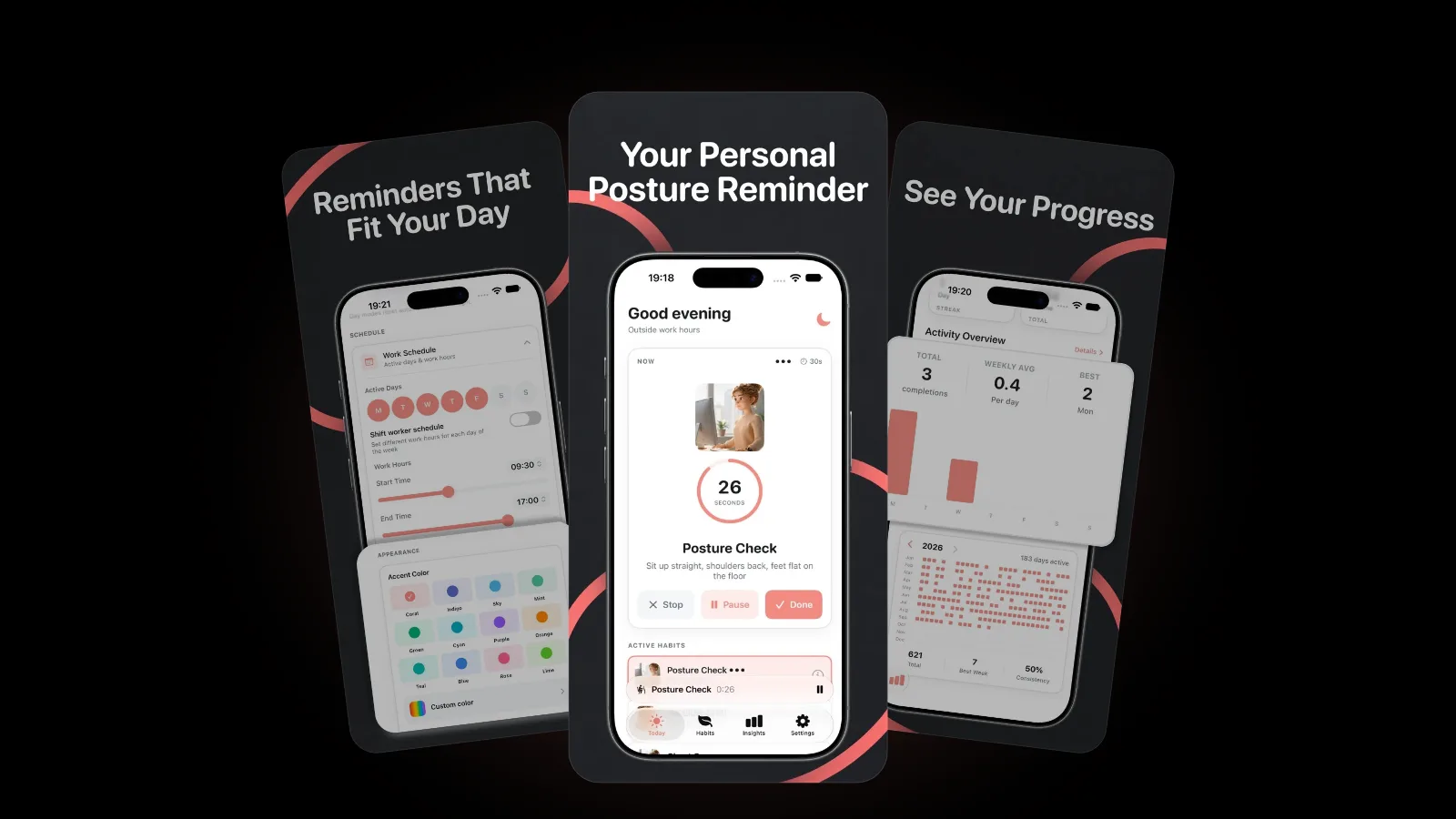
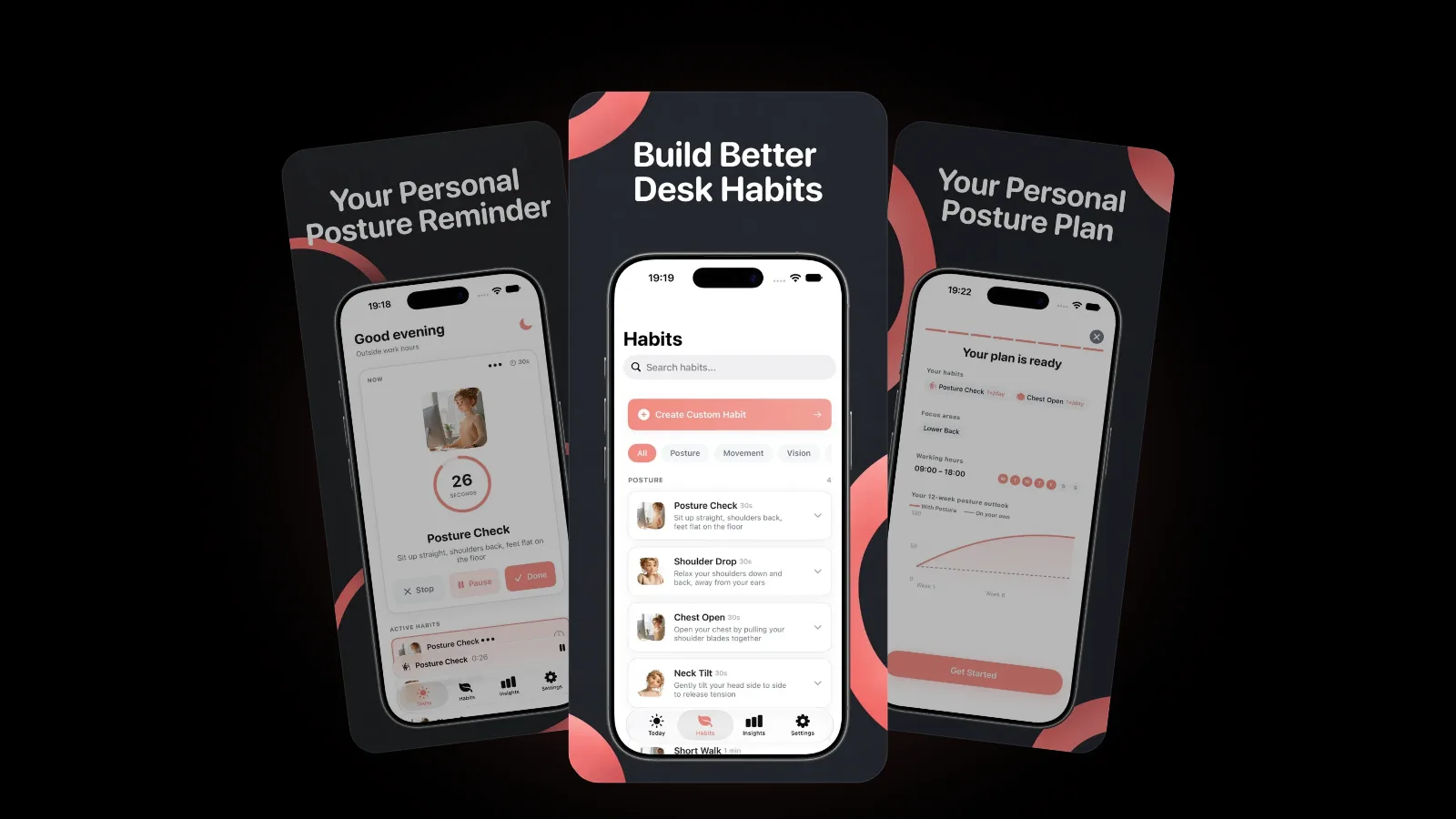
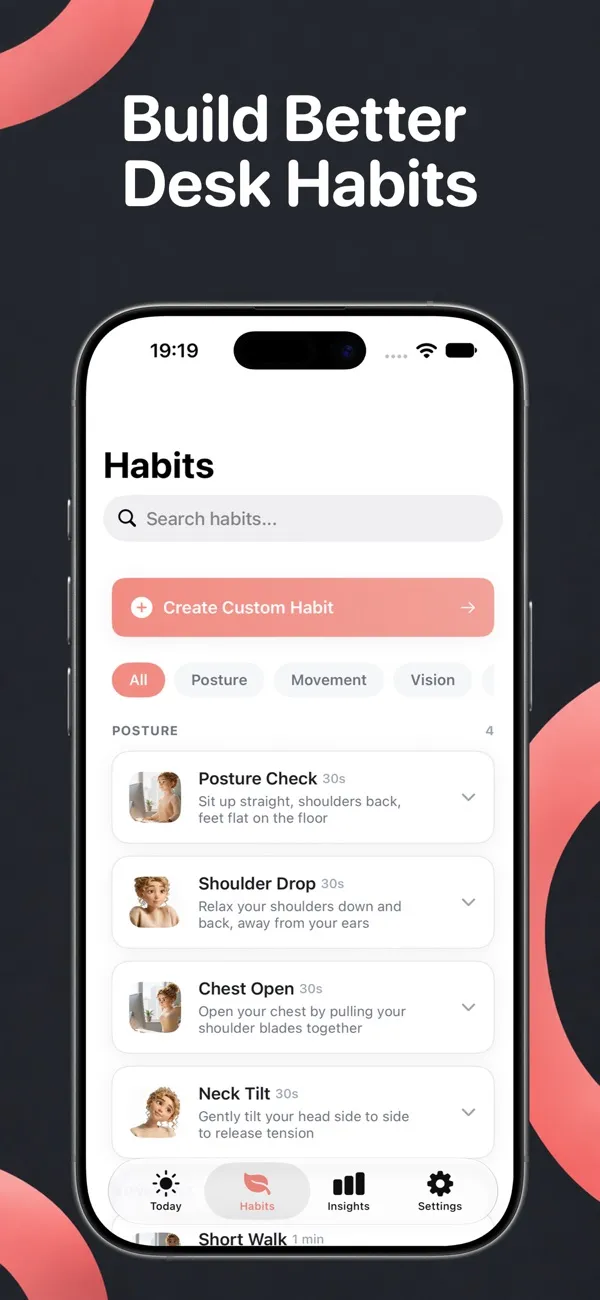
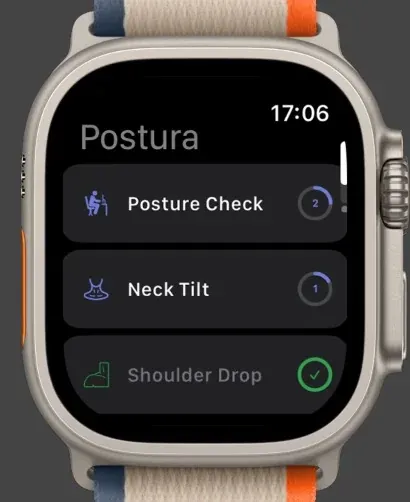
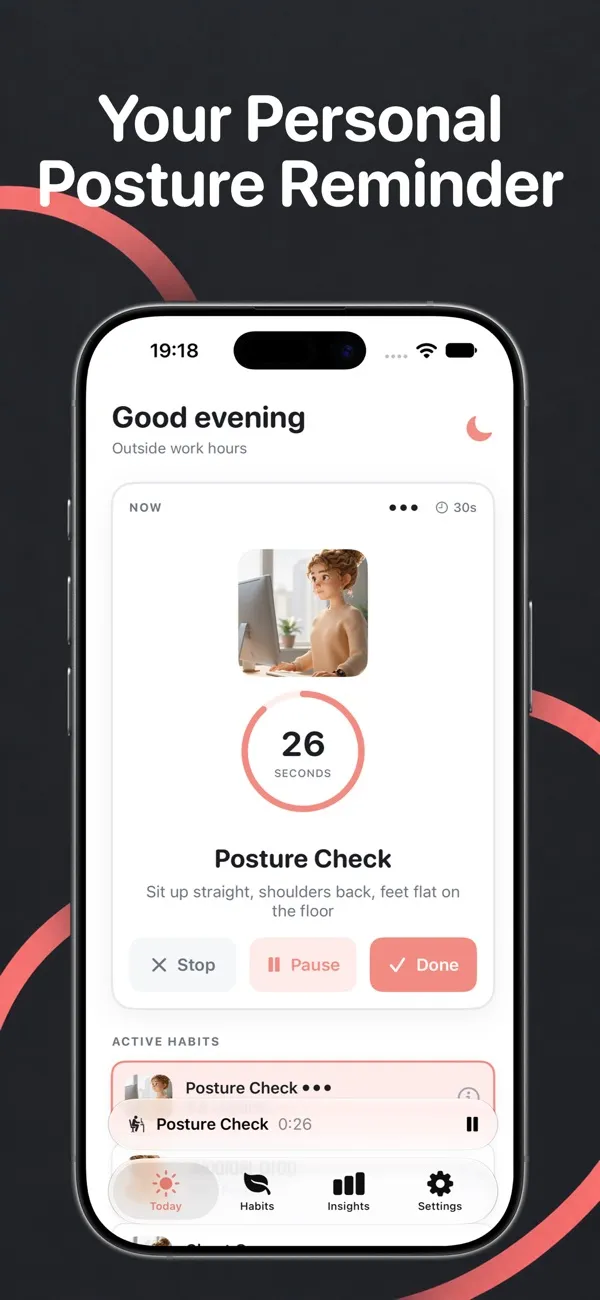
That third approach is why we made Postura. Its built-in habits include Posture Check, Shoulder Drop, Chest Open and Neck Tilt, movement breaks like Short Walk, Stand Up and Shoulder Roll, eye breaks and breathing exercises. You set your working hours and active days, choose how often you want reminders, and Postura pauses them automatically once you reach your goals. Progress views then show your daily completions, weekly trends and streaks, so you can see the habit forming.
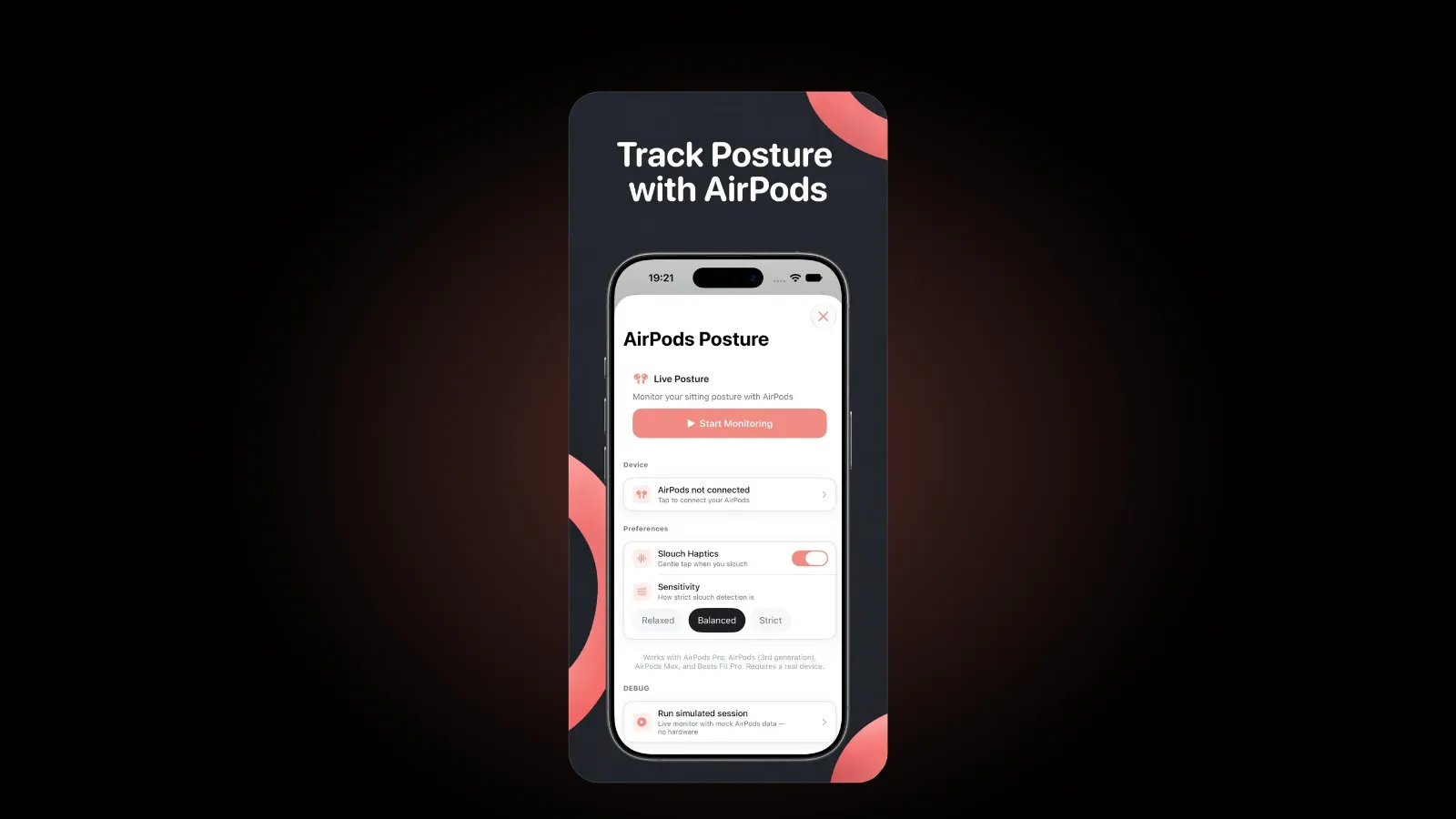
If you wear AirPods at your desk, Postura Pro can also use them to notice when you slouch and nudge you to reset. We explain how that works, and what it cannot do, in our guide to AirPods posture tracking.
FAQ
How long should I hold a desk stretch?
It depends on the stretch. The NHS sitting exercises use short holds: five seconds for neck rotations and the upper-body twist, and five to ten seconds for the chest stretch, repeated several times.
Can desk stretches fix neck pain?
We cannot promise that, and no app or routine should. Stretching and changing position are general ways to stay comfortable at a desk. The NHS says to see a GP if neck pain does not go away after a few weeks or comes with other symptoms such as pins and needles.
Do I need to stand up to stretch?
No. Every move in this routine is done seated. Standing up and walking for a few minutes is still a good idea from time to time, as OSHA suggests.
Are desk stretches enough on their own?
They work best together with a comfortable setup and regular movement. Check your screen height and chair, and take short walks when you can.
Get started
Postura is free to download on the App Store, with an optional Pro subscription. It reminds you to stretch, check your posture and rest your eyes during the hours you choose, with 12 targeted exercises built in. Postura is not a medical app; it is a gentle way to build better desk habits. See everything it does on the Postura page or read more Postura articles.