SunDoseSunburn8 min read
How long does it take to get sunburned? UV and skin type
How long it takes to burn depends on the UV index and your skin type. See the dose math, rough minutes at UV 3 to 10, and why no number is a safe limit.
How long it takes to get sunburned depends on the UV index, which sets how fast UV dose builds up, and your skin type, which sets how much it takes to redden. At a steady UV 10, the fairest untanned, unprotected skin may turn pink in roughly 13 to 20 minutes. Treat that as an estimate, never a limit.
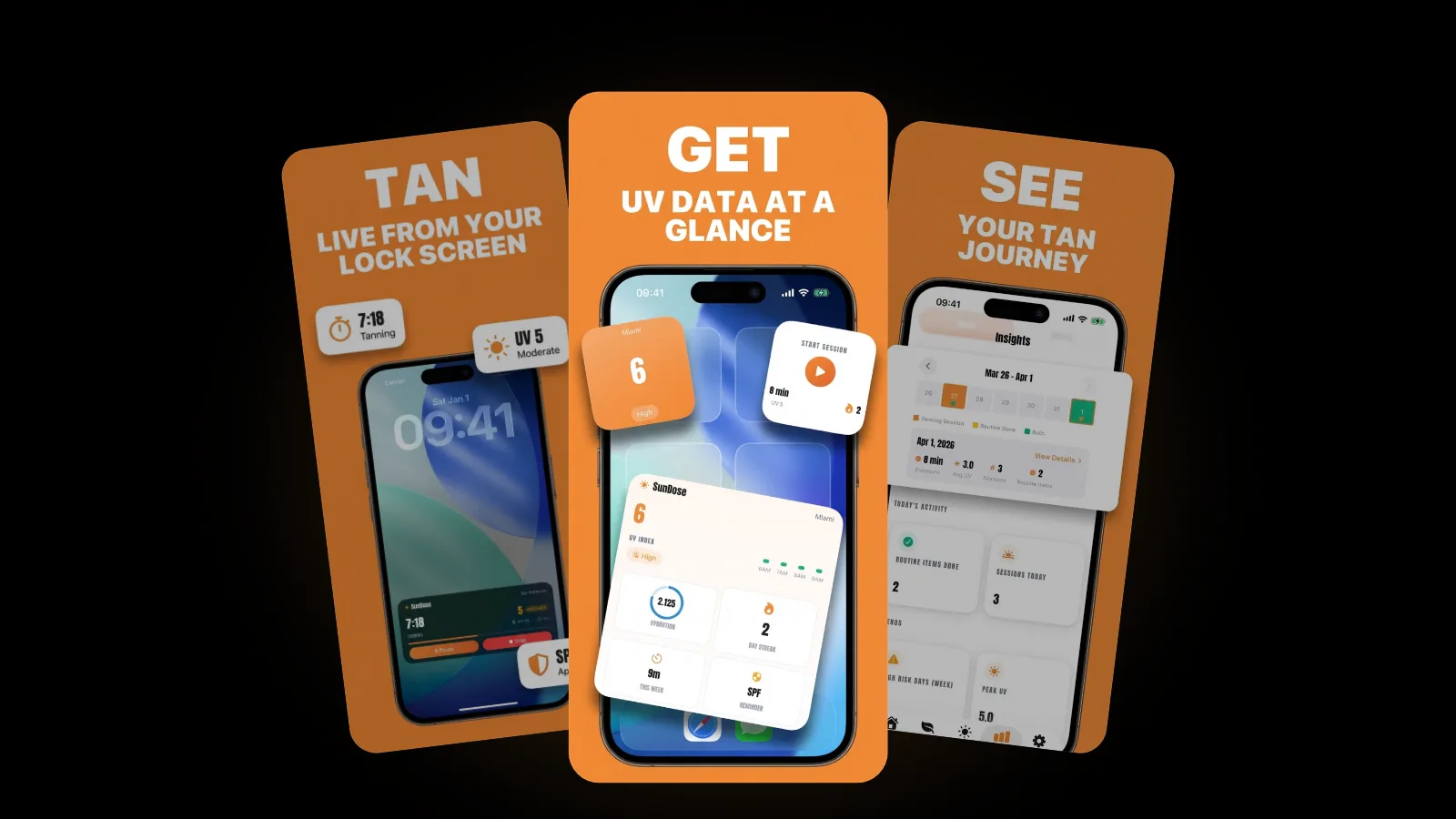
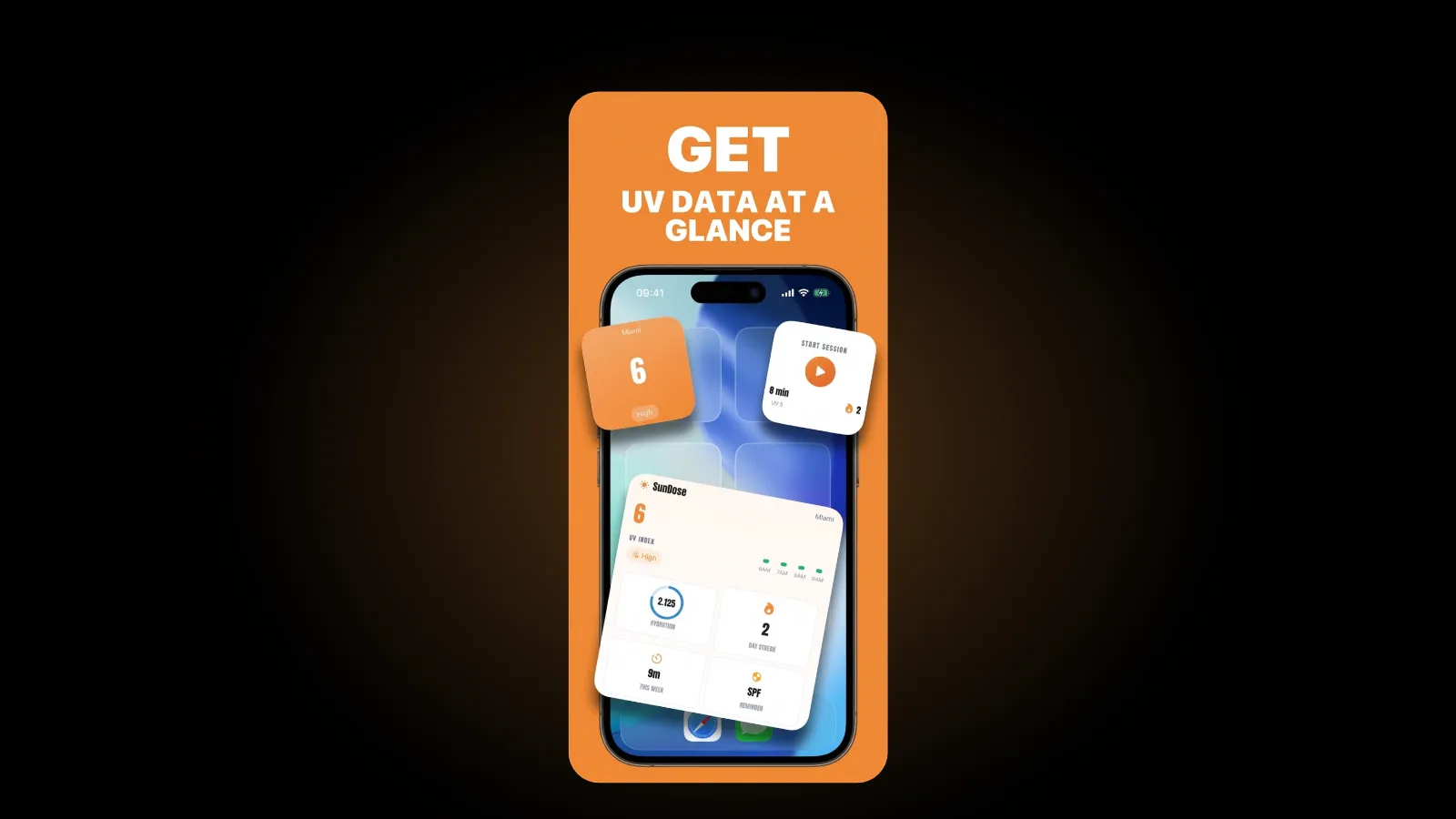
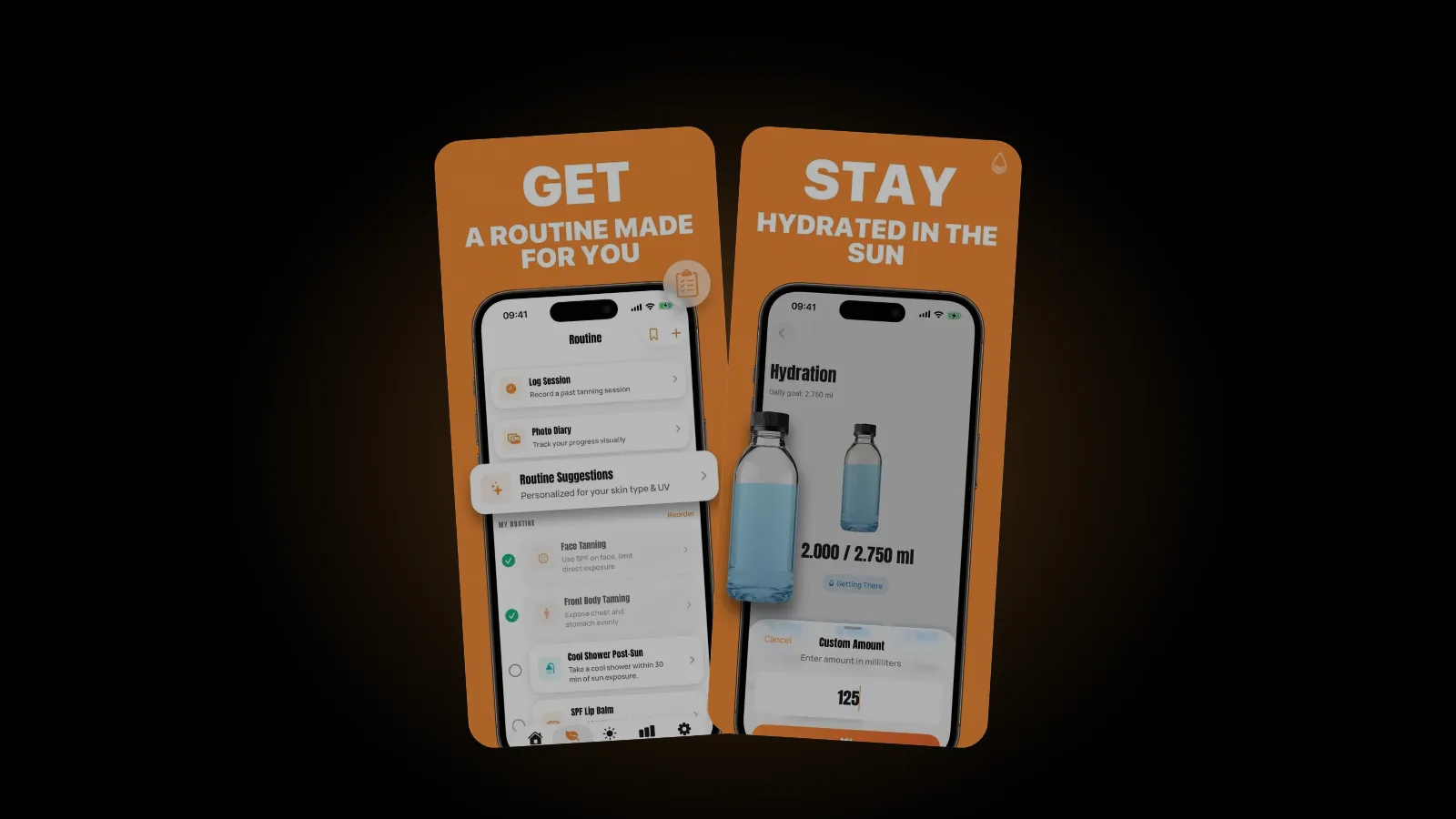
We make SunDose, a UV index and sun exposure timer for iPhone. Most answers to this question are charts with one number per UV band and nothing about skin type. Here's the mechanism instead, with sources, and what shortens the time further. This is general information, not medical advice.
How long does it take to get sunburned?
The time to sunburn is a dose divided by a dose rate. The UV index is the rate: the World Health Organization (WHO) defines it as erythemally weighted UV irradiance multiplied by 40, so each point on the index equals 0.025 W/m². The dose is counted in standard erythema doses (SED), and the International Commission on Illumination (CIE) sets 1 SED at 100 J/m². Do the division and 1 SED takes about 67 minutes at UV 1, about 11 minutes at UV 6 and about 7 minutes at UV 10. A 2016 review in Pigment Cell & Melanoma Research puts the minimal erythema dose (MED), the dose that causes just perceptible redness, at 2 to 3 SED for skin type I and 4 to 7 SED for type IV. So at a steady UV 10, untanned and unprotected type I skin reaches it in roughly 13 to 20 minutes, and type IV in roughly 27 to 47. These are illustrative estimates, not limits.
Why is there no single safe number of minutes?
Because the WHO advises against publishing one. Its Global Solar UV Index practical guide says reporting burn times is not recommended, because people tend to read them as a safe level of unprotected sun exposure. It adds that cumulative UV exposure plays a major role in skin cancer. So read every minute figure here as a way to see the mechanism, not as permission. One number can't hold because:
- UV doesn't hold still. A forecast usually gives the day's peak, and the rate is lower before and after it.
- Skin type is a loose guide. The 2016 review found MED rises with skin type but with considerable overlap between types.
- Body sites differ. A 2010 thesis review in the Danish Medical Bulletin cites up to fivefold differences in MED between body sites, with the chest and upper back most sensitive.
- Damage starts before redness. In a 2018 study in the Journal of Investigative Dermatology, as little as 0.2 MED produced DNA damage in the skin.
How does the UV index change your time to burn?
Every point on the index adds the same dose rate, so the time to collect 1 SED falls fast: going from UV 3 to UV 6 halves it. The WHO says the reported index is normally the day's maximum, which occurs during the four-hour period around solar noon. The math is 100 J/m² divided by (UV index × 0.025 W/m²), which gives seconds.
| UV index | WHO category | Erythemal irradiance | Time to 1 SED |
|---|---|---|---|
| 1 | Low | 0.025 W/m² | About 67 minutes |
| 3 | Moderate | 0.075 W/m² | About 22 minutes |
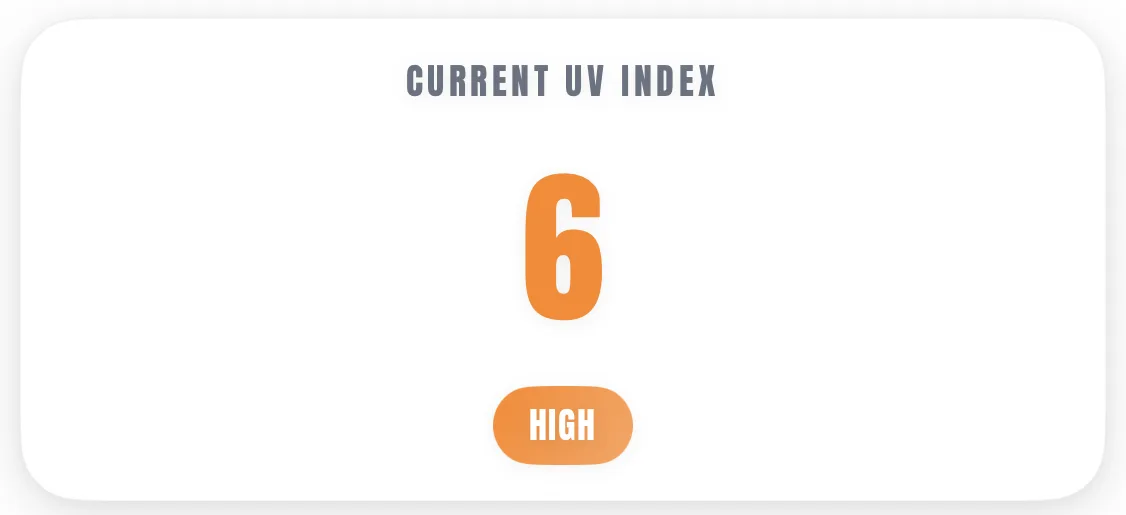
| 6 | High | 0.15 W/m² | About 11 minutes |
| 8 | Very high | 0.20 W/m² | About 8 minutes |
| 10 | Very high | 0.25 W/m² | About 7 minutes |
| 11 | Extreme | 0.275 W/m² | About 6 minutes |
The WHO says protection is necessary above UV 3, with the message reinforced at 8 and above. For how the index moves through a day, see our guide to the best UV index for tanning.
How does your skin type change it?
Your skin type sets how many SEDs it takes to redden. The 2016 review by Fajuyigbe and Young lists the MED as 2 to 3 SED for type I, 2.5 to 3 for type II, 3 to 5 for type III and 4 to 7 for type IV. Multiply by the minutes per SED for these rough ranges, in minutes, for untanned, unprotected skin under a steady UV index. They're illustrative, not limits.
| Skin type | MED (SED) | UV 3 | UV 6 | UV 8 | UV 10 |
|---|---|---|---|---|---|
| I | 2 to 3 | 44 to 67 | 22 to 33 | 17 to 25 | 13 to 20 |
| II | 2.5 to 3 | 56 to 67 | 28 to 33 | 21 to 25 | 17 to 20 |
| III | 3 to 5 | 67 to 111 | 33 to 56 | 25 to 42 | 20 to 33 |
| IV | 4 to 7 | 89 to 156 | 44 to 78 | 33 to 58 | 27 to 47 |
Types V and VI are left out on purpose. The review gives 6 to 20 SED for both and says the wide range reflects uncertainty in the data. The WHO adds that darker skin is still susceptible to UV damage, especially to the eyes and immune system.
Measured values agree: the 2018 study phototested 39 volunteers and found mean MEDs from 2.1 SED for type I to 15.2 SED for type VI. Not sure of your type? Our guide to Fitzpatrick skin types walks through all six. It matters most for types I and II, where the WHO says more than 90% of non-melanoma skin cancers occur.
Do sunscreen, medication and reflection change the math?
Yes. Sunscreen lowers the dose that reaches your skin, but it isn't meant to buy time. Medication can lower the dose your skin tolerates, and reflection or altitude can raise the dose you get.
- Sunscreen. The FDA's page on sun protection factor says "SPF is not directly related to time of solar exposure but to amount of solar exposure." The NHS is blunter: "Do not spend any longer in the sun than you would without sunscreen." How much you apply matters too, which our SPF 30 vs 50 guide explains.
- Medication. MedlinePlus says some medicines, such as the antibiotics doxycycline and tetracycline, can make your skin easier to sunburn. Our guide to medications that cause sun sensitivity covers the wider list.
- Reflection. The WHO says fresh snow can reflect as much as 80% of UV, sea foam about 25% and dry beach sand about 15%. Water offers only minimal protection, and its reflections can add to your exposure.
- Altitude. UV levels rise by 10% to 12% with every 1,000 metres, according to the WHO.
- Cloud. Up to 80% of solar UV can get through light cloud cover. Our guide on whether you can get sunburned on a cloudy day explains more.
How long does a sunburn take to show up?
Later than you'd expect. MedlinePlus says the first signs may not appear for a few hours, and the full effect may not appear for 24 hours or longer. Cleveland Clinic says pain usually starts within a few hours and peaks at about 24 hours.
That delay makes redness a poor stop signal. If your skin already looks pink while you're outside, the dose behind it was delivered earlier, and the reaction can keep building into the next day. You can't feel UV either: the WHO notes that the sun's warmth comes from infrared, not UV. If it's already happened, here's how to treat sunburn.
How can SunDose help you time your sun?
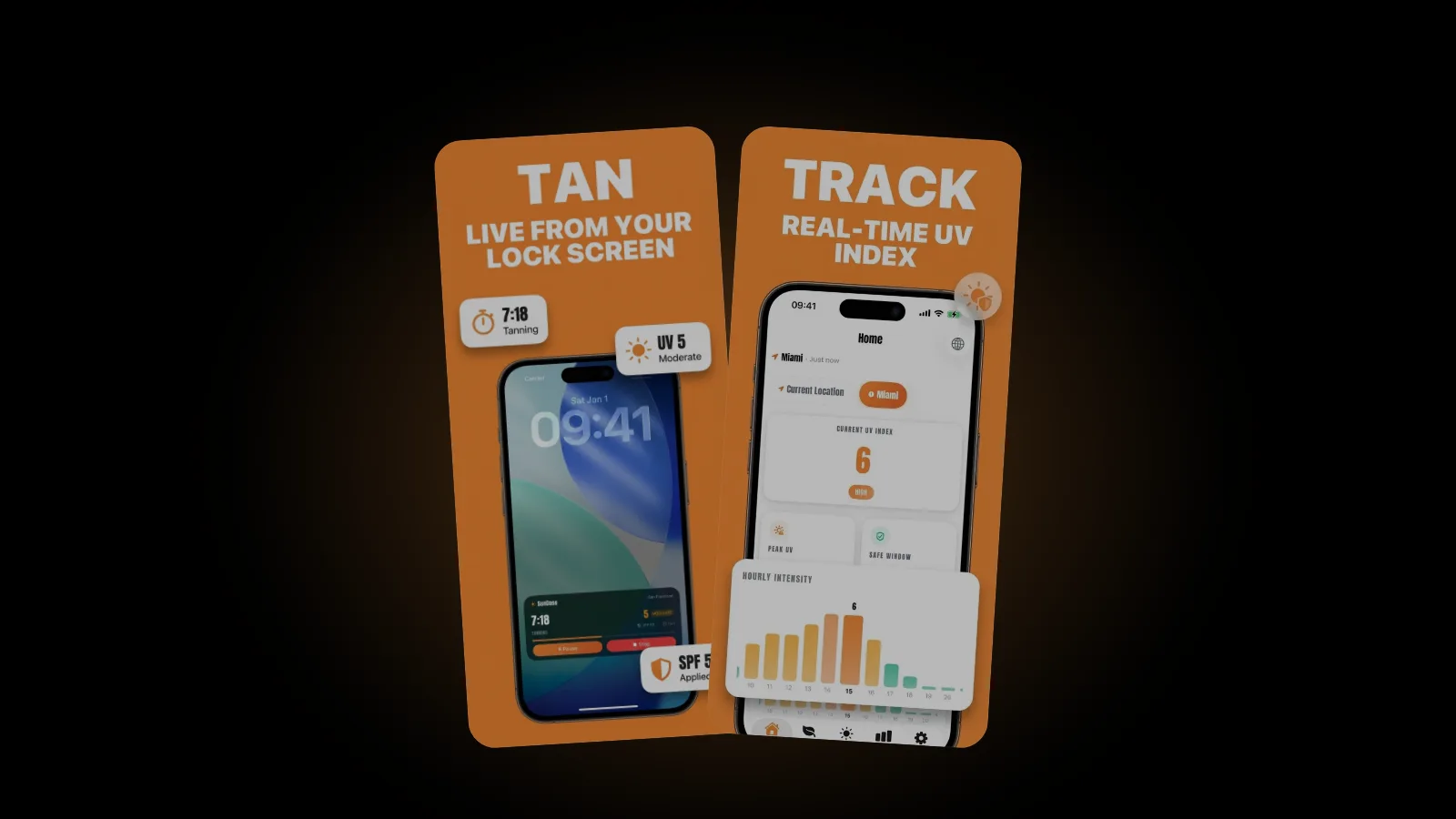
SunDose works from the same inputs. It shows the live UV index for your location, with an hourly forecast, from Apple WeatherKit. When you start a session, it suggests a length between 1 and 180 minutes, calculated from your skin type, the current UV and the SPF you say you applied. Flag sensitivities in your profile, such as retinoids, exfoliating acids, isotretinoin or tetracycline antibiotics like doxycycline, and it shortens its suggestions.
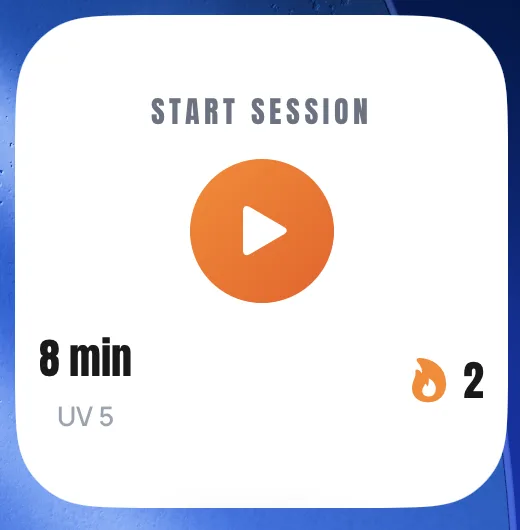
A running session shows as a countdown on the Lock Screen and in the Dynamic Island, with reapply prompts timed to the session clock. Sessions log automatically and stay on your device.
Know the limits, though. The suggested length is an estimate, not a promise that you won't burn. SunDose records the UV reported for your location and the time you spent outside; it isn't a dosimeter measuring what reaches your skin. See the full feature list on the SunDose page, or browse more guides in the SunDose category.
FAQ
How long can you stay in the sun without sunscreen?
There's no safe figure. The WHO advises protection whenever the UV index is 3 or higher and warns that burn times wrongly suggest a safe level of unprotected exposure. As an illustration only, untanned type I skin may redden in roughly 44 to 67 minutes at a steady UV 3.
How fast can you burn at UV 10?
At UV 10, 1 SED builds up in about 7 minutes. Using the 2016 review's MED ranges, untanned, unprotected type I skin may reach just perceptible redness in roughly 13 to 20 minutes, and type III in 20 to 33. Medication, reflection or altitude can shorten that.
Do breaks in the shade reset the clock?
No. The WHO lists "if you take regular breaks during sunbathing you won't get sunburnt" as fiction and says UV exposure is cumulative during the day. Shade slows the dose down, but it doesn't erase what you've already collected.
Is the minimal erythema dose the same as a sunburn?
It's the threshold for the mildest visible reaction: the lowest UV dose that leaves just perceptible redness 24 hours later. It isn't a safe line to stay under, though. The 2018 study found DNA damage in the skin at as little as 0.2 MED.
Get started
Check the UV index before you head out, and plan shade, clothing and sunscreen from UV 3 up. If you'd like a session timer that accounts for your skin type, the current UV and the SPF you applied, SunDose is free on the App Store, with optional premium tiers, for iPhone on iOS 26 or later. SunDose is a wellness app, not a medical device.