SunDoseSPF9 min read
SPF 30 vs 50: what the numbers mean and which to choose
SPF 30 vs 50: 97% versus 98% of UVB blocked sounds close, but what reaches your skin drops from 1 in 30 to 1 in 50. What it means and which to choose.
SPF 30 blocks about 97% of the UVB rays that cause sunburn, and SPF 50 about 98%. That one-point gap looks tiny, but flip it around: at the lab test dose, SPF 30 lets roughly 1 in 30 through and SPF 50 roughly 1 in 50. Either is a sound choice if you apply enough and reapply.
Below, we do the math both ways, explain why SPF is not a timer and match SPF levels to everyday life, the beach, fair skin and water. Then we show how SunDose uses the SPF you tell it. This is general information, not medical advice.
What does SPF actually measure?
SPF, or sun protection factor, is a lab measure of how well a sunscreen protects skin from sunburn. The US Food and Drug Administration explains the test in its consumer guide, Sunscreen: How to Help Protect Your Skin from the Sun: it compares the UV exposure needed to cause sunburn with sunscreen and without it, and SPF values mainly indicate protection from UVB. The test uses 2 milligrams of sunscreen per square centimeter of skin. A 2022 review in Anais Brasileiros de Dermatologia, Sunscreen lotions in the dermatological prescription, notes that people usually apply much less, between 0.4 and 1.5 milligrams per square centimeter. The NHS calls SPF a measure of the amount of UVB protection and says SPFs are rated on a scale of 2 to 50+. The Skin Cancer Foundation, in Does a High SPF Protect My Skin Better?, puts it simply: think of SPF as filter strength, not a time allowance.
UVA, the rays the American Academy of Dermatology links to wrinkles and age spots, has its own label: "broad spectrum" in the US, or a UVA star rating in the UK, where the NHS advises at least 4 stars. Our guide to UVA vs UVB covers those ratings.
SPF 30 vs 50: how big is the difference?
The 2022 review puts it plainly: at the test dose, SPF 30 absorbs 96.7% of the UVB that causes sunburn and SPF 50 about 98%. Measured as what is blocked, that is barely more than one point. Measured as what gets through, it is 3.3% against 2%, so by our arithmetic SPF 50 lets about 40% less UVB reach your skin.
| SPF | UVB blocked at the test dose | UVB that gets through | Roughly |
|---|---|---|---|
| 15 | 93.3% | 6.7% | 1 in 15 |
| 30 | 96.7% | 3.3% | 1 in 30 |
| 50 | about 98% | 2% | 1 in 50 |
| 100 | about 99% | about 1% | 1 in 100 |
The first three rows come from the 2022 review. The SPF 100 row uses the same one-in-SPF rule, which a 2019 review in Frontiers in Medicine, Ensuring the Safety of Sunscreens, and Their Efficacy in Preventing Skin Cancers, calls a simplified way of explaining SPF.
The pattern worth remembering: each time the SPF doubles, the share that gets through roughly halves. The percentage blocked barely moves, which is why the numbers look interchangeable on a shelf. So is SPF 50 better? In the lab, yes. On real skin, the gap between two SPF numbers is often smaller than the gap between a thick layer and a thin one.
Is SPF 100 worth it?
It can add margin, but it is not a different kind of protection. The FDA's Questions and Answers on its regulatory actions on sunscreen, current as of September 2026, says the US deemed final order "does not include a limit on maximum SPF values". The agency has proposed capping labels at SPF 60+, citing meaningful clinical benefit up to SPF 60, but that part is not final.
Two randomized trials in the Journal of the American Academy of Dermatology had people wear SPF 100+ and SPF 50+ at the same time. In a 2018 split-face trial, after about six hours outdoors, 55.3% of 199 adults were more sunburned on the SPF 50+ side and 5% on the SPF 100+ side. A 2020 beach trial of 55 people found 56% against 7% after five days. Several authors of both studies worked for a sunscreen maker.
The catch is behavior. The Skin Cancer Foundation warns that very high SPFs often create a false sense of security: people stay out longer, skip reapplying and skip shade, hats and clothing.
Does a higher SPF let you stay in the sun longer?
No. The FDA's consumer guide says "SPF is not directly related to time of solar exposure but to amount of solar exposure", so SPF 15 does not let you stay out 15 times longer. The American Academy of Dermatology's Sunscreen FAQs adds that high-number SPFs last the same amount of time as low-number SPFs.
Why isn't SPF a timer? UV intensity changes through the day, and sunscreen breaks down with sweat, water and friction, the Skin Cancer Foundation explains. The NHS guidance on sunscreen and sun safety is blunt: "Do not spend any longer in the sun than you would without sunscreen." How long that is depends on the UV index and your skin, as we explain in how long it takes to get sunburned.
Water resistance is the one claim printed in minutes. The FDA requires water-resistant labels to say whether the sunscreen stays effective for 40 or 80 minutes while swimming or sweating, and no sunscreen is waterproof.
Why does how much you apply matter more than the number?
Because most people apply far less than the test dose. The American Academy of Dermatology says many people apply only about 20 to 50% of the amount needed to get the SPF on the label, and the NHS warns that a thin layer gives less protection. The academy also notes that high-SPF sunscreens help make up for this, which is the honest case for SPF 50.
The basics, briefly:
- Use enough. About 1 ounce, roughly a shot glass, for skin not covered by clothing (AAD), or 6 to 8 teaspoons for the whole body (NHS).
- Apply before you go out. The AAD says 15 minutes before. If you'll be out long enough to risk burning, the NHS suggests 30 minutes before and again just before.
- Reapply. About every two hours outdoors, and after swimming or sweating, whatever the SPF.
- Don't rely on makeup. Cancer Research UK's July 2026 sun safety myths article says makeup or moisturiser with SPF won't be enough to protect you.
Which SPF should you choose?
For most days, a broad spectrum SPF 30 or higher, the minimum both the AAD and the NHS recommend. The Skin Cancer Foundation suggests SPF 30 or higher for daily use and a water-resistant, broad-spectrum SPF 50 or higher for extended outdoor activities.
| Situation | What the guidance says |
|---|---|
| Everyday: commute, errands, a short walk | Broad spectrum SPF 30 or higher (AAD, NHS), with at least 4-star UVA in the UK (NHS) |
| Long day outdoors: beach, hike, sport | Water-resistant, broad-spectrum SPF 50 or higher (Skin Cancer Foundation), plus shade and clothing |
| Fair skin that burns easily | No separate number; at least SPF 30 and extra care with shade and clothing (NHS) |
| Swimming or sweating | Water resistant for 40 or 80 minutes (FDA), reapplied after water and towel drying (NHS) |
| Under makeup | A separate sunscreen, since makeup SPF is not enough (Cancer Research UK) |
| Babies under 6 months | Keep out of direct strong sunlight (NHS) |
Is SPF 50 better for fair skin? None of the bodies we checked sets a separate SPF for it. The NHS lists pale skin, freckles, red or fair hair and tending to burn rather than tan among reasons to take extra care. Since higher SPFs help offset thin application, SPF 50 is a reasonable pick if you burn easily, alongside shade and clothing. Our guide to Fitzpatrick skin types explains where your skin sits.
How does SunDose use your SPF?
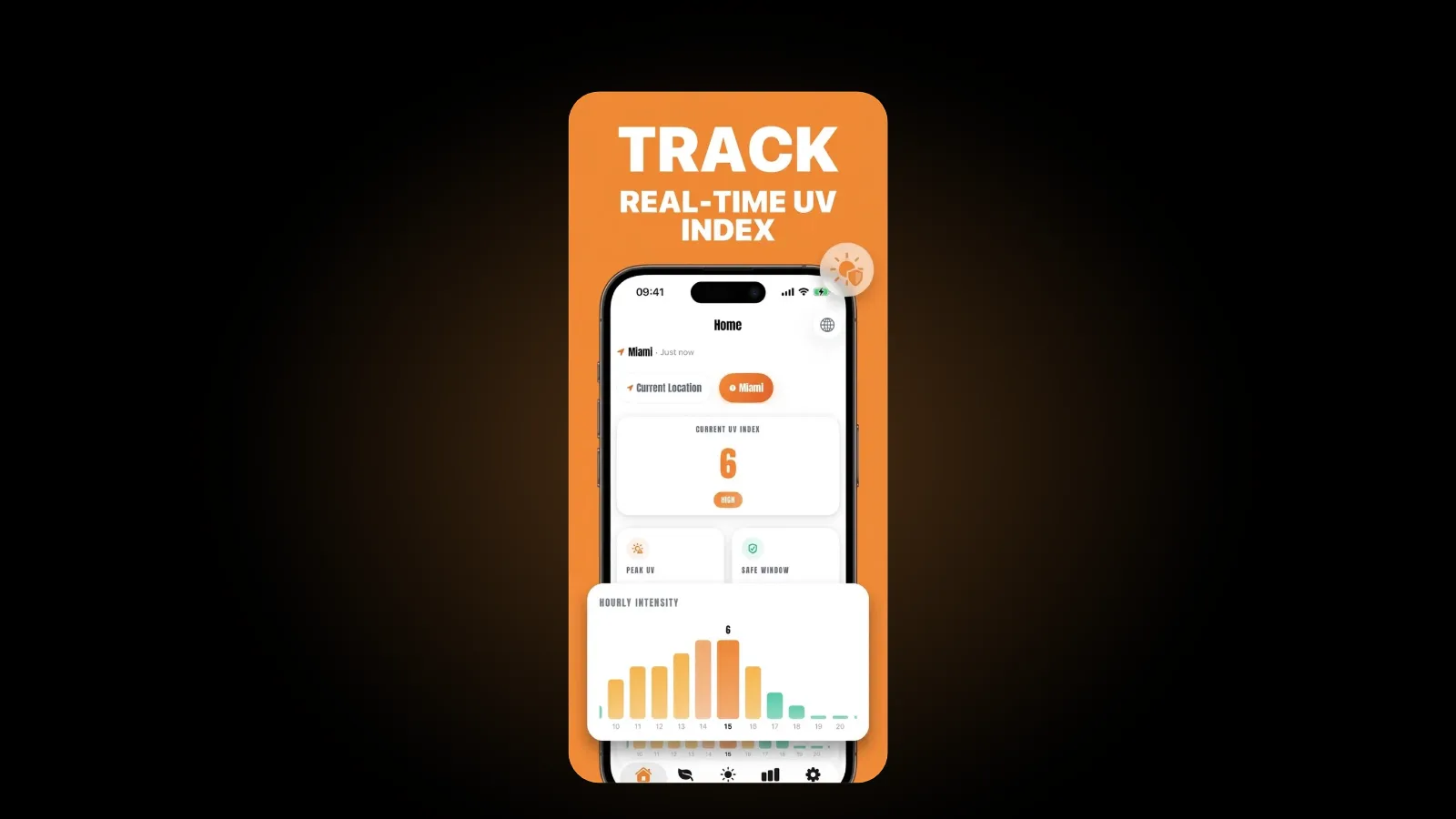
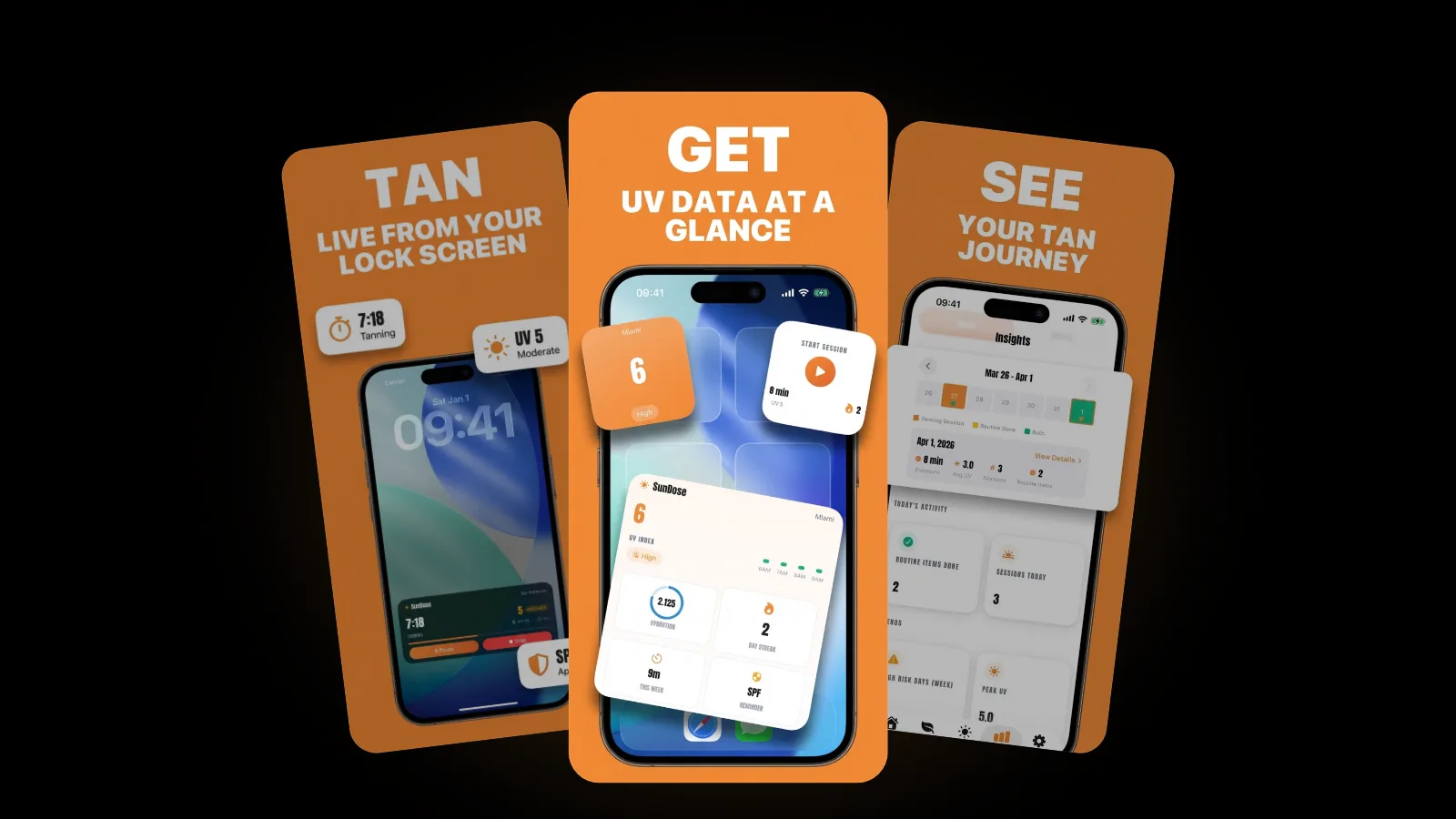
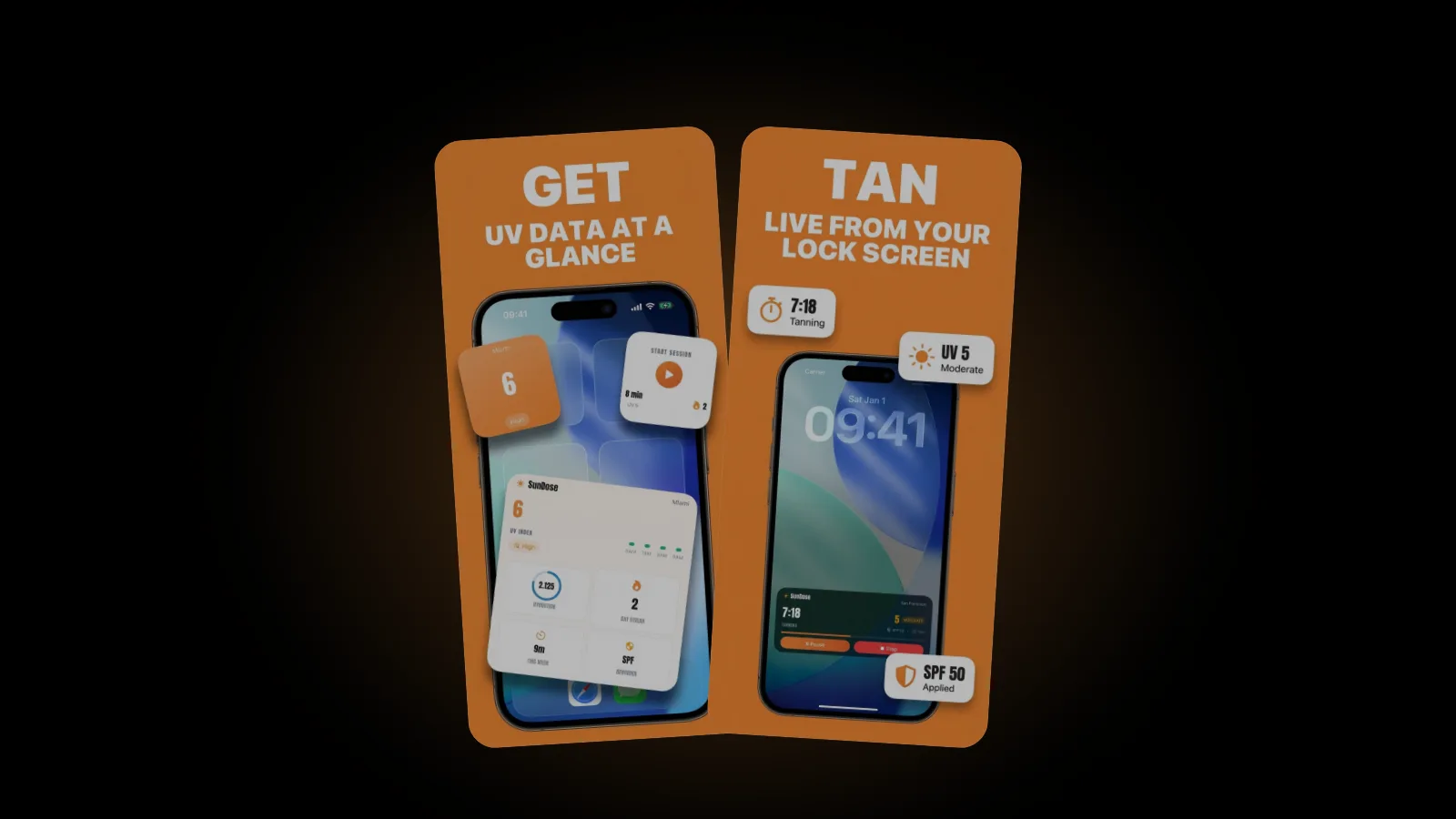
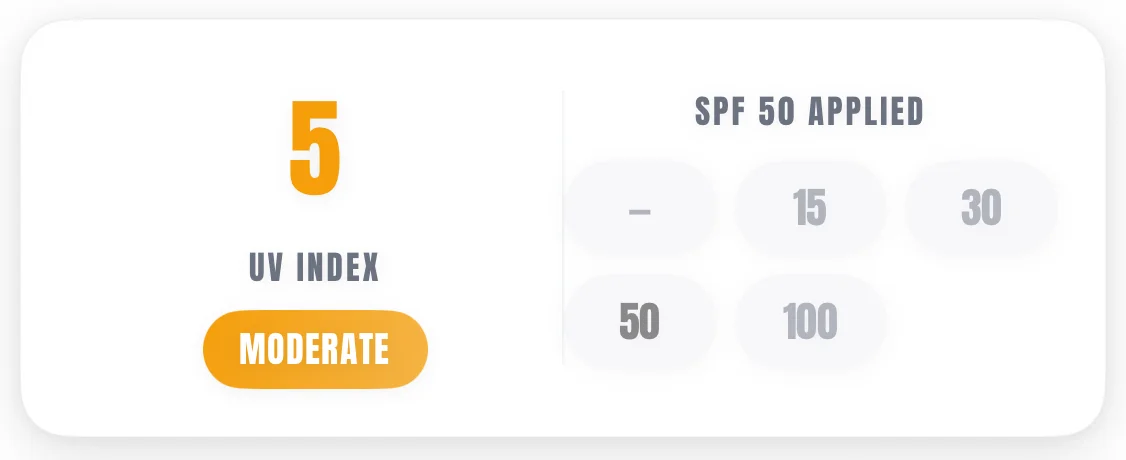
SunDose doesn't guess your sunscreen; it asks which SPF you put on. You pick 15, 30, 50 or 100 on the session screen, and the app weighs that with your skin type and the current UV index to suggest a session length between 1 and 180 minutes.
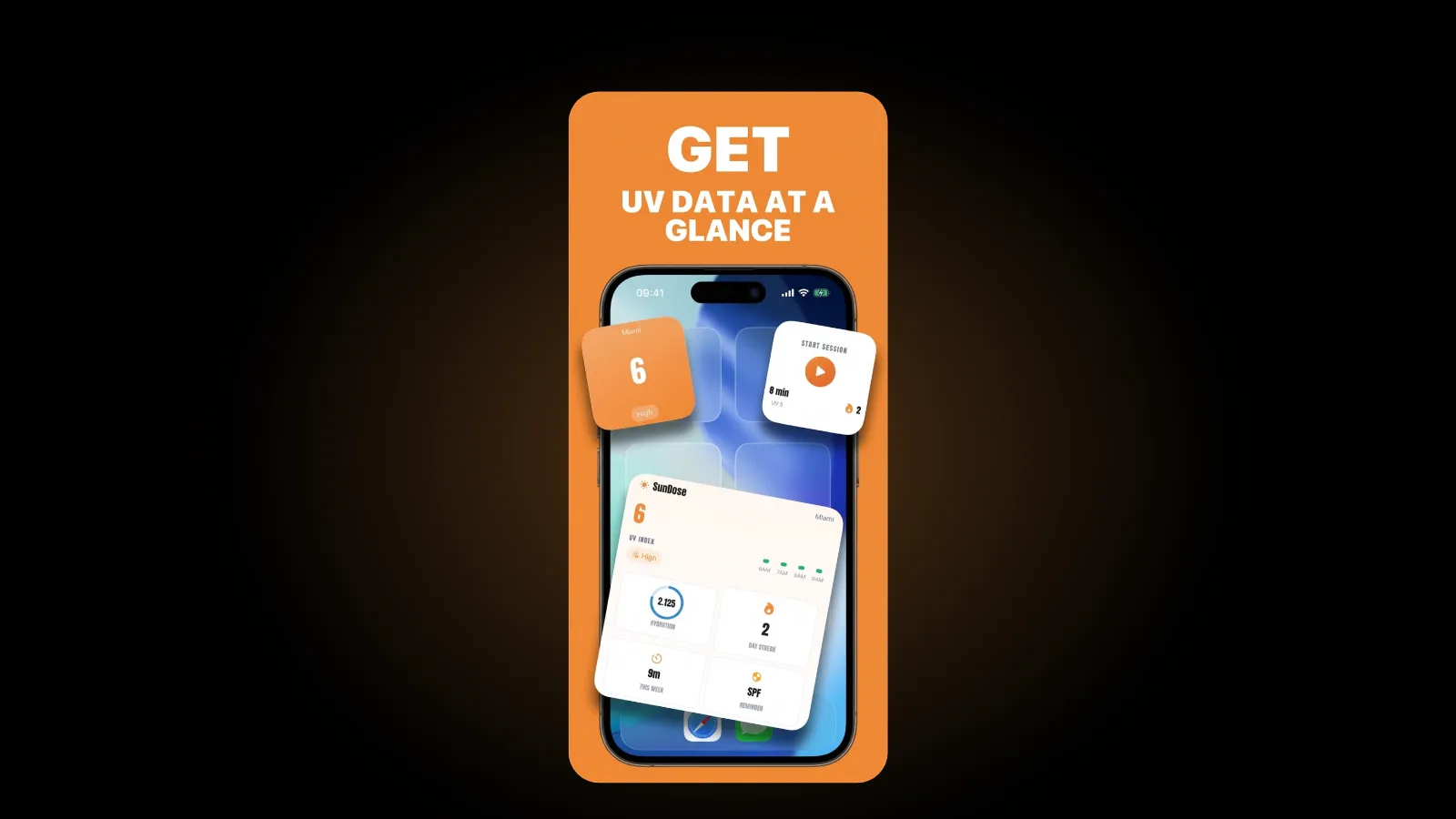
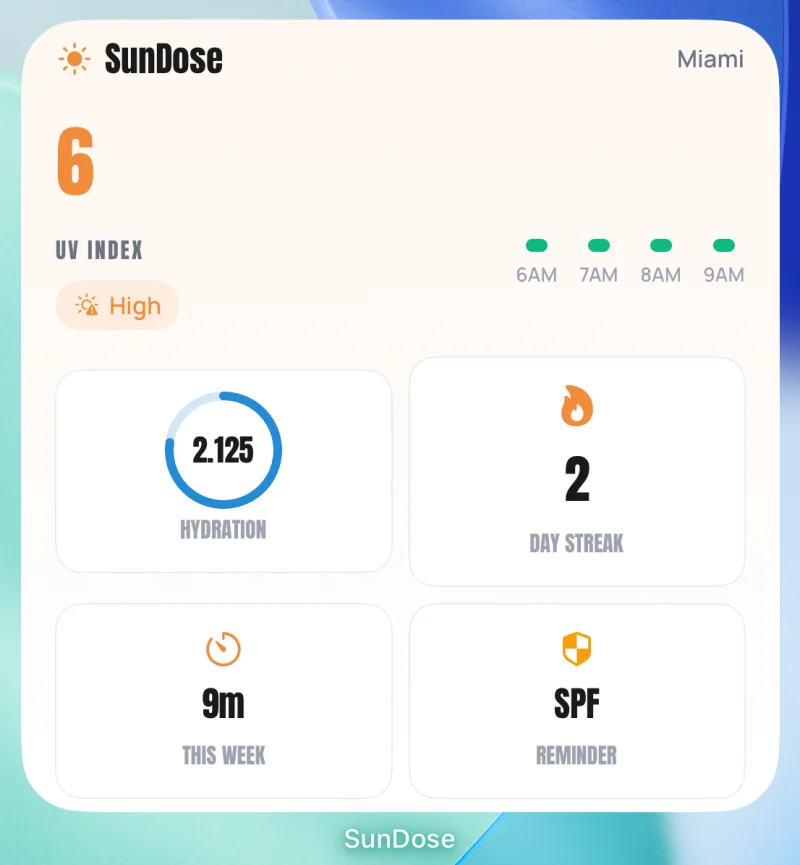
Reapply prompts follow the running session, so they arrive while you're still outside, with haptic and notification alerts to flip or reapply. An SPF reminder widget sits on the Home Screen. If you use something that makes skin more sensitive to UV, such as a retinoid or doxycycline, add it to your sensitivities and the suggestions get shorter. Our guide to medications that cause sun sensitivity covers the common ones.
SunDose can't see how thickly you applied sunscreen, and it is not a UV sensor on your skin; it works from the UV index reported for your location and your minutes outside. Treat a suggested length as a plan for time you'd spend outside anyway, not a reason to stay longer.
FAQ
Is SPF 30 enough?
For everyday use, yes, by AAD and NHS guidance: both set SPF 30 as the minimum, and the AAD says it blocks 97% of UVB rays. For long days outdoors, the Skin Cancer Foundation recommends a water-resistant, broad-spectrum SPF 50 or higher. Either one only works if you apply enough.
Does SPF 50 last longer than SPF 30?
No. The AAD says high-number SPFs last the same amount of time as low-number SPFs. Reapply about every two hours outdoors, and after swimming or sweating, whatever the number. The FDA adds that SPF relates to the amount of sun exposure, not to how long you stay out.
Is SPF 15 enough for everyday use?
The FDA's consumer advice sets the floor at broad spectrum SPF 15, while the AAD and NHS both recommend at least SPF 30. At the test dose, SPF 15 lets through about 6.7% of UVB, twice the 3.3% that gets through SPF 30, according to the 2022 dermatology review.
What does water resistant 40 or 80 minutes mean?
It tells you how long the sunscreen stays effective while you swim or sweat. The FDA requires water-resistant labels to state either 40 or 80 minutes, and no sunscreen is waterproof. The NHS says to reapply straight after being in water, even with a water-resistant product, and after towel drying.
Get started
SunDose is free to download on the App Store, with optional premium tiers; the live UV index, hourly forecast and session timer work without a subscription. It runs on iPhone with iOS 26 or later. See everything it does on the SunDose page or read more SunDose articles. SunDose is a wellness app, not a medical device.