SunDoseSkin type9 min read
Fitzpatrick skin types: find yours and what it means
Find your Fitzpatrick skin type with a chart of the six types by how skin burns and tans, a quick self-check, the scale's limits and what it means for you.
A Fitzpatrick skin type is a rating from I to VI that describes how your skin reacts to sun, from type I, which always burns and never tans, to type VI, the least likely to burn. You find yours by matching your usual burning and tanning to the chart below. Every type needs sun protection.
Below: the six types described by sun response, a self-check based on the Skin Cancer Foundation's quiz, the scale's limits and how SunDose uses your type. This is general information, not medical advice. For questions about your own skin, see a dermatologist.
What is the Fitzpatrick skin type scale?
The Fitzpatrick skin type scale, also called skin phototype, is a six-point classification of how skin responds to sunlight. The Skin Cancer Foundation's guide Your Skin Type and Skin Cancer, last updated in March 2025, says the system was developed in 1975 and classifies skin by the amount of pigment you have and your skin's reaction to sun exposure. Type I sits at one end: skin that always burns and never tans. Type VI sits at the other: deeply pigmented skin described as never burning. The foundation calls skin type a major factor in your risk for skin cancer, so the number matters well beyond tanning. Your type describes your natural skin before any sun, not a tan built up over a summer. It is a self-check tool rather than a diagnosis, and the questions that count most are about how you burn and tan. That is why this guide describes each type by sun response, not by looks.
What are the six Fitzpatrick skin types?
Each type is defined by how readily you burn and how readily you tan. Apple's HealthKit documentation lists the six Fitzpatrick skin types that Apple Health can store, and describes the scale as based on the skin's response to sun in terms of burning and tanning. Here is that response, type by type:
| Type | How it burns | How it tans |
|---|---|---|
| I | Always burns easily | Never tans |
| II | Burns easily | Tans minimally |
| III | Burns moderately | Tans uniformly |
| IV | Burns minimally | Tans moderately |
| V | Rarely burns | Tans profusely |
| VI | Never burns | Tans profusely |
If you are type II, expect to burn easily and tan only a little. The Cancer Institute NSW, a government cancer agency, describes types I and II as always burning easily and being very or extremely sun sensitive. It says people with these two types are at high risk of skin cancer.
One caution: "never burns" is the scale's wording, not a promise, as the section on darker skin explains.
How do you find your Fitzpatrick skin type?
The quickest route is the Skin Cancer Foundation's Fitzpatrick skin type quiz. If you are asking what your skin type is for sun, its eight questions cover:
- Your eye color, from light blue, gray or green to brownish black.
- Your natural hair color, from red or light blonde to black.
- Your natural skin color before any sun exposure.
- How many freckles you have on skin that is usually covered.
- How your skin responds to the sun, from always burning, blistering and peeling to never burning.
- How sensitive your face is to the sun.
- How deeply you tan.
- How often your skin tans at all.
Questions 5 to 8 carry the heart of the scale. Think back to how your skin has reacted in the past rather than testing it; the answer is already in your history. Then match your answers to the chart. If you sit between two types, picking the one that burns more easily is the cautious choice, because people and clinicians often rate the same skin differently.
What does your skin type mean for sunburn and skin cancer risk?
Lower types burn faster and carry more risk. In its skin type quiz, updated in February 2025, the Skin Cancer Foundation says people with types I and II face the highest risk of developing skin cancer, while types V and VI are at the lowest risk. It adds that everyone, regardless of skin type, should practice a complete sun protection strategy and have regular skin exams with a dermatologist.
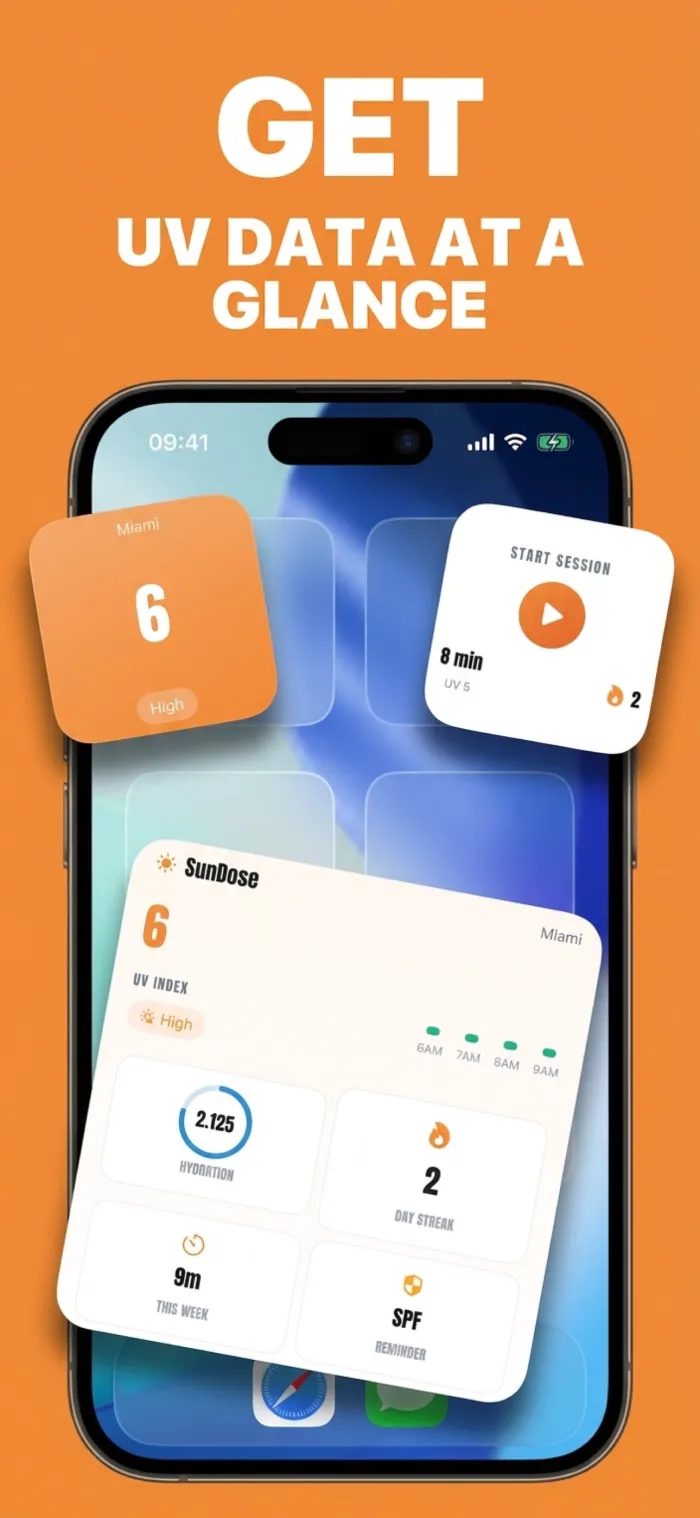
Your skin type tells you how quickly you tend to respond; the UV index tells you how strong the sun is right now. The World Health Organization's UV index Q&A recommends protective measures whenever the UV index is 3 or higher. NOAA's Climate Prediction Center UV index page notes that people who always burn and never tan have relatively short times to burn compared with those who almost always tan.
For minutes at different UV levels, see how long it takes to get sunburned. A tan is no free pass either: the Cancer Institute NSW says that when types III and IV darken in the sun, it is the skin signalling UV damage, which can lead to skin cancer. Our piece on the base tan myth goes further, and if you are weighing sun against vitamin D, see how much sun you need for vitamin D.
Can darker skin get sunburned?
Yes. Cancer Research UK's page Am I at risk of sunburn? says anyone can get sunburn or develop skin cancer, and that lower risk doesn't mean there's no risk. Sunburn can look different, too: on darker skin tones it may feel irritated, tender or itchy, while lighter skin may also go pink or red.
The Skin Cancer Foundation adds that people with darker skin tones, even those who always tan or rarely burn, can still get skin cancer. So types V and VI start from a lower risk, not from zero. Because sunburn may not show as redness, notice how your skin feels after time outdoors. If it turns sore, our guide on how to treat sunburn covers cooling, pain relief and when to see a doctor.
What are the limits of the Fitzpatrick scale?
The scale is a useful shorthand, but a rough one. Four limits are worth knowing:
- It started with lighter skin. A StatPearls chapter indexed on PubMed, Laser Fitzpatrick Skin Type Recommendations, says the phototypes were first described in 1972 as types I to IV for patients with white skin, and later modified to include types V and VI for darker skin.
- Self-report and clinician ratings differ. In a 2024 survey study of 472 patients and 20 providers at one US dermatology clinic, published in the Journal of Clinical and Aesthetic Dermatology, patients reported more burning and tanning than their provider-assigned types suggested, a mean difference of 0.51 points. The authors concluded that providers generally underestimated patients' ability to sunburn.
- It gets misused as a stand-in for race. The same authors note that using the scale as a surrogate for race or ethnicity has been criticized. They say its best use involves a thorough sun-exposure history from the patient.
- It describes your skin, not your week. The FDA's page The Sun and Your Medicine notes that certain types of medicines can cause sensitivity to the sun. Our guide to medications that cause sun sensitivity goes through the common ones.
The study authors conclude that the system has many limitations and needs to be reevaluated or replaced. Treat your type as a starting point, and let your own sun history overrule the chart.
How does SunDose use your skin type?
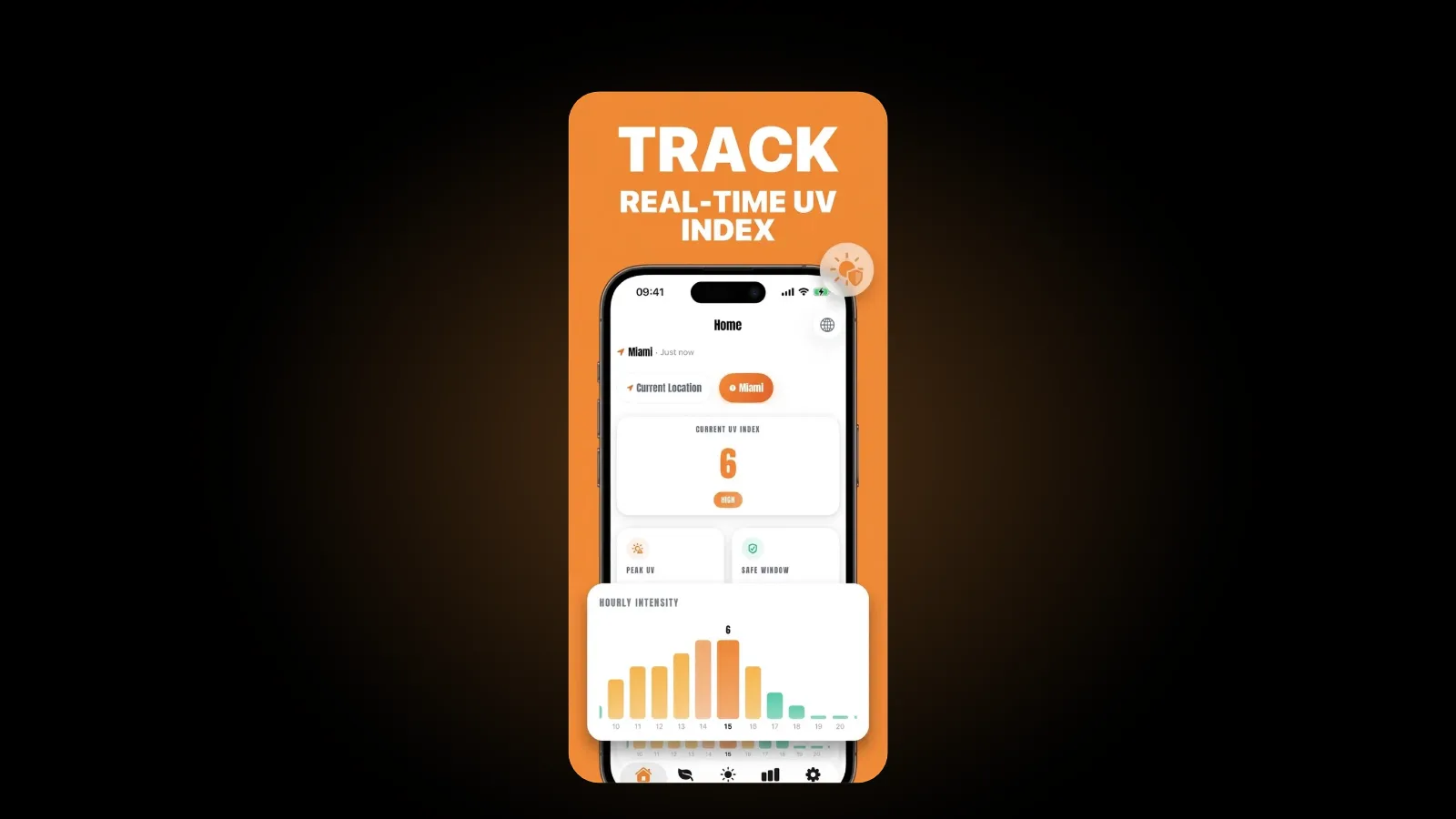
In SunDose, you set your skin type once in your profile, or let the app read it from Apple Health. It feeds two things:
- Suggested session length. The session timer runs from 1 to 180 minutes. The suggested length is calculated from your skin type, the current UV index for your location and the SPF you say you applied.
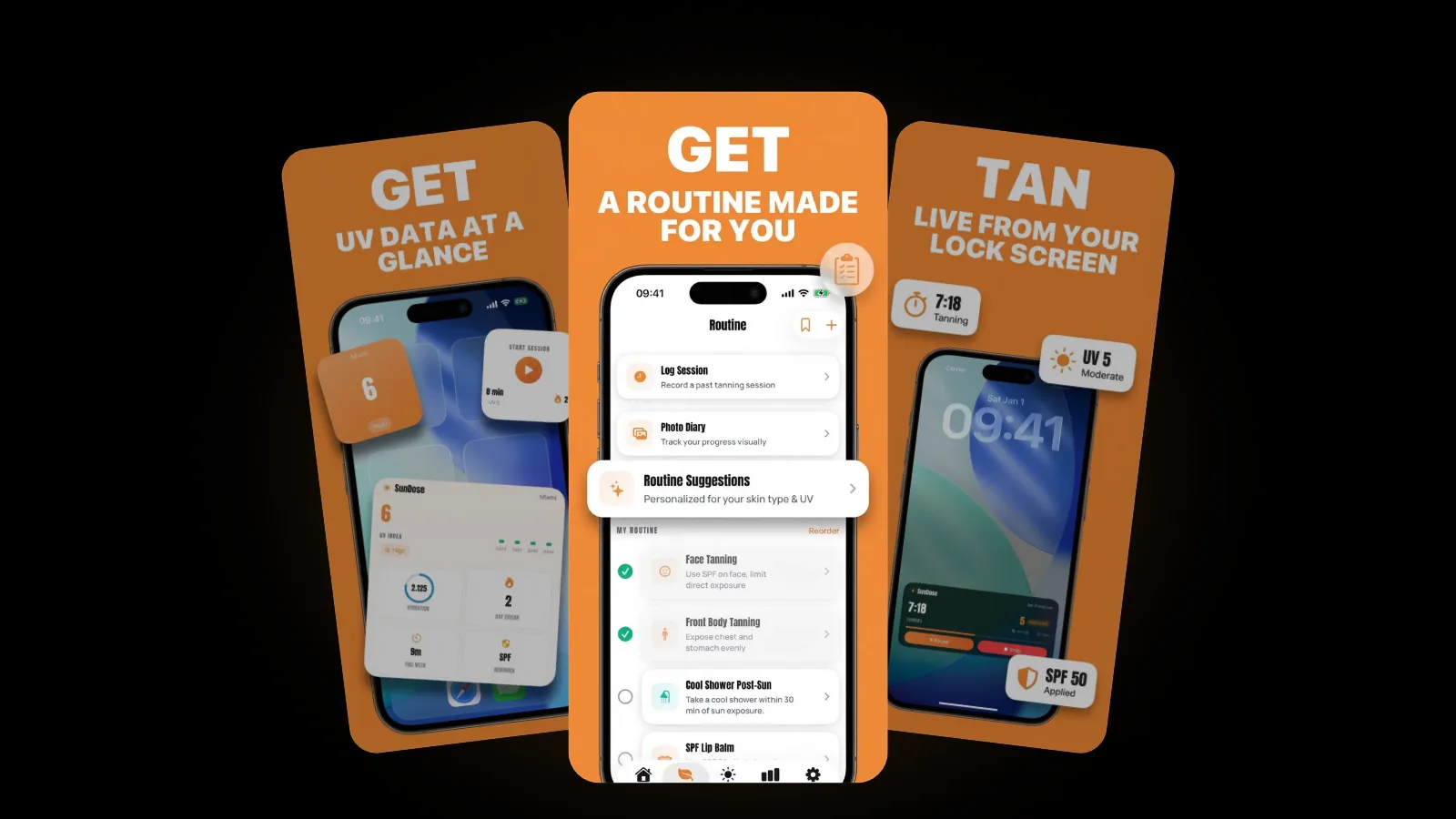
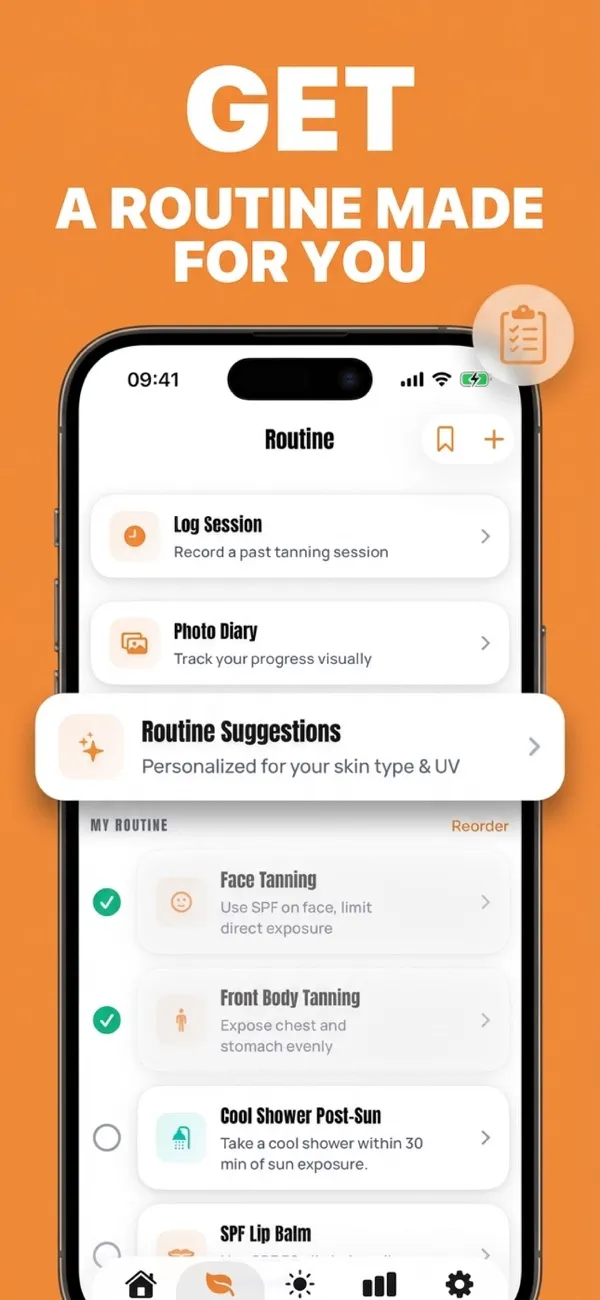
- Routine suggestions. Suggestions adapt to your skin type, any sensitivities you flag and the UV around you.
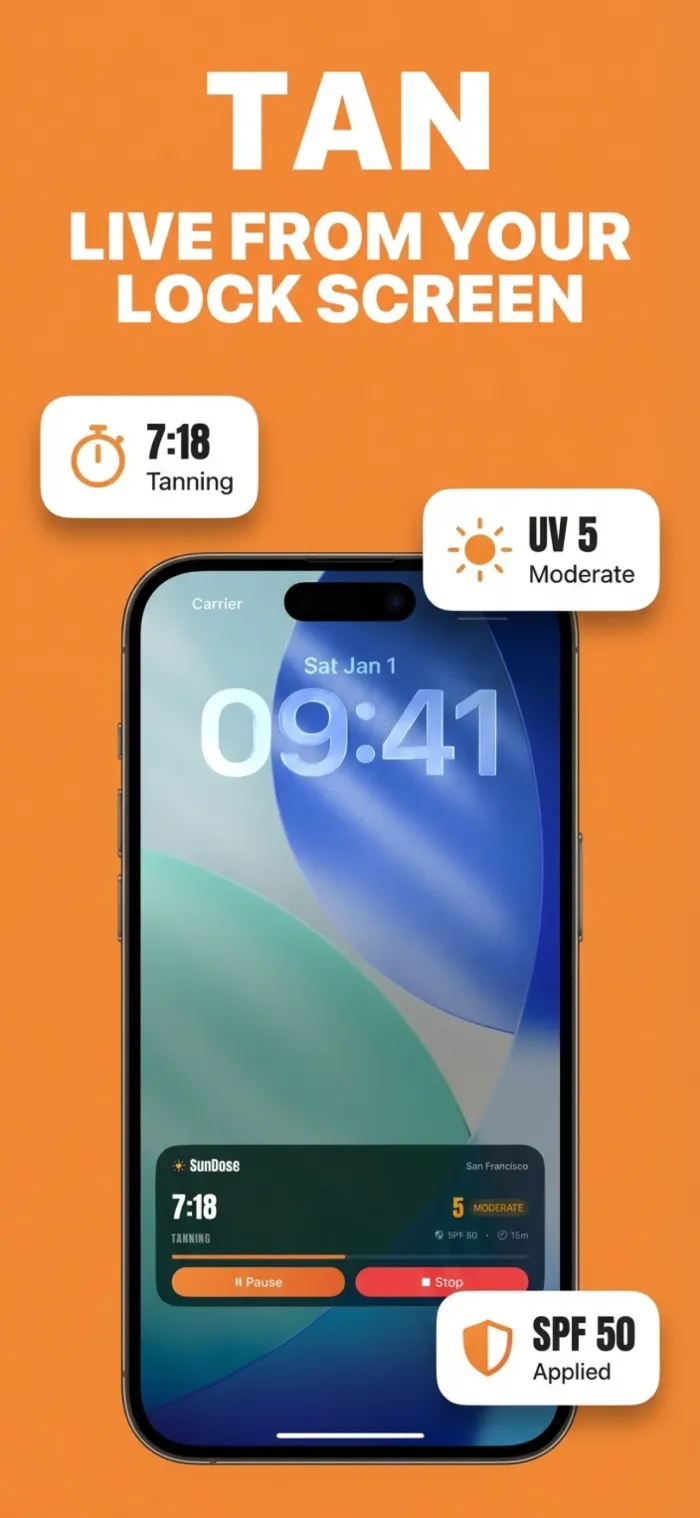
Flagged sensitivities, such as retinoids, exfoliating acids or tetracycline antibiotics like doxycycline, shorten the suggestions further. Reapply prompts run on the session clock, and a running session shows as a Lock Screen Live Activity.
Apple's documentation for reading the Fitzpatrick skin type says that if you haven't set a skin type, or haven't given an app permission to read it, the app sees it as not set. SunDose can read skin type and date of birth from Apple Health, and saves sessions back as time in daylight and UV exposure. Your profile and sessions stay on your device.
Treat the result as a starting point, not a diagnosis. SunDose records the reported UV for your location and your time outside; it is not a dosimeter measuring your skin.
FAQ
Which Fitzpatrick skin type burns most easily?
Type I. Apple's HealthKit definitions describe it as skin that always burns easily and never tans, and type II as skin that burns easily and tans minimally. The Skin Cancer Foundation says these two types face the highest risk of developing skin cancer.
Can your Fitzpatrick skin type change with a tan?
No. Your type is based on your natural skin: the Skin Cancer Foundation's quiz asks about your skin color before sun exposure and how your skin usually burns and tans. A tan does not raise your type. The Cancer Institute NSW describes skin darkening in the sun as a signal of UV damage.
Does Apple Health store your Fitzpatrick skin type?
Yes. Apple's HealthKit includes a Fitzpatrick skin type characteristic with six values, I to VI. Apps you allow can read it. If you haven't set it, or haven't granted permission, Apple's documentation says the app sees it as not set. SunDose can read it so you don't have to enter it twice.
Do darker skin types still need sun protection?
Yes. Cancer Research UK says anyone can get sunburn and that lower risk doesn't mean no risk. The Skin Cancer Foundation says everyone, regardless of skin type, should practice a complete sun protection strategy, and that people with darker skin can still get skin cancer.
Get started
SunDose is free to download on the App Store, with optional premium tiers. The live UV index, hourly forecast and session timer work without a subscription. It runs on iPhone with iOS 26 or later. SunDose is a wellness app, not a medical device. Learn more on the SunDose page or read all our SunDose articles.