AuraAura colors9 min read
Pink aura meaning: light pink, hot pink and dusty rose
Pink aura meaning explained: what light pink, hot pink and dusty rose say about love, friendship and self-kindness, and whether a pink aura is rare.
A pink aura is traditionally read as love in its gentlest form: tenderness, affection, compassion and kindness toward yourself. Light pink leans soft and caring, hot pink bold and playful, and dusty rose quiet and wistful. These meanings come from spiritual tradition, not science, and work best as a prompt for reflection.
Pink is one of the core colors in our guide to aura colors meaning. This deep dive uses the same color language we built into Aura, our iPhone app that turns your mood into a daily aura color.
What does a pink aura mean?
A pink aura is read as the soft side of red. Red stands for energy, passion and drive; pink keeps the warmth and drops the force, so readers link it to tenderness, affection, compassion and gentle care. When someone says they see pink around a person, they usually mean a person who leads with kindness: a good listener, quick to comfort, slow to judge. Pink is also read as self-kindness, the days you treat yourself the way you'd treat a friend. The shade changes the reading. A pale, clear pink is read as an open heart, a vivid hot pink as playful, outgoing affection, and a muted dusty rose as quieter love with some longing or tiredness in it. Like every aura color, it's a symbol from spiritual tradition, so treat it as a way to name a feeling, not a fact about who you are.
That is tradition, not evidence: the encyclopedia entry on the aura in parapsychology says aura claims "are not supported by scientific evidence".
Why is pink the color of tenderness and love?
Pink reads as love partly because of what it is. The encyclopedia entry on pink calls it "a pale tint of red or rose", and a tint is a color lightened with white. So pink is red with the heat turned down: warm, but gentle rather than urgent. Our guide to the red aura meaning covers the full-strength version.
The word was a flower first. The same entry says the color is "named after the flowers, pinks", plants in the genus Dianthus named for their frilled edges, and that pink was "first used as a color name in the late 17th century".
Aura reading made the link to love explicit. In "Man Visible and Invisible", whose 1903 edition is free on the Internet Archive, the Theosophist C. W. Leadbeater wrote that love is shown "by crimson and rose". Love that "thinks never of itself" appeared as "the most lovely rose-colour", and a rose "exceptionally brilliant and tinged with lilac" showed "the more spiritual love for humanity".
Psychology points the same way, at least for the word. In 2020, the journal Psychological Science published Universal Patterns in Color-Emotion Associations Are Further Shaped by Linguistic and Geographic Proximity, a survey of 4,598 people from 30 nations who matched 20 emotion concepts with 12 color terms. Pink was linked most strongly with love, joy and pleasure, and its pattern was the most consistent across nations of any color term (average r = .925). That says nothing about auras, but it explains why pink is so easy to read.
In the modern Western chakra system, the heart chakra, Anahata, is green, and the encyclopedia entry on chakras notes that these colors are modern: the seven rainbow colors "were added by Leadbeater in 1927". Many modern aura guides add pink as a second heart color. Our guide to the green aura meaning covers the green half.
Light pink, hot pink or dusty rose: what does each shade say?
Shade matters as much as hue. Readers treat a clear, pale pink as gentleness, a vivid pink as outgoing affection and a muted pink as quieter love. The readings below are a modern synthesis, not fixed rules.
| Pink shade | What it looks like | Traditional reading | A faded or muddy version is read as |
|---|---|---|---|
| Light pink | Pale, pastel, close to white | Gentleness, an open heart, new affection | Feeling fragile or easily hurt |
| Rose pink | Clear, medium pink | Steady, caring love | Love that waits to be returned |
| Hot pink | Vivid, saturated, close to magenta | Playful, outgoing affection | Craving attention or reassurance |
| Dusty rose | Muted, grayish pink | Quiet love, nostalgia, tenderness | Wistfulness or a need for rest |
| Lilac pink | Pink with a violet tint | Compassion with a reflective edge | Daydreaming instead of reaching out |
| Peach or salmon pink | Pink leaning toward orange | Warm, sociable kindness | Pleasing others at your own expense |
Light pink aura meaning
A light pink aura is read as gentleness and an open heart: new affection, being easy to talk to, a kind mood with room in it. A pale pink that looks thin or washed out is read as feeling easily hurt.
Hot pink aura meaning
Hot pink is pink at full volume, read as expressive affection: warmth that shows, flirting, making plans with people you like. Because it sits close to magenta, readers add confidence and individuality. A harsh, restless hot pink is read as a need for reassurance. Magenta itself is covered in our guide to rare aura colors.
Dusty rose aura meaning
Dusty rose is pink with gray in it. Grayer, muddier shades are usually read as tiredness or a need for rest, so dusty rose reads as love that has gone quiet: nostalgia, missing someone, tenderness on a tired day. It often describes care that needs some care back.
If your reading shows pink beside a separate purple, blue, yellow or orange, our guide to aura color combinations reads those pairs.
What are people with a pink aura said to be like?
People described with a pink aura are said to be warm, caring and easy to trust: someone who notices how others feel and does something about it. The traits most often listed:
- Caring. They help without being asked.
- Loyal. Their affection covers friends and family, not only partners.
- Gentle in conflict. They would rather repair than win.
- Romantic. Small gestures and remembered details.
- Sensitive. Other people's moods land hard, which is the gift and the strain.
The traditional shadow side is over-giving: putting everyone else first and saying yes when they mean no. And since most traditions say aura colors shift with your mood, pink often describes a day rather than a fixed personality.
Is a pink aura rare?
No. Pink belongs to the basic aura palette with red, orange, yellow, green, blue and purple, and guides seldom list it as rare. Auras can't be detected, so nobody knows how often any color appears. "Rare" and "common" are tradition, not data.
The shades guides call rare tend to be metallic or blended, such as silver, gold, rainbow and magenta, and a vivid pink leaning toward magenta is as close as pink gets. Pink's meaning is anything but rare: in the 30-nation survey above, it was the most consistent of any color term.
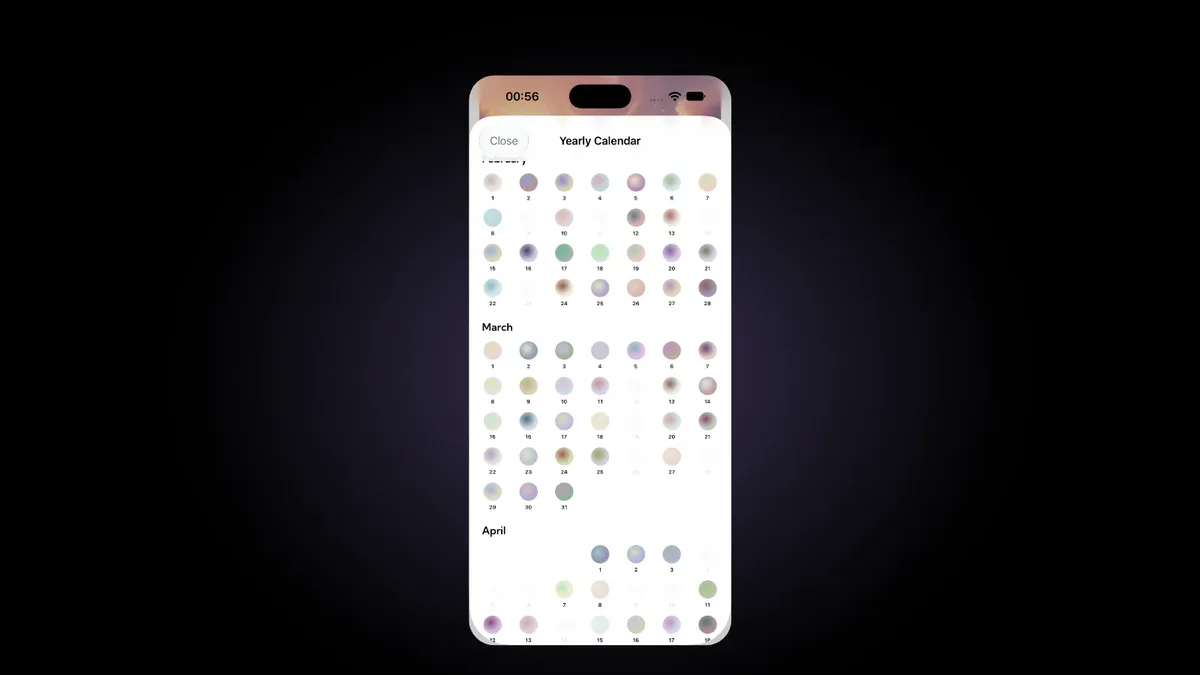
Your own rare color is the shade that turns up least in your record. Our guide to the year in pixels mood tracker shows how a color calendar makes that visible.
What does a pink aura say about love, friendship and self-kindness?
Pink is read as love in all its forms: romance, friendship and family, and compassion turned inward.
Pink aura in love
In a relationship, pink is read as tenderness rather than passion. Red is the rush; pink is the care that stays. A pink aura in love suggests you feel safe enough to be soft. Hot pink leans flirtatious, and dusty rose can mean missing someone.
Pink aura in friendship
Pink is just as often read as love between friends and family: the friend who checks in, the sibling who remembers.
Pink aura as self-kindness
This is the reading people skip. Pink is also linked to compassion toward yourself: rest without guilt, a gentler inner voice, forgiving a bad day. Are you pink for everyone except yourself? Take it as a nudge.
Aura colors are a prompt for reflection, not medical or psychological advice.
How does Aura show soft pink tones in your colors?
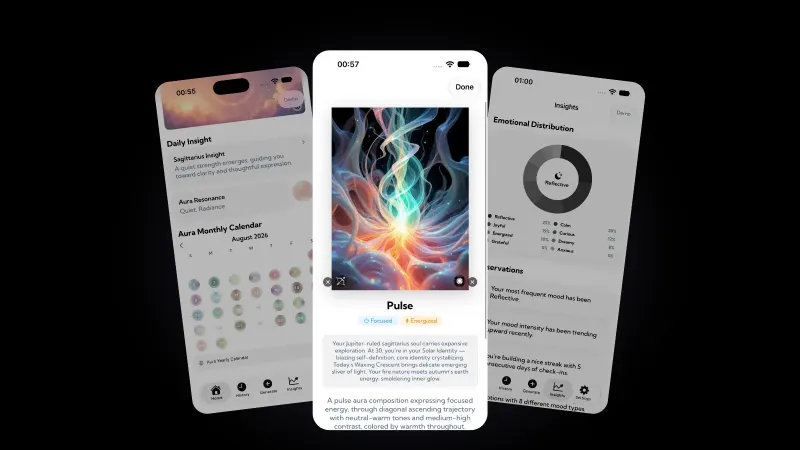
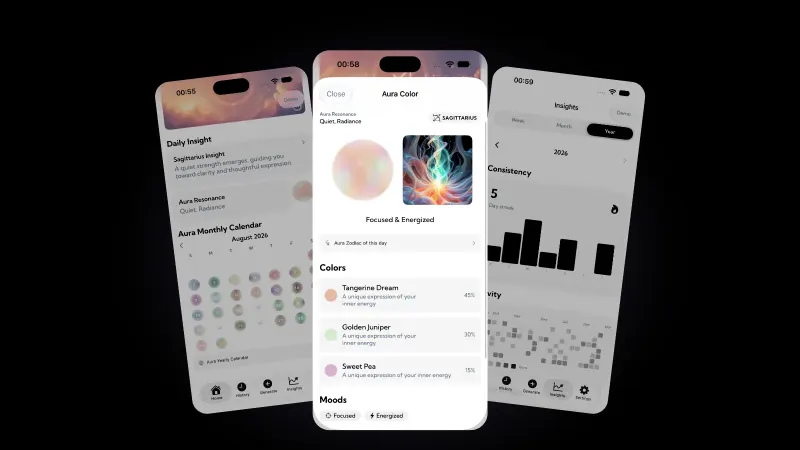
In Aura, you log your mood, choosing from 28 moods and up to three at once. Every day the app reads your mood, your zodiac sign and the sky above to reveal your aura color, which is part of Aura Pro. Each reading names its colors and shows how much of the reading each one takes.
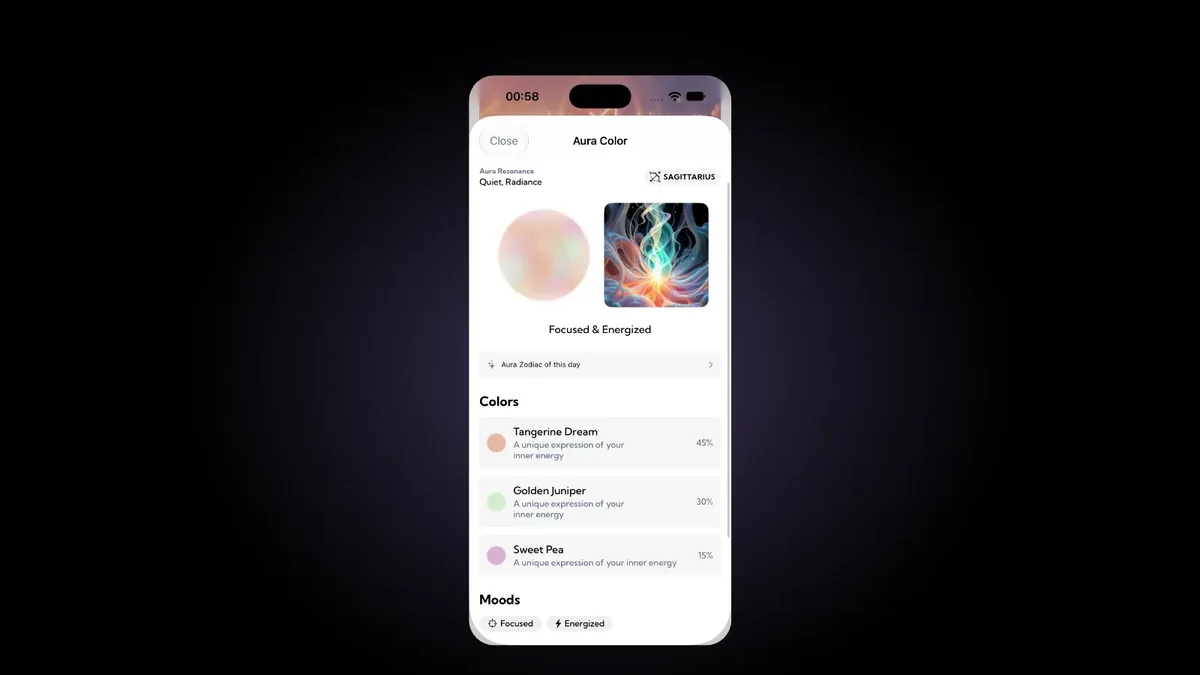
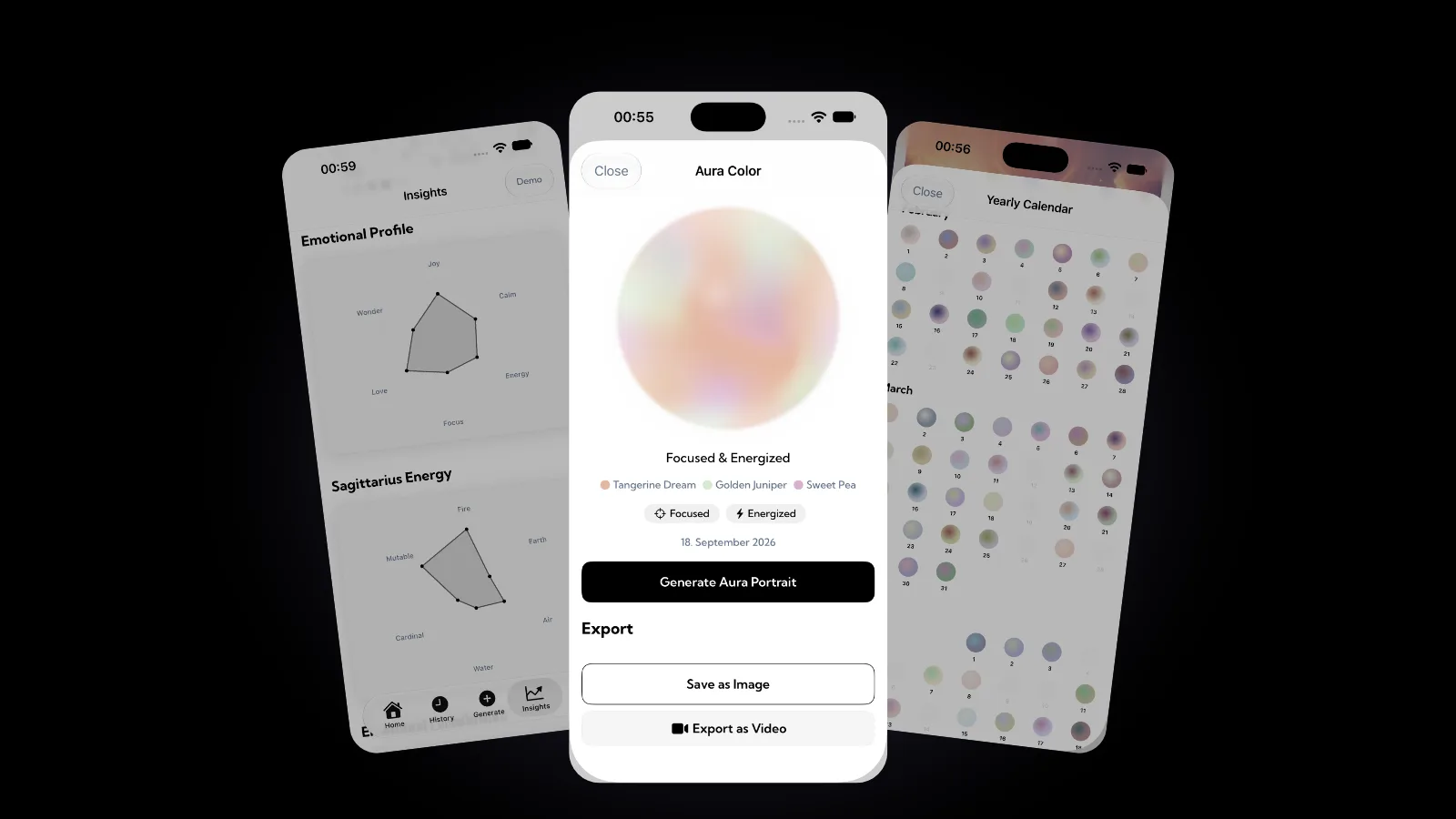
Here Sweet Pea is a lilac pink, close to Leadbeater's rose "tinged with lilac", and like pink itself it carries a flower's name. It takes 15 percent of a day logged as Focused and Energized, so pink doesn't only appear on romantic days. The color families are our reading, not something the app states.
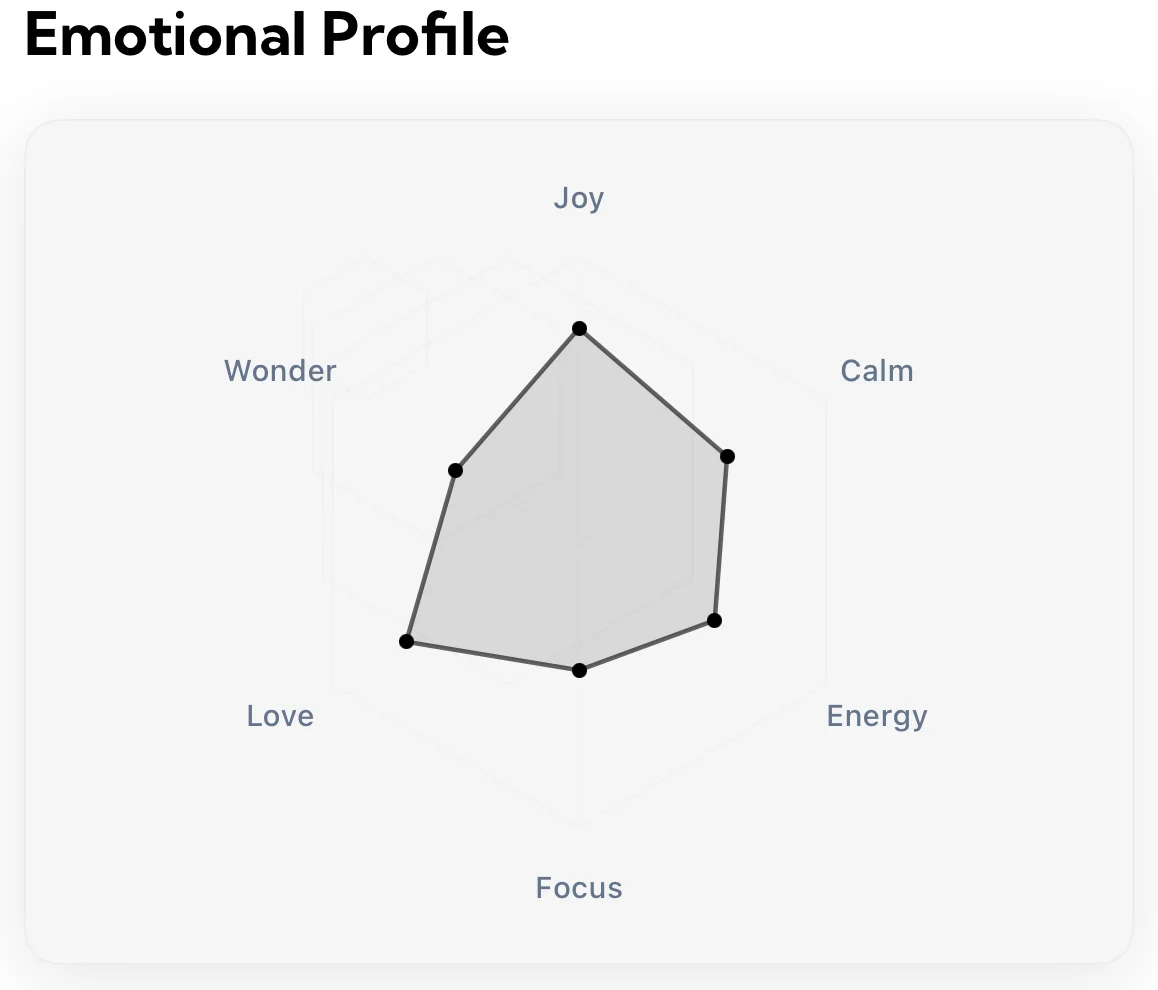
Over time, your colors fill a calendar of your emotional year, and the Insights screen charts your most frequent moods, your streaks and how your energy shifts. You can find more posts like this in the Aura category of our blog.
FAQ
Is a pink aura rare?
No. Pink is part of the basic aura palette, and guides rarely call it rare. Auras can't be measured, so there is no real count. A vivid pink close to magenta is the shade most often called unusual, and your own rare color is the one you see least.
What does a light pink aura mean?
A light pink aura is read as gentleness, an open heart and new or tender affection. A thin, washed-out light pink is read as feeling sensitive or easily hurt.
What does a hot pink aura mean?
Hot pink is read as playful, outgoing affection: warmth that shows, flirting and fun with people you like. Its closeness to magenta adds confidence and individuality. A harsh, restless hot pink is read as a need for attention or reassurance.
Is a pink aura always about romance?
No. Pink covers romantic love, but readers apply it just as often to friendship, family and kindness toward yourself. It can appear on a focused, busy day too: read it as warmth in your mood, whoever it's aimed at.
Get started
If you want to see how often soft pink tones show up in your colors, Aura is free to download on the App Store for iPhone, with an optional Aura Pro subscription that includes your daily aura color. No account is needed, your mood history and journal are stored on your device, and your data is never sold.