SunDoseUV index9 min read
UVA vs UVB: what each does to skin and how to block both
UVA vs UVB: UVB causes most sunburns, while UVA reaches deeper and passes through glass. See how sunscreen labels show each and what the UV index misses.
UVB is the shorter-wavelength UV behind most sunburns. UVA is longer, reaches deeper into the skin, ages it and passes through most window glass. Cancer Research UK says both can cause skin cancer. To block both, pick SPF 30 or higher with UVA protection on the label: "broad spectrum", 4 or more stars, or UVA in a circle.
Below: what each band does, how much glass and car windows stop, one table of the sunscreen labels you'll see, and why the UV index is mostly a sunburn number. We make SunDose, an iPhone app that shows the UV index for your location hour by hour. This is general information, not medical advice.
What is the difference between UVA and UVB?
UVA and UVB are two bands of ultraviolet radiation from the sun, told apart by wavelength. The World Health Organization's Q&A on ultraviolet radiation puts UVA at 315 to 400 nanometres and UVB at 280 to 315. Most UVB is absorbed on its way through the atmosphere, while UVA is not filtered as much, so the WHO says UVA accounts for approximately 95 percent of the UV reaching the Earth's surface. Inside the skin, Cancer Research UK's page on how the sun and UV cause cancer says UVB reaches the outer layer, the epidermis, and causes most sunburns. UVA reaches deeper, into the dermis, and is responsible for ageing the skin while contributing less to sunburn. Both can damage skin and cause skin cancer. Glass splits them as well: the Skin Cancer Foundation says UVB does not penetrate glass, but UVA can. And sunscreen labels rate them separately.
| UVA | UVB | UVC | |
|---|---|---|---|
| Wavelength (WHO) | 315-400 nm | 280-315 nm | 100-280 nm |
| Reaches the ground? | Yes, about 95 percent of surface UV (WHO) | Mostly absorbed by the atmosphere (WHO) | No, completely filtered out (WHO) |
| Main effect | Skin ageing, immediate tanning (WHO) | Most sunburns (Cancer Research UK) | None from sunlight |
| Window glass (Skin Cancer Foundation) | Can pass through | Does not penetrate | Not relevant |
| Sunscreen label | Broad spectrum, stars, UVA circle | SPF number | Not rated |
What does UVB do to your skin?
UVB burns. The WHO calls it very biologically active, though it cannot penetrate beyond the superficial skin layers. It causes delayed tanning and burning, enhances skin ageing and significantly promotes the development of skin cancer. The Skin Cancer Foundation's page on UV radiation, updated in July 2026, says UVB intensity fluctuates, peaking late-morning to mid-afternoon from spring to fall in temperate climates.
The WHO's UV index guide adds that small amounts of UV are essential in the production of vitamin D, which our guide to how much sun you need for vitamin D covers.
What does UVA do to your skin?
UVA goes deeper and is around for more of the day. The WHO says it penetrates into the deeper layers of the skin, is responsible for the immediate tanning effect and contributes to skin ageing and wrinkling. The Skin Cancer Foundation is more direct: UVA rays are proven to contribute to the development of skin cancer, and UVA is the main type of light used in most tanning beds.
The foundation also says UVA keeps the same level of strength during daylight hours throughout the year, and can penetrate windows and cloud cover. So a grey day isn't empty of UVA, as our guide to getting sunburned on a cloudy day explains. And the tan? The WHO's guide calls tanning a sign of damage to the skin, which is why the base tan myth doesn't hold up.
What about UVC?
UVC from the sun never reaches you. The WHO says UVC, 100 to 280 nm, is the most damaging type of UV radiation, but it is completely filtered by the atmosphere. Cancer Research UK says the ozone layer blocks it completely. That's why no sunscreen label rates it.
Does glass block UVA or UVB?
Window glass stops UVB but often lets UVA through. In its July 2026 article 15 myths about sun safety debunked, Cancer Research UK says indoors you're mostly protected from sunburn, but UVA can pass through glass, so long periods driving or in a sunny conservatory can mean long-term skin damage.
How much gets through depends on the glass:
- Car windscreens are laminated. In a 2016 JAMA Ophthalmology study of 29 cars, they blocked an average of 96 percent of UVA.
- Car side windows are usually tempered glass. The same study found they blocked 71 percent of UVA on average, anywhere from 44 to 96 percent. Its author suggests this may partly explain reported higher rates of left-sided facial skin cancer.
- Home windows vary. A February 2025 University of Wollongong explainer says most residential glass lets 45 to 75 percent of UVA through.
- Tint and laminated glass help most. The explainer says window tinting blocks around 95 percent of UVA, and laminated glass or double-glazed tinted windows let less than 1 percent through.
Can you get sunburned through a window?
It's less likely than outdoors, but long spells count. Cancer Research UK says you're mostly protected from sunburn indoors. The University of Wollongong explainer estimates that at midday in summer, a burn could take about an hour in a car without tinted windows, and 30 minutes beside a home window that lets more UVA through. Stuck by a sunny window? Cancer Research UK suggests clothes, a hat and UV-protection sunglasses.
How do sunscreen labels show UVA and UVB protection?
SPF is a UVB number. The FDA's guide to sunscreen says SPF values primarily indicate a sunscreen's UVB protection, and the NHS calls SPF a measure of UVB protection. UVA protection is shown separately, depending on where the bottle was sold.
| Label | Where you'll see it | What it tells you |
|---|---|---|
| SPF number, such as 30 or 50+ | Everywhere | Sunburn protection, mainly from UVB (FDA, NHS) |
| "Broad spectrum" | US, sometimes UK | Protects against UVA and UVB (FDA, AAD, NHS) |
| UVA star rating, up to 5 stars | UK | Amount of UVA protection; pick 4 stars or more (NHS) |
| "UVA" in a circle | UK and EU | Meets the EU standard for UVA protection (NHS) |
The American Academy of Dermatology's guide to sunscreen labels sums it up: broad spectrum covers UVA (aging) and UVB (burning) rays. The FDA says a sunscreen that isn't broad spectrum, or has an SPF below 15, must warn that it only helps prevent sunburn, not skin cancer or early skin aging. For the SPF number itself, see SPF 30 vs SPF 50.
To block both UVA and UVB:
- Pick SPF 30 or higher with UVA cover: at least 4 stars in the UK, per the NHS, or broad spectrum in the US.
- Don't rely on sunscreen alone. The NHS says to wear suitable clothing and use shade when the sun's at its hottest.
- Cover up by sunny windows and on long drives.
- Time it with the UV index. The WHO's guide says protection is necessary above 3. See what each UV level means.
Which kind of UV does the UV index measure?
Both, but not equally. The WHO's Global Solar UV Index: A Practical Guide says the index is formulated using the CIE reference action spectrum for UV-induced erythema, the skin reddening of sunburn. Each wavelength counts by how well it burns skin, so the number is, at heart, a measure of burning power.
The Hong Kong Observatory explains on its page about measuring the UV index that in this weighting, the damaging effect of UVB on skin is much larger than that of UVA. UVA is far more plentiful at ground level, but each unit counts for much less.
Here's what most explainers skip. Because the scale is built on sunburn, a low reading means a low burn risk, not zero UVA, and UVA is the part that comes through a car's side window. The WHO guide also defines the index for a horizontal surface, not for light coming sideways through glass.
This doesn't overturn the official advice: the WHO guide says that below 3, the risk of damage is limited and, under normal circumstances, no protective measures are needed. Just read the number for what it is: a sunburn forecast, not a UVA meter.
What does SunDose show, and what doesn't it?
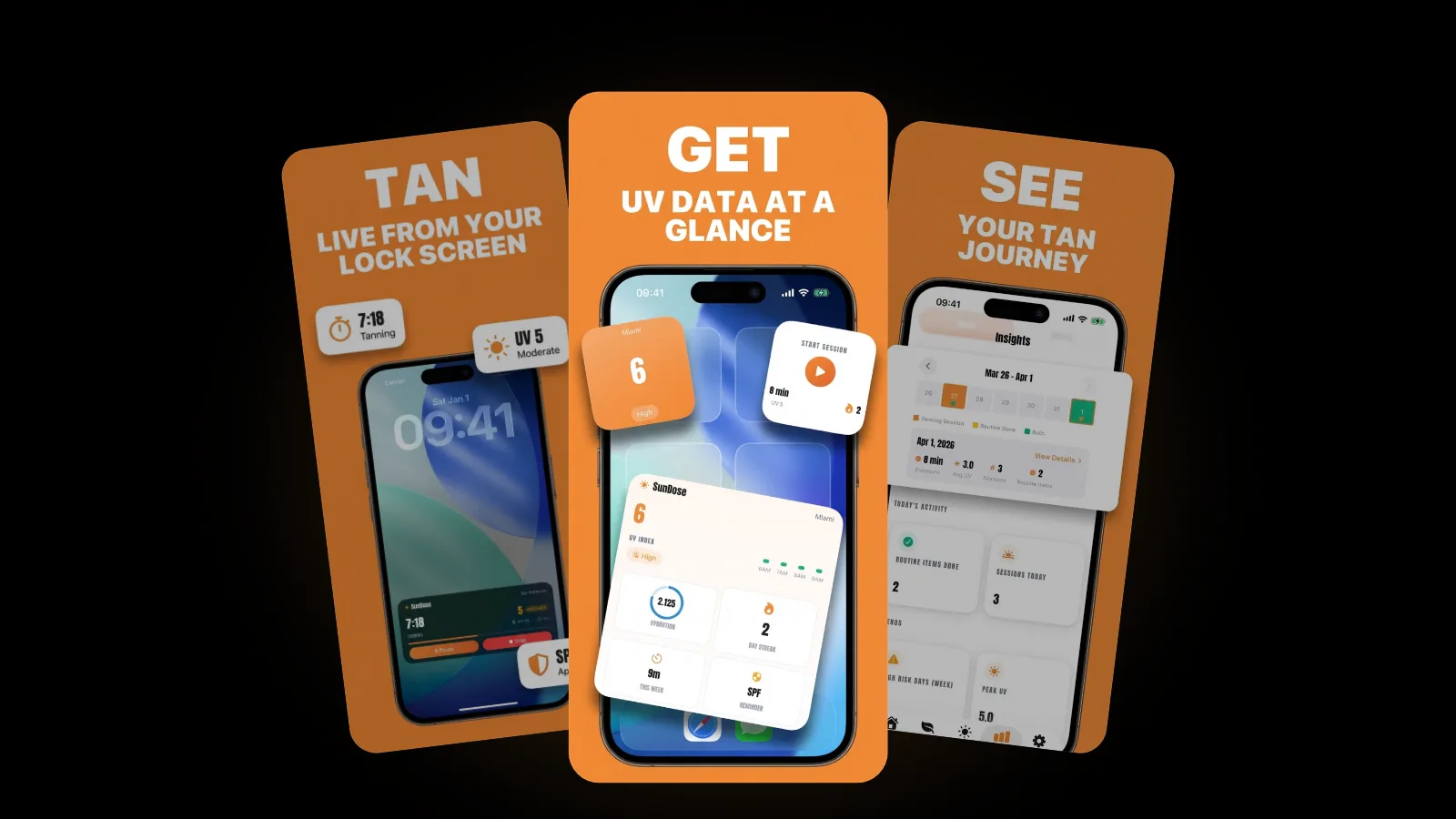
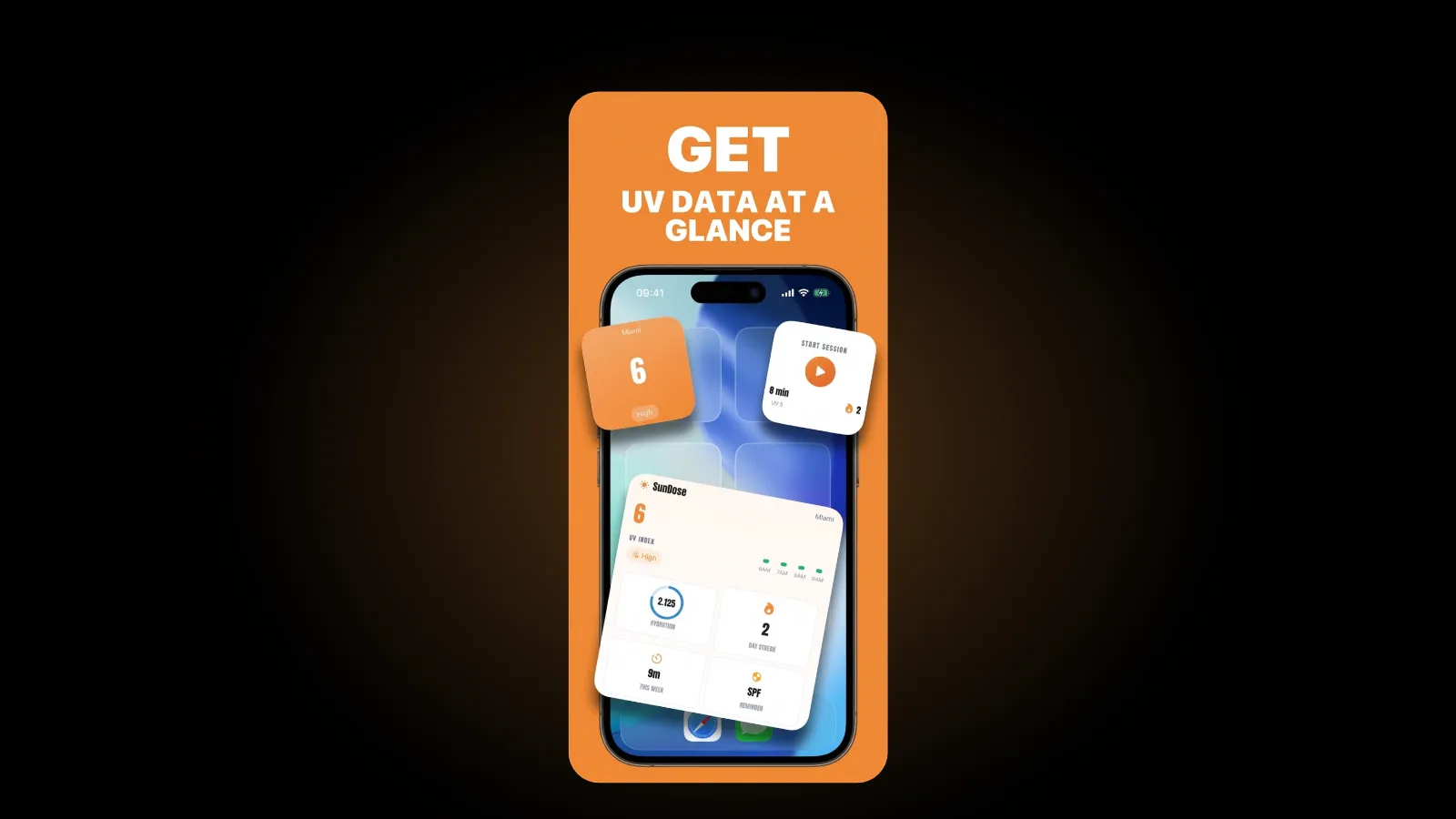
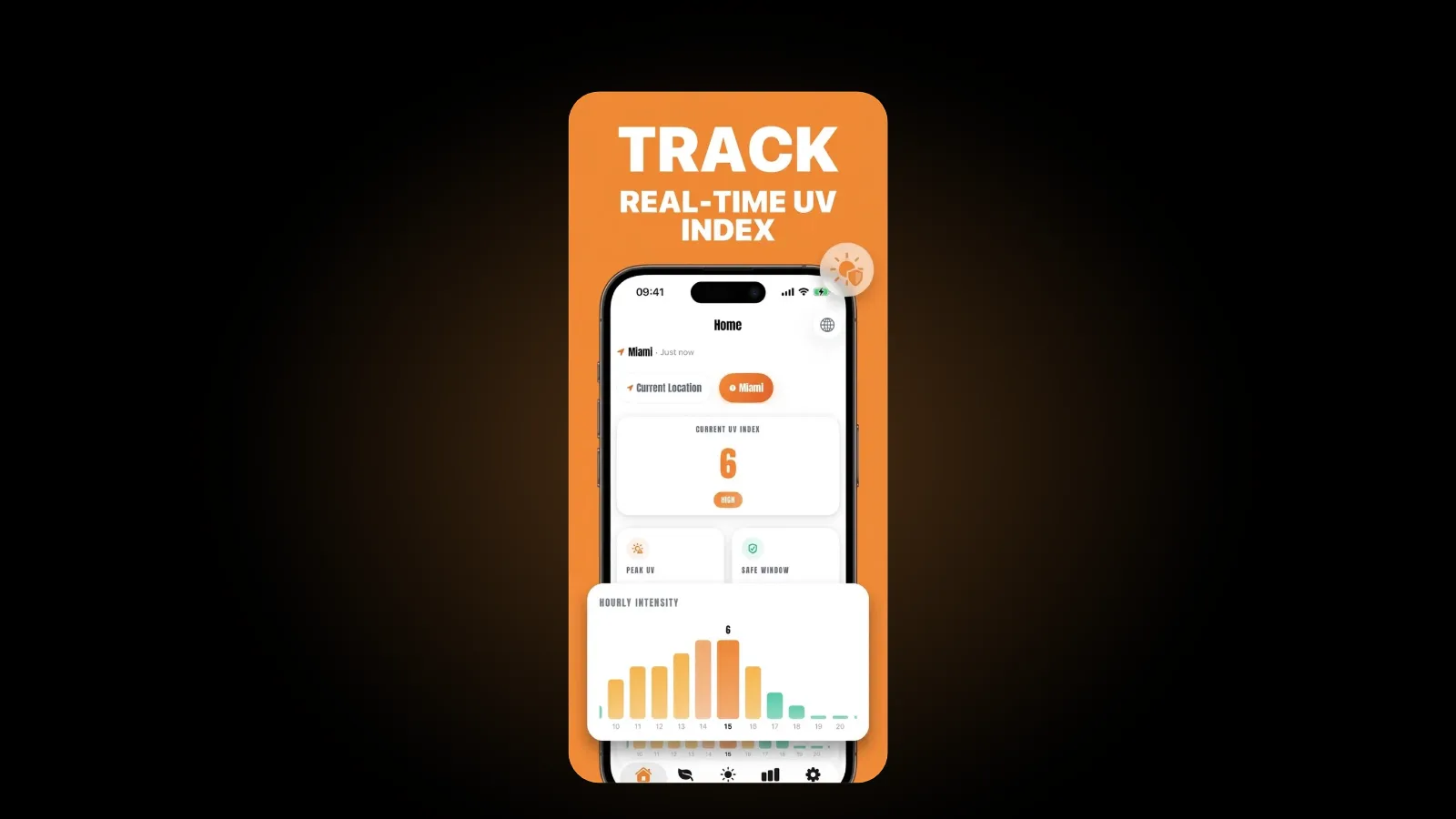
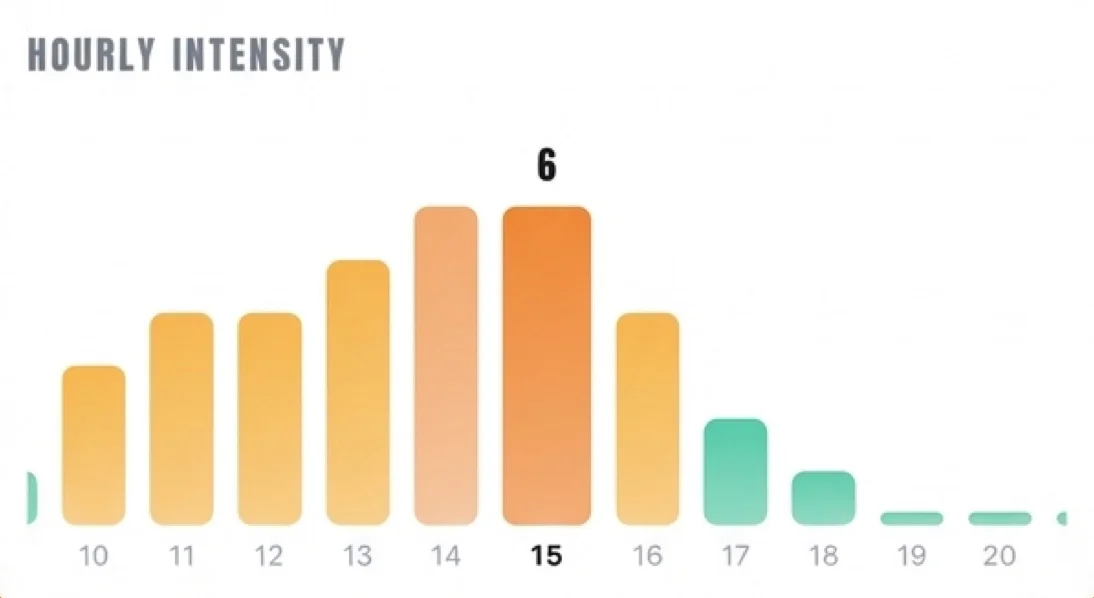
SunDose shows the live UV index for your location, with hourly and weekly forecasts from Apple WeatherKit. That's the same sunburn-weighted number described above: SunDose doesn't give separate UVA and UVB readings, and it can't measure what comes through your window. What it does with the number:
- Shows the peak, hour by hour, so you can plan shade around it.
- Times sessions. It suggests 1 to 180 minutes from your skin type, the current UV and the SPF you say you applied, with reapply prompts on the session clock.
- Shortens for sensitivities, such as retinoids, exfoliating acids, isotretinoin or doxycycline.
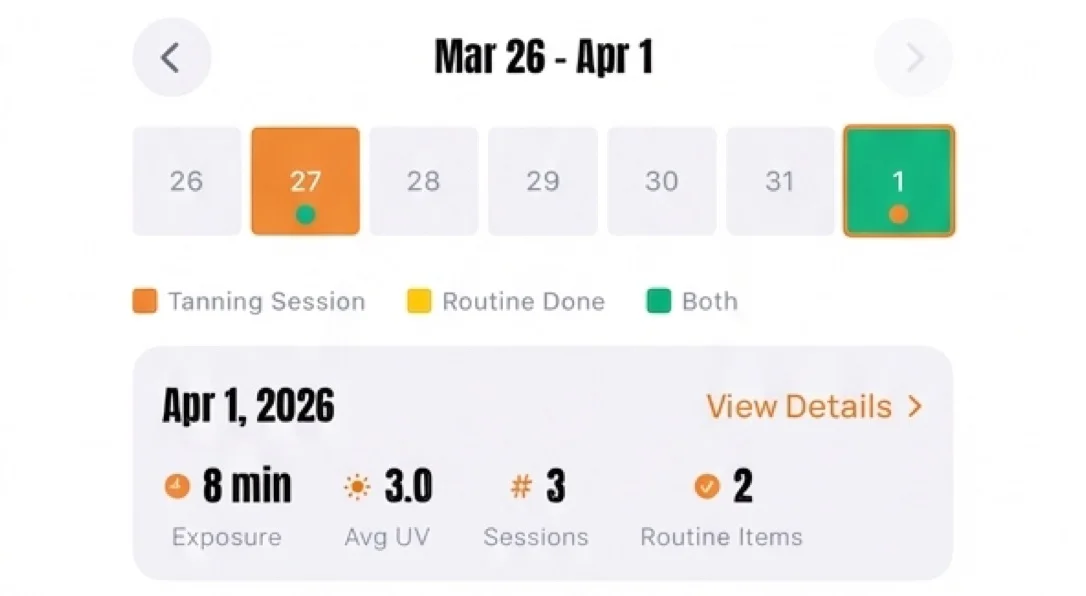
- Keeps a record. Insights show total minutes, average UV, higher-risk days and a 30-day calendar.
SunDose records the reported UV index and the time; it is not a dosimeter, and a timer doesn't make any tan safe. Your data stays on your device, with no ad tracking.
FAQ
Which is worse, UVA or UVB?
Neither is harmless. Cancer Research UK says UVB causes most sunburns, UVA is responsible for ageing the skin, and both can cause skin cancer. UVA is also the bigger share: about 95 percent of the UV reaching the ground, according to the WHO.
What does broad spectrum mean on sunscreen?
It means the sunscreen protects against both UVA and UVB, per the FDA and the American Academy of Dermatology. A US sunscreen that isn't broad spectrum, or has an SPF below 15, must warn that it only helps prevent sunburn, not skin cancer or early skin aging.
Does the UV index measure UVA?
Partly. The WHO's guide says the index is weighted by the erythema, or sunburn, action spectrum, and the Hong Kong Observatory notes that UVB's effect in that weighting is much larger than UVA's. A low reading means a low burn risk, not zero UVA.
Do I need sun protection indoors or in the car?
It depends on the glass and how long you're there. Cancer Research UK says you're mostly protected from sunburn indoors, but UVA passes through glass, so long drives add up. Car side windows blocked 71 percent of UVA on average in a 2016 study, against 96 percent for windscreens.
Get started
SunDose is free to download on the App Store for iPhone with iOS 26 or later, with optional premium tiers; the UV index, hourly forecast and session timer work without a subscription. SunDose is a wellness app, not a medical device. See everything it does on the SunDose page or read more SunDose articles.