SunDoseHydration9 min read
How much water to drink in hot weather: signs and limits
How much water to drink in hot weather, with EFSA, NHS, WHO and CDC figures side by side, a per-hour limit, dehydration signs and heat stroke red flags.
In hot weather, drink more than your everyday baseline. EFSA sets that baseline at 2 litres of total water a day for women and 2.5 litres for men, food included. When you're working or active in the heat, the CDC suggests 1 cup (about 240 ml) every 15 to 20 minutes, and no more than 6 cups an hour.
Below, the official numbers sit side by side, from the European Food Safety Authority (EFSA), the NHS, the World Health Organization (WHO) and the CDC's National Institute for Occupational Safety and Health (NIOSH). Then come the warning signs, who needs extra care and how SunDose can help you keep count. This is general information, not medical advice. With a heart or kidney condition or a fluid limit, follow your doctor instead.
How much water should you drink in hot weather?
There's no single number for a hot day, but the official figures give you a floor and a ceiling. In 2010, EFSA set adequate intakes of 2.0 litres of total water a day for women and 2.5 litres for men. Its scientific opinion on water says those totals include drinking water, drinks of all kinds and the water in food, and only apply at moderate temperatures and moderate activity. The NHS page on water, drinks and your health puts the everyday aim at 6 to 8 cups or glasses of fluid, and says you may need more in a hot environment or when you're active for long periods. For hot weather, the WHO's heat and health fact sheet advises drinking water regularly: 1 cup an hour and at least 2 to 3 litres a day. The ceiling comes from NIOSH: no more than 6 cups (48 oz, about 1.4 litres) in any hour.
| Guidance | Amount | When it applies | Source |
|---|---|---|---|
| Daily total water | 2.0 L for women, 2.5 L for men, food included | Moderate temperature and activity | EFSA, 2010 |
| Daily fluids | 6 to 8 cups or glasses | Everyday guide; more in a hot environment | NHS |
| Hot weather | 1 cup an hour, at least 2 to 3 L a day | Keeping cool and hydrated in heat | WHO |
| Working in heat | 1 cup (8 oz) every 15 to 20 minutes | Moderate activity lasting under 2 hours | CDC, NIOSH |
| Upper limit | No more than 6 cups (48 oz) an hour | Any time | CDC, NIOSH |
The UV index doesn't set your fluid needs. Cancer Research UK's July 2026 article on sun safety myths says UV rays aren't hot and you can't feel them. Heat drives thirst; UV drives sunburn, and our guide to the UV index and tanning explains why no level makes a tan safe.
How much water per hour when you're outside or active?
NIOSH's heat stress recommendations are the most specific: for moderate activity in the heat lasting under 2 hours, drink 1 cup (8 oz) of water every 15 to 20 minutes. Its 2017 fact sheet, Heat Stress: Hydration, works that out as 24 to 32 oz an hour, roughly 0.7 to 0.95 litres. Its practical rules apply well beyond a work site:
- Start hydrated. If you start out dehydrated, you may not be able to catch up.
- Drink before you're thirsty. By the time you feel thirsty, you're already behind.
- Sip, don't gulp. Short intervals work better than large amounts now and then.
- Keep going afterwards. Most people need several hours to replace what they sweated out.
- Skip the alcohol. Drinking within 24 hours of working in the heat can raise the risk of heat illness.
Electrolytes are covered in the FAQ. Training outdoors? See sun protection for runners and cyclists for the skin side.
What are the signs of dehydration in hot weather?
Thirst is only the first sign. The NHS dehydration page lists these symptoms in adults and children:
- Feeling thirsty
- Dark yellow, strong-smelling pee
- Peeing less often than usual
- Feeling dizzy or lightheaded, or a headache
- Feeling tired
- A dry mouth, lips and tongue
- Sunken eyes
Pee colour is the easiest check: the NHS says to aim for a clear pale yellow, and NIOSH's fact sheet prints a urine colour chart for the same job.
The NHS says to ask for an urgent GP appointment or call 111 for unusual tiredness, dizziness on standing that doesn't pass, or a fast heart rate or breathing. Call 999 if someone is confused, has cold skin, is hard to wake, struggles to breathe, or has blue, grey, pale or blotchy skin, lips or tongue.
Heat exhaustion vs heat stroke: how can you tell?
Heat exhaustion is the warning; heatstroke is the emergency. The NHS heat exhaustion and heatstroke page says heat exhaustion doesn't usually need emergency help if you can cool down within 30 minutes. Still unwell after 30 minutes of rest, cooling and fluids? The NHS lists that as a sign of heatstroke: call 999, or your local emergency number.
Here's how they compare, from the NHS, NIOSH's heat-related illnesses page and the CDC chart on the National Weather Service's heat illness page:
| Sign | Heat exhaustion | Heat stroke |
|---|---|---|
| Skin | Heavy sweating, pale and clammy | Hot; the NHS says not sweating, the CDC chart says red, dry or damp |
| Temperature | High | Very high; the CDC chart says above 103°F (39.4°C) |
| Mind | Tired, irritable, dizzy | Confusion, slurred speech, seizures, loss of consciousness |
| Heart and breathing | Fast, weak pulse | Fast heartbeat and fast breathing |
| Other | Headache, nausea or vomiting, cramps, strong thirst | Throbbing headache, nausea, fainting |
| What to do | Move somewhere cool, remove extra clothing, drink water, cool the skin | Call 999 or 911 now, and cool them while you wait |
With heat exhaustion, the NHS says the person should feel better within 30 minutes of cooling. The CDC chart says to get medical help right away if they vomit, or if symptoms worsen or last longer than an hour.
Heat stroke is different: the CDC chart says not to give fluids. Cool the person with cool cloths or a cool bath until help arrives. If you've also burned, our guide on how to treat sunburn lists the NHS red flags for that.
Can you drink too much water in the heat?
Yes. NIOSH's fact sheet is blunt: don't drink more than 48 oz (1.5 quarts, about 1.4 litres) an hour. Too much water or other fluids, sports and energy drinks included, can cause a medical emergency because the concentration of salt in the blood becomes too low.
MedlinePlus, the US National Library of Medicine's health site, calls low blood sodium hyponatremia and lists symptoms including headache, nausea, vomiting, confusion and convulsions. Those overlap with heat illness, so pace matters more than the daily total: steady sips, not a litre and a half in one go.
Who needs to take extra care in hot weather?
The NHS heatwave guide and the WHO name the groups most at risk. Use them as a checklist for yourself and anyone you look in on:
- Older people, especially those aged 65 and over; the WHO singles out people over 65 and those with heart, lung or kidney conditions
- Babies and young children aged 5 and under (for their skin, see sun protection for babies and kids)
- People who are pregnant or have serious long-term conditions
- People on several medicines, or on medicines that may make hot weather harder to cope with
- People who rely on others to get them drinks, a dehydration risk on the NHS list
- Outdoor and manual workers and athletes, exposed to excess heat through their work, the WHO says
On a fluid limit? Then the figures above don't apply as written. The British Heart Foundation's answer on fluid restriction in hot weather says never to change your limit on your own, and to speak to your nurse or doctor if a heatwave is expected or you're struggling with thirst. For kidney disease, the American Kidney Fund says to check your fluid needs with your doctor and dietitian.
The NHS also lists diuretics as a dehydration risk; they appear in our guide to medications that cause sun sensitivity too. Don't stop a medicine because of the weather; ask your pharmacist or doctor.
How can you keep track of water on a hot day?
Pacing is easier when you can see it. Start the day with a drink and carry a bottle whose size you know: at the NIOSH pace, a 750 ml bottle lasts roughly an hour of work in the heat.
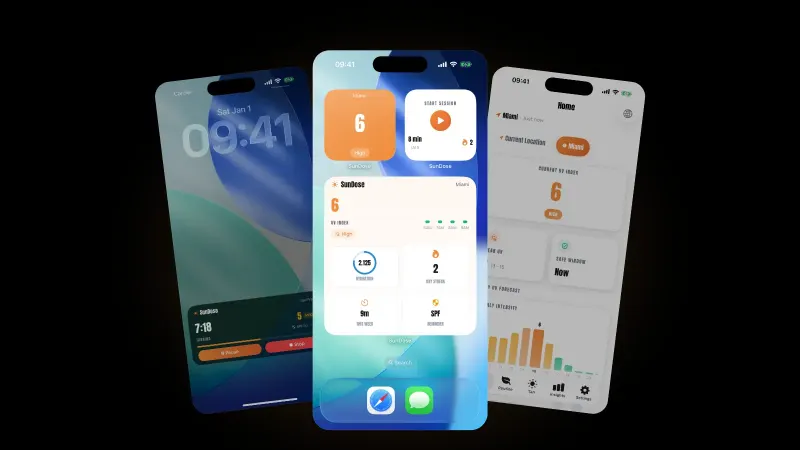
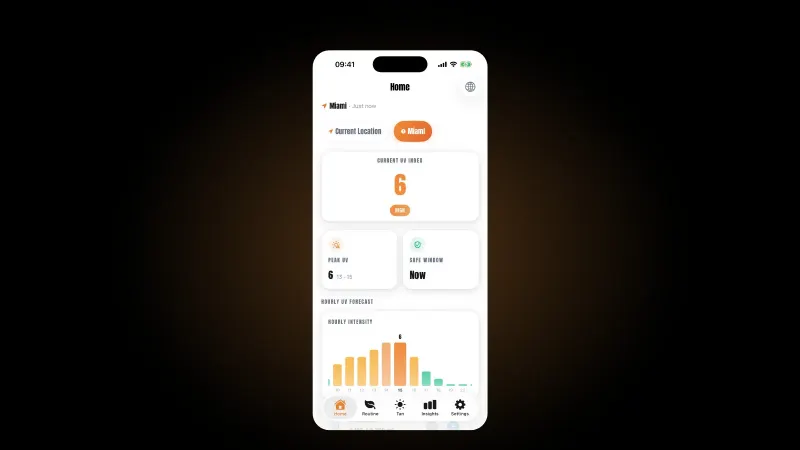
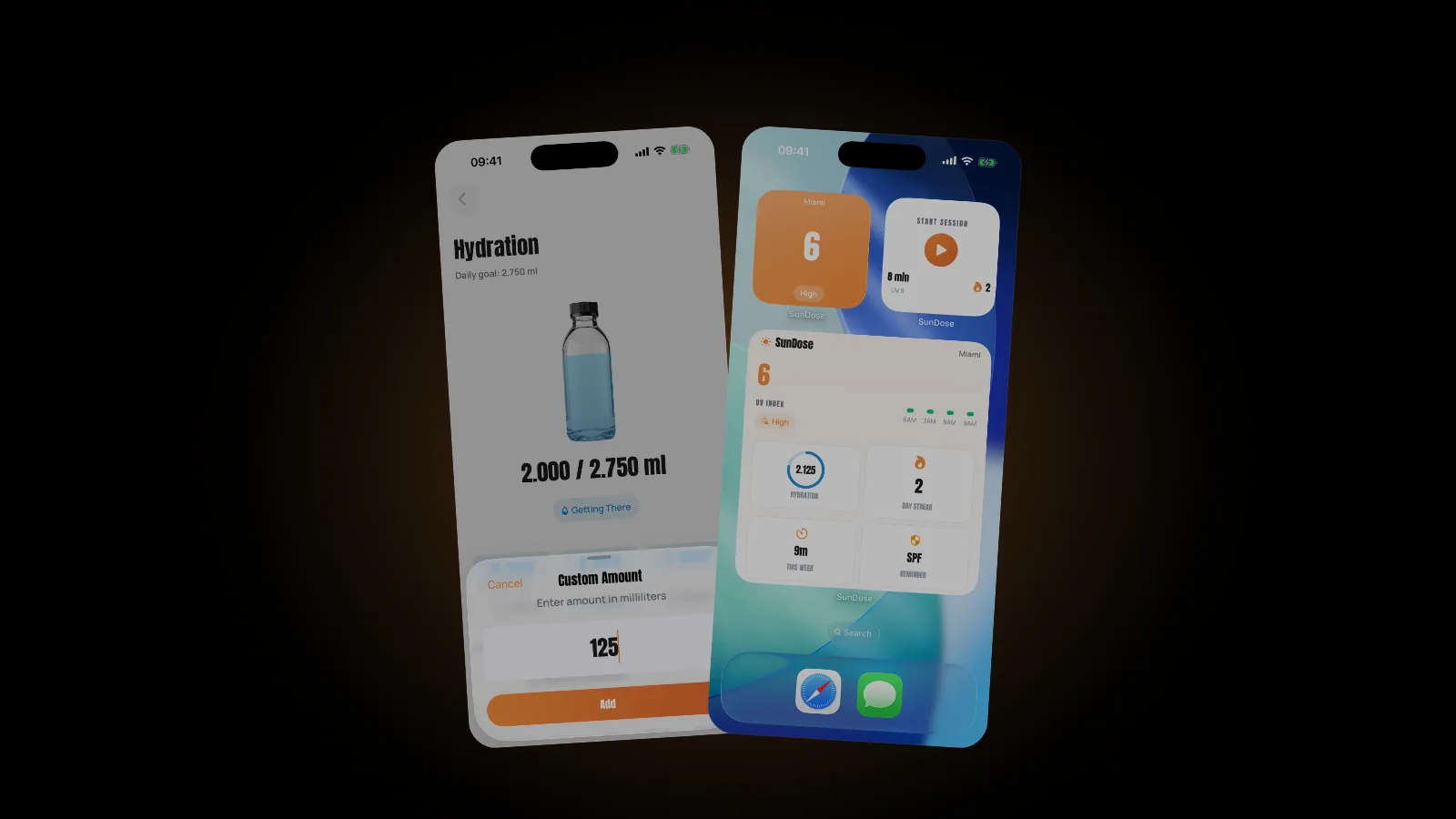
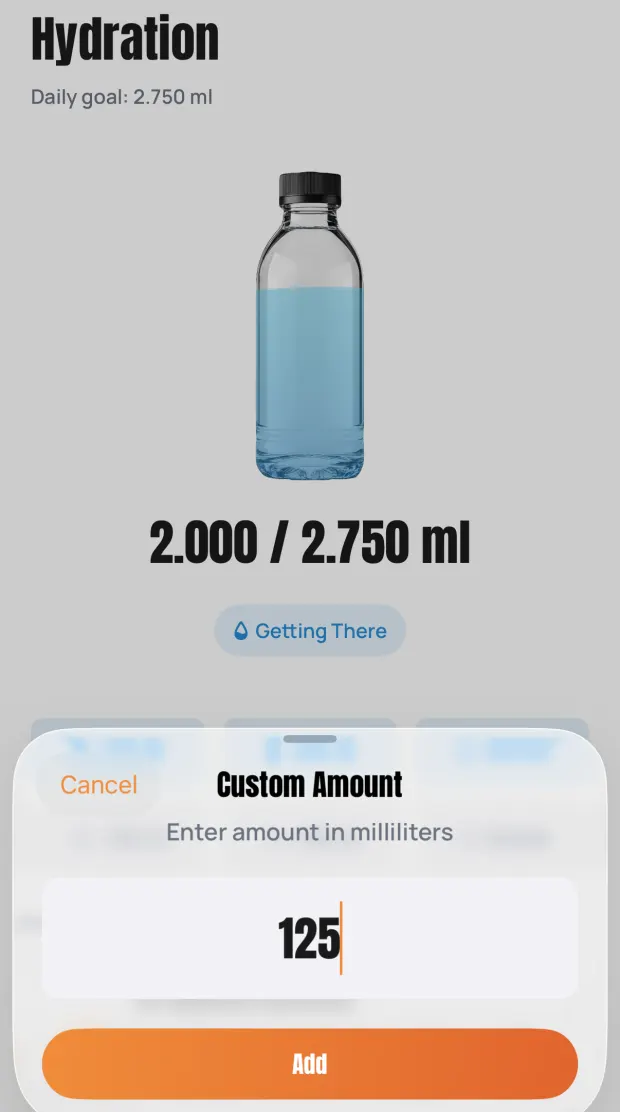
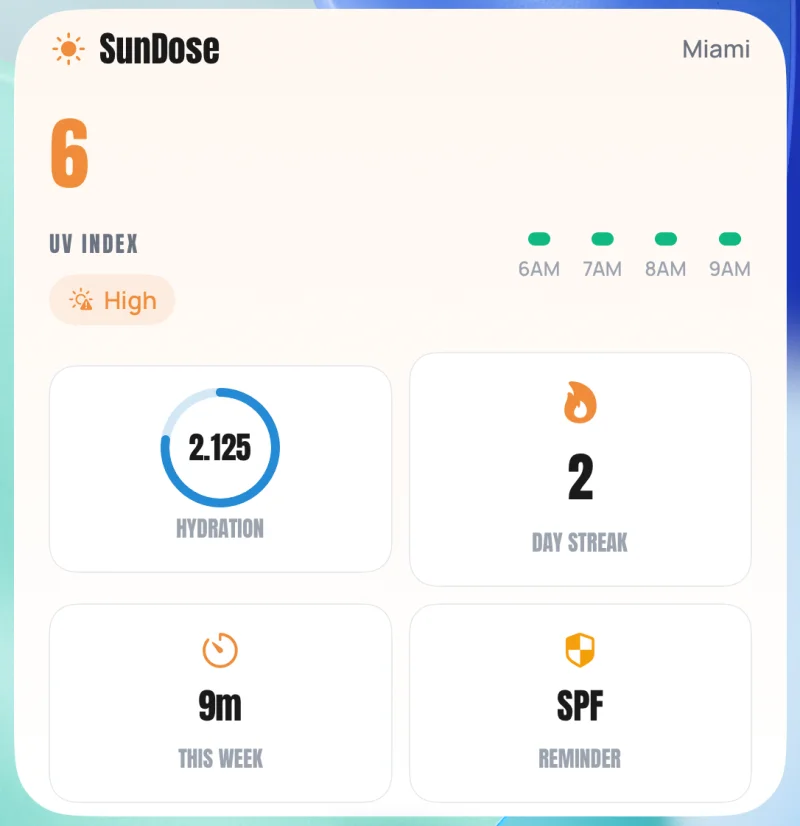
SunDose's hydration tracker shows a daily goal as a visual bottle, and you log water with quick-add buttons or a custom amount in millilitres. A Home Screen widget shows your progress as a ring beside the UV index, and the routine adds after-sun prompts such as a cool shower. Treat the goal as a nudge, not a prescription: the right amount comes from the guidance above, or from your doctor.
FAQ
Do tea and coffee count toward your water in hot weather?
Mostly, yes. The NHS says water, lower-fat milk and lower-sugar drinks, including tea and coffee, all count, and NIOSH says the caffeine in tea and coffee probably won't affect overall hydration. In a heatwave, though, the NHS advises avoiding alcohol, caffeine and hot drinks.
What colour should your pee be in hot weather?
A clear pale yellow, according to the NHS. Dark yellow, strong-smelling pee, or peeing less often than usual, is a sign of dehydration. The NHS includes dark yellow pee and peeing less than normal among the reasons to ask for an urgent GP appointment or get help from NHS 111.
Do you need electrolytes in hot weather?
Usually not. NIOSH says water almost always keeps you hydrated during work in the heat, as long as you eat regular meals to replace salt lost in sweat. For sweating that lasts several hours, sports drinks with balanced electrolytes are an option. NIOSH doesn't recommend salt tablets.
Does a high UV index mean you need more water?
Not by itself. Cancer Research UK says UV rays aren't hot and you can't feel them, so the UV index tells you about sunburn risk, not heat. The NHS says you may need more fluid in a hot environment or when you're active for long periods.
Get started
SunDose is free to download on the App Store, with optional premium tiers; the live UV index, hourly forecast and session timer work without a subscription. It runs on iPhone with iOS 26 or later. SunDose is a wellness app, not a medical device. See everything it does on the SunDose page or read more SunDose articles.