SunDoseSunscreen9 min read
Does sunscreen expire? How to tell if yours still works
Does sunscreen expire? Yes: a US bottle with no date counts as expired 3 years after purchase. How to read the open-jar symbol and spot heat damage.
Yes, sunscreen expires. The US Food and Drug Administration says to throw out sunscreen that is past its expiration date, and to treat a bottle with no date as expired three years after you bought it. Heat can break it down sooner, so a tube that spent the summer in a hot car may not last that long.
Below: why labels differ in the US, the EU and Australia, how to read the open-jar symbol, how to spot a bad bottle and how fast one should run out. We also show what SunDose can and can't do here. This is general information, not medical advice.
Does sunscreen expire?
Sunscreen does expire, but what the bottle shows depends on where it was sold. In the US, sunscreens are regulated as nonprescription drugs. The federal rule on expiration dating, 21 CFR 211.137, requires drugs to carry an expiration date, but it is not enforced for over-the-counter products with no dosage limits that stay stable for at least 3 years. That's why some American bottles have no date at all. The FDA's consumer guide, Sunscreen: How to Help Protect Your Skin from the Sun, says to treat such a product as expired three years after purchase, to discard sunscreen past its printed date, and to discard it if you don't know how old it is. In the EU, sunscreen is a cosmetic, so the label carries a best-before date or an open-jar symbol instead. In Australia, therapeutic sunscreens must show an expiry date.
| Where it was sold | Regulated as | What the label shows | No date in sight? |
|---|---|---|---|
| United States | Nonprescription drug (FDA) | An expiration date, unless stable for at least 3 years | Treat it as expired 3 years after purchase |
| European Union | Cosmetic (Regulation 1223/2009) | A best-before date if it lasts 30 months or less, otherwise an open jar with months | Count the open-jar months from opening |
| Australia | Therapeutic good with an AUST number (TGA) | Storage conditions and an expiry date | Labels must show one |
The EU row comes from Article 19 of the EU Cosmetics Regulation, the Australian one from the TGA's guide to reading sunscreen labels. As a dermatologist told the Skin Cancer Foundation in Does a Sunscreen Stay Effective After Its Expiration Date?, sunscreen loses effectiveness over time, so respect the date.
How long does sunscreen last once opened?
There's no single number; the label decides. US bottles count from the printed date, or from purchase if undated, opened or not. A European label may show an open jar with a number and an M. The NHS, in Sunscreen and sun safety, says that number shows how many months the sunscreen lasts once opened. Cancer Council Australia's sunscreen advice says most sunscreens last about two to three years.
The open jar is a legal symbol. Under the EU regulation, a cosmetic that stays stable for more than 30 months can skip the best-before date, but it must state how long it stays safe after opening, using that symbol plus months or years. So 12M means 12 months from the day you first open it. Write that date on the bottle; the American Academy of Dermatology suggests the same for undated US sunscreen, using the purchase date.
Does unopened sunscreen expire?
Yes. Sealed bottles carry the same printed date, and the FDA's three-year rule for undated sunscreen runs from purchase, not first use. In the EU, only a product that lasts more than 30 months unopened may skip the best-before date.
What happens if you use expired sunscreen?
You may get less protection than the label promises. The FDA says expired sunscreens may not be safe and effective anymore. In its FDA Insight episode on sunscreen, an agency official said there's no assurance they remain safe and fully effective. Cancer Council Australia says out-of-date sunscreen is unlikely to be effective. And the federal rule itself says expiration dates exist to assure a drug meets its standards of strength and quality at the time of use.
What does that mean on the beach? A burn you didn't plan for. How fast one can happen depends on the UV index and your skin, as we explain in how long it takes to get sunburned. None of the agencies we checked endorses an old bottle as a stopgap. Until you replace it, the FDA's other advice applies: limit time in the sun, especially from 10 a.m. to 2 p.m., and wear long sleeves, a broad-brimmed hat and sunglasses.
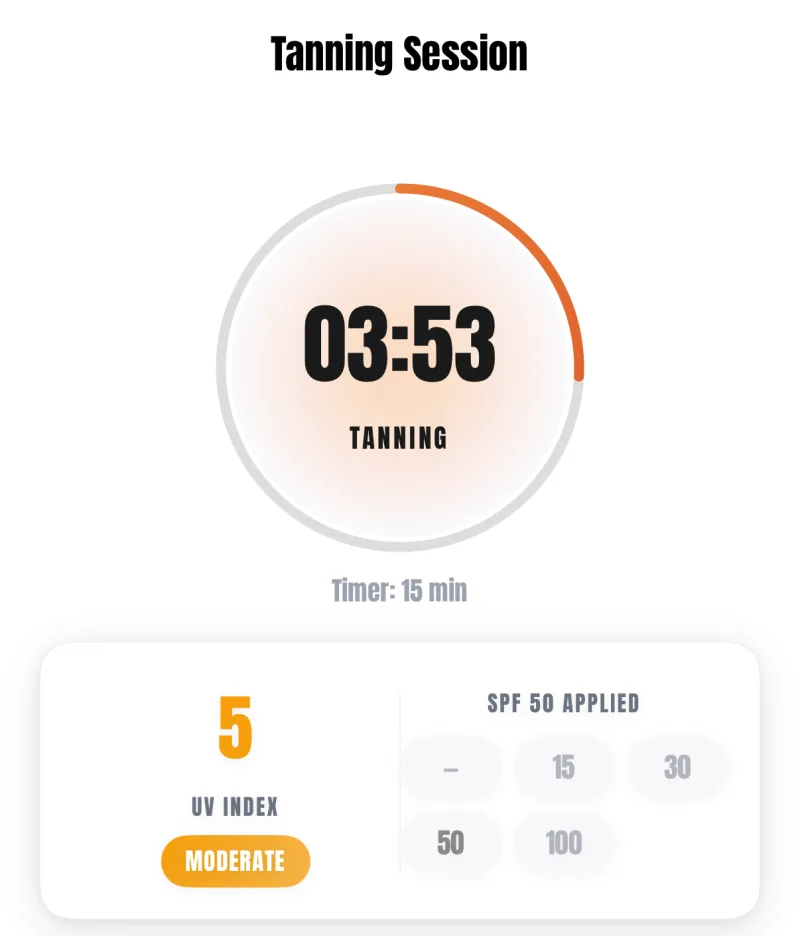
SunDose asks which SPF you applied rather than assuming, and takes your answer at face value. It can't know the bottle is three summers old, so the SPF you pick is only as good as the sunscreen behind it.
How can you tell sunscreen has gone bad?
Read the label before you judge the lotion. A normal-looking bottle can still be past its date, and the FDA's rule is simple: if you don't know how old your sunscreen is, discard it. Replace it if any of these apply:
- The printed date has passed. The FDA and the AAD both say to throw it out.
- There's no date and it's over three years old, or you can't remember when you bought it.
- The open-jar period has run out since you first opened it.
- The color or consistency has changed. The AAD's sunscreen FAQs say any obvious change means it's time for a new bottle.
- It has separated or turned gritty or lumpy. Cancer Council Australia says badly stored sunscreen can split into oil and water, which may affect how it goes on and how well it protects.
When you buy the replacement, look for broad spectrum or a UVA rating as well as the SPF. Our guide to UVA vs UVB explains those labels.
Does heat ruin sunscreen?
Heat speeds up the damage. The FDA requires US sunscreen labels to say "Protect the product in this container from excessive heat and direct sun," and its official noted in the podcast that sunscreen stored somewhere hot, such as a car, may degrade even faster. The AAD gives the reason: heat speeds up the rate at which sunscreen ingredients break down.
How to store sunscreen, according to those sources:
- At the beach or pool, wrap the container in a towel or keep it in the shade (FDA). A cooler works on long days out.
- At home, keep it below 30°C in a cool, dark place (Cancer Council Australia).
- Not in the car. The AAD warns against hot places such as the inside of a car.
Is one warm afternoon enough to ruin a bottle? None of the agencies we checked gives a number of hours. A tube that lived in the glove box all summer, or one that has separated, is the kind to replace. Whether some UV filters hold up better than others is a separate question, covered in mineral vs chemical sunscreen.
How fast should a bottle of sunscreen run out?
Faster than most people expect. The AAD says that if you use sunscreen every day in the correct amount, a bottle should not last long. The Skin Cancer Foundation's guide to how much sunscreen to use gives the test amount, about 2 milligrams per square centimeter of skin, and the everyday version: a shot glass, two tablespoons, for exposed face and body. That's about 30 ml. Cancer Council Australia puts a full adult body at about 35 ml.
Our arithmetic, at 30 to 35 ml per full-body application:
- A 100 ml tube holds about three applications.
- A 200 ml bottle holds about six.
- A six-hour beach day, applying before you go and every two hours after, as the AAD advises, takes three: roughly 90 to 105 ml for one adult.
So a 200 ml bottle covers about two beach days for one person. If one bottle got your household through the whole summer, it was probably going on far thinner than the tested amount, and a thin layer protects less than the SPF suggests. We explain why in SPF 30 vs 50. Covering children too? See sun protection for babies and kids. Used this way, most bottles never get near their expiry date; the spare tubes in bags and cars are the ones to check.
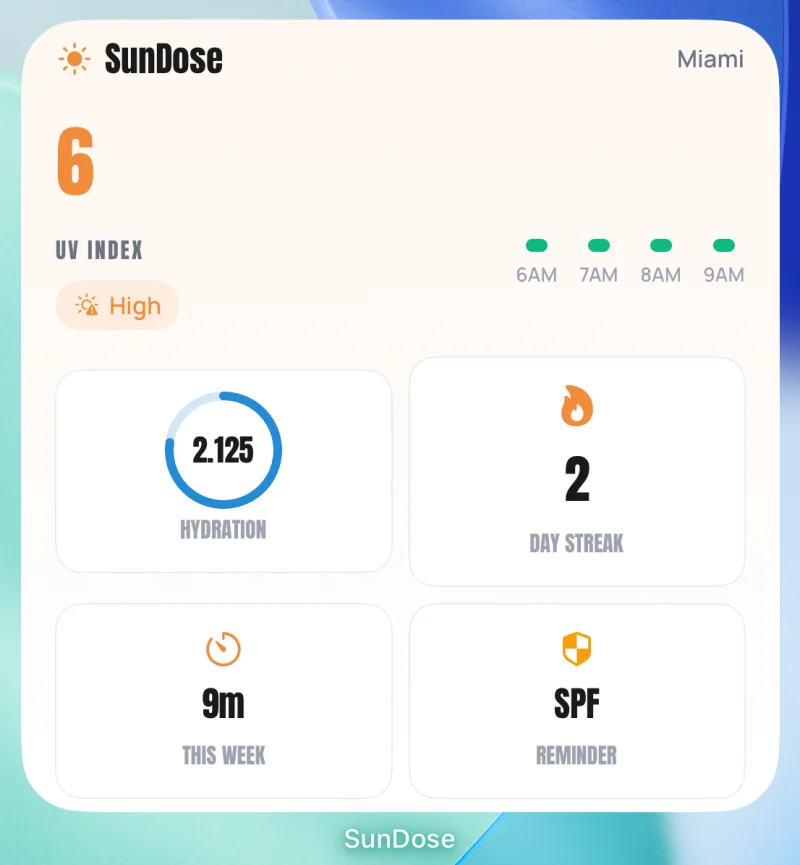
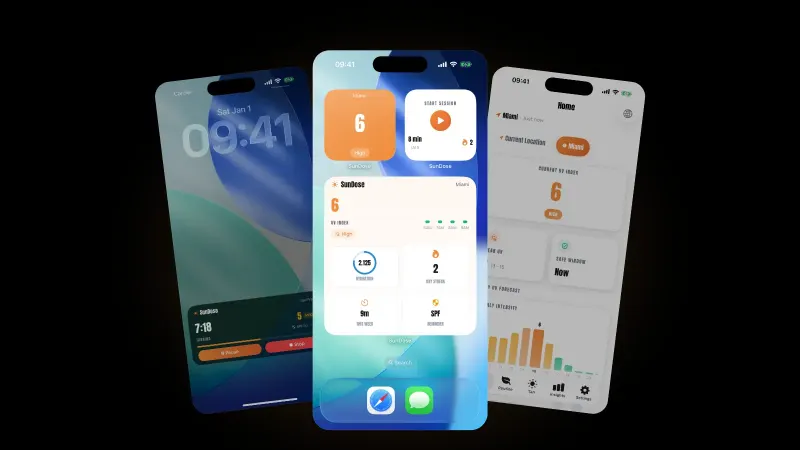
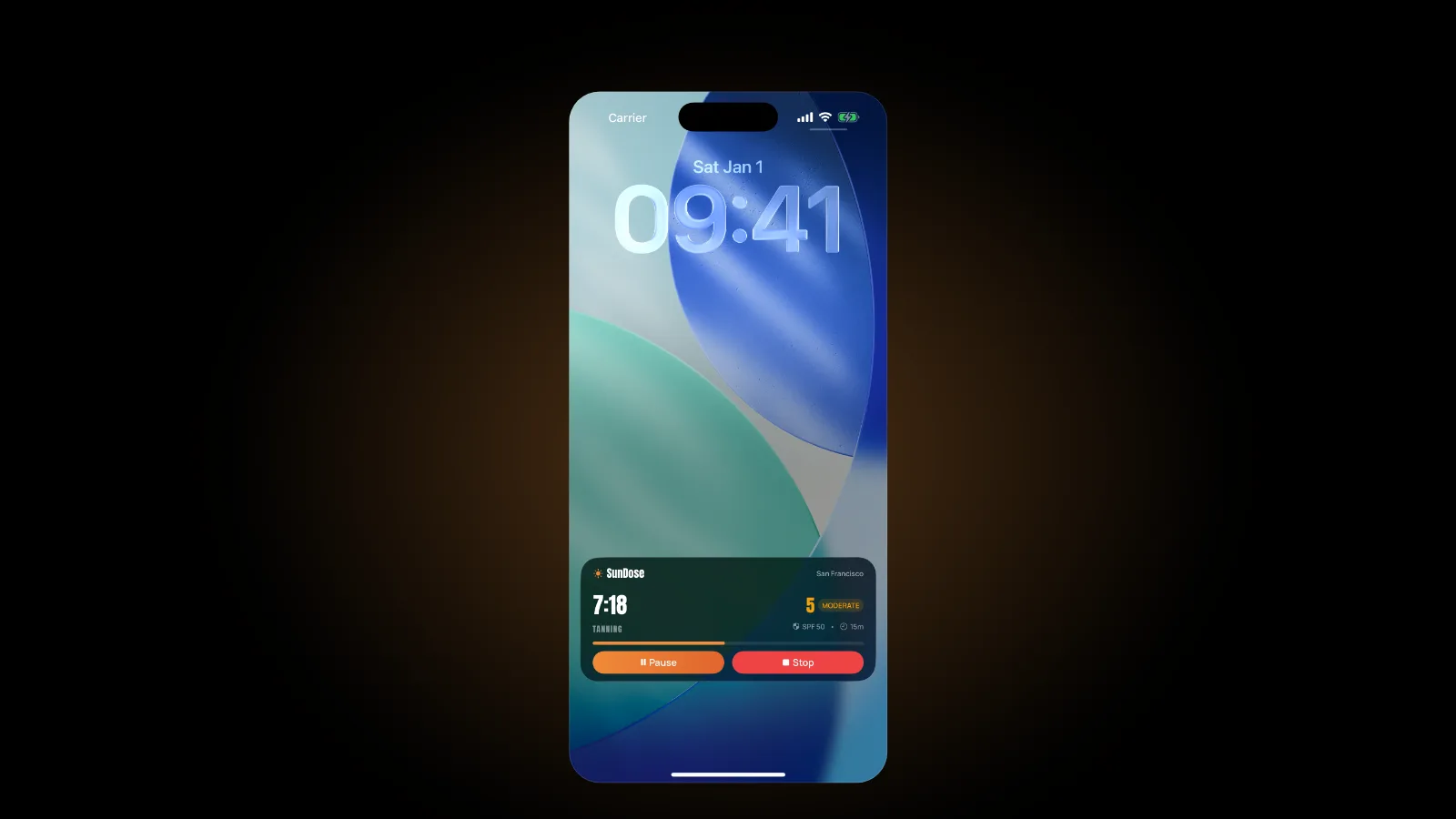
SunDose doesn't track bottle dates. It helps with the reapplying that empties a bottle: reapply prompts run on the session clock, so they land while you're outside, with haptic and notification alerts. The SPF you chose shows on the Lock Screen Live Activity, and the Home Screen widget carries an SPF reminder.
FAQ
Can you use expired sunscreen?
The FDA says no: discard sunscreen past its expiration date, because it may not be safe and effective anymore. Cancer Council Australia says out-of-date sunscreen is unlikely to be effective. Until you replace it, limit time in the sun, especially from 10 a.m. to 2 p.m., and cover up with clothing, a hat and sunglasses.
Can you use last summer's sunscreen?
Usually, if it's in date and was kept cool. The AAD notes that the FDA requires sunscreens to keep their original strength for at least three years. Check the printed date or the open-jar period, and replace the bottle if its color or consistency has changed or it spent the summer somewhere hot.
What does the open jar symbol on sunscreen mean?
It's the period-after-opening symbol set by EU Cosmetics Regulation 1223/2009. The number beside it, such as 12M, tells you how many months the product stays safe to use once opened, as the NHS explains. Write the opening date on the bottle so you know when that period ends.
Is sunscreen left in a hot car still good?
It may not be. The FDA says sunscreen stored somewhere hot, such as a car, may degrade even faster, and the AAD says heat speeds up the breakdown of its ingredients. Cancer Council Australia advises storing it below 30°C. If it has separated or changed color or texture, replace it.
Get started
SunDose is free to download on the App Store, with optional premium tiers; the live UV index, hourly forecast and session timer work without a subscription. It runs on iPhone with iOS 26 or later. See everything it does on the SunDose page or read more SunDose articles. SunDose is a wellness app, not a medical device.