SunDoseSun safety9 min read
What does UV400 mean? How sunglasses protect your eyes
UV400 means a lens blocks UV up to 400 nm, covering UVA and UVB. Decode every sunglasses label, why darker isn't safer, and when to wear a pair.
UV400 means the lenses block ultraviolet light at wavelengths up to 400 nanometres. That covers both UVA (315 to 400 nm) and UVB (280 to 315 nm), which is why the American Academy of Ophthalmology treats a UV400 label as equal to 100% UV protection. It says nothing about tint, glare or polarization. Those are separate features.
This guide decodes the common sunglasses markings, explains why a darker lens isn't automatically safer, and ties when to wear sunglasses to the UV index, not to how bright the day looks. We make SunDose, a UV index app for iPhone; it doesn't test or rate eyewear. This is general information, not medical advice.
What does UV400 mean?
UV400 is a lens rating that means the lens blocks ultraviolet light up to a wavelength of 400 nanometres (nm). The World Health Organization's Q&A on ultraviolet radiation puts UVA at 315 to 400 nm and UVB at 280 to 315 nm, so a lens that stops everything up to 400 nm covers both bands. The American Academy of Ophthalmology (AAO) guide to recommended types of sunglasses says a label reading "UV absorption up to 400nm" is the same thing as 100 percent UV absorption. The academy's page on the sun, UV light and your eyes gives the short version: choose 100% UV or UV400 protection, or lenses that block both UV-A and UV-B rays. The rating describes UV only. It doesn't tell you how dark the lens is, whether it cuts glare, or how well the frame covers the sides of your eyes. For how the two bands differ, see UVA vs UVB.
Is UV400 the same as 100% UV protection?
For practical purposes, yes. The AAO treats the two labels as equal, and the WHO's fact sheet on ultraviolet radiation asks for wraparound sunglasses "that provide 99 to 100% UV-A and UV-B protection." Other marks on the label mean different things:
| Marking | What it tells you | What it doesn't |
|---|---|---|
| UV400 | Blocks UV up to 400 nm: UVA and UVB | Tint, glare or side coverage |
| 100% UVA/UVB | The level the AAO asks for | Anything about glare |
| CE | The maker indicates the product meets the EU rules that apply to it | No central EU body issues it |
| ISO 12312-1 | Made to the international standard for general-use sunglasses | Your pair's exact UV figure |
| ANSI Z80.3 | Made to the US standard for nonprescription sunglasses, revised in 2025 | A UV percentage, unless stated |
| AS/NZS 1067.1 | Made to the Australian and New Zealand standard | Categories 0 and 1 are fashion spectacles, per Cancer Council Australia |
| Category 0 to 4 | How much visible light gets through | How much UV is blocked |
| Polarized | Cuts reflected glare | UV protection |
No UV claim on the label? Don't assume there is any. The CDC's Yellow Book chapter on sun exposure says "not all sunglasses provide UV protection for the eyes."
UV400 vs polarized: what is the difference?
UV400 is about invisible ultraviolet light. Polarization is about visible glare. The AAO's page What are polarized lenses? says they block horizontal light, the glare bouncing off water or pavement. Its guide on choosing sunglasses to avoid sun damage adds that "polarization itself does not provide UV protection."
So UV400 belongs on every pair, and polarization is a comfort extra with trade-offs. The AAO says polarized lenses can make LCD screens, including car dashboard controls, hard to read, and icy patches harder to see while driving or skiing.
Do darker lenses block more UV?
No. The AAO's sunglasses tips say very dark lenses "do not necessarily block more UV rays," and its guide to prescription sunglasses says tint has nothing to do with UV protection. Darkness is what the filter category measures. The College of Optometrists' guidance on tints and driving lists the categories from BS EN ISO 12312-1:
| Category | Tint | Visible light let through | Driving |
|---|---|---|---|
| 0 | Clear or very light | Over 80% to 100% | Yes |
| 1 | Light | Over 43% to 80% | Yes |
| 2 | Medium | Over 18% to 43% | Yes |
| 3 | Dark | Over 8% to 18% | Yes |
| 4 | Very dark | Over 3% to 8% | No |
The College adds that filters letting through less than 75% of visible light aren't suitable for driving at twilight or night.
Can a dark lens be worse than none? Only if it filters UV poorly. The usual explanation is that a dark tint lets your pupils widen. A 2024 study in Scientific Reports tested that on 214 lenses and found pupil size played little part. Field of view, which the authors tied to squinting and brightness, mattered up to 314.3% more. Their conclusion: lenses with UVA protection below 86% may slightly raise the hazard compared with wearing none. A dark lens with a UV400 label is fine.
What can UV do to your eyes?
The WHO fact sheet says "the higher the UVI value, the greater the potential for damage to the skin and eye." Some harm is quick, some builds over years:
- Photokeratitis, including snow blindness: a sunburn of the cornea. The AAO's page What is photokeratitis? lists pain, redness, tearing and light sensitivity, often noticed well after the damage is done.
- Cataracts: clouding of the eye's lens. The WHO estimates 15 million people are blind from cataracts, and some 10% of those may be due to UV exposure.
- Pterygium: a growth on the eye's surface that, per the WHO's Q&A on UV health effects, can extend over the cornea and reduce vision. The AAO says such growths can appear in your teens or 20s.
- Eye and eyelid cancers: the AAO says eye cancers can take years to develop, and Cancer Council Australia's eye protection fact sheet links UV to eyelid carcinomas.
When should you wear sunglasses?
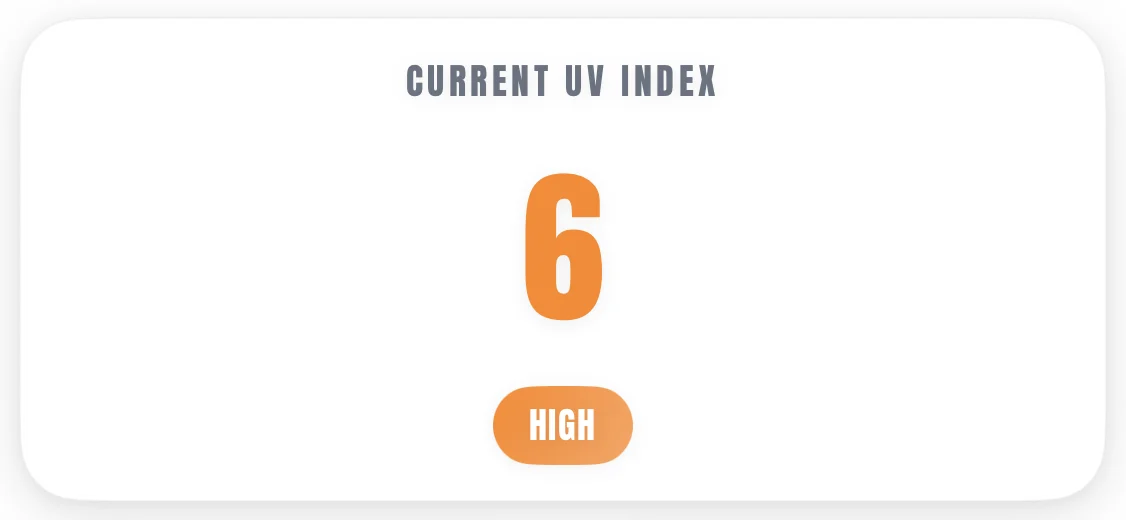
Whenever the UV index is 3 or higher, whatever the sky looks like. The WHO recommends sun protection from UV 3, Cancer Council Australia advises protecting the eyes at all times from UV 3, and the EPA's UV index scale lists sunglasses among its steps from UV 3 upward.
Situations that raise the stakes:
- Cloudy days. The AAO says clouds don't block UV light. See how much gets through in can you get sunburned on a cloudy day.
- Midday to early afternoon, when the AAO says sunlight is strongest. The best UV index for tanning guide shows how UV climbs by the hour, and why no level makes a tan safe.
- Snow. The WHO says fresh snow can reflect up to 80% of UV, and the CDC says snow reflection nearly doubles the UVB reaching your eyes.
- Water, sand and altitude. The AAO says UV is stronger at higher altitudes and that snow blindness can follow UV reflected off ice, sand or water. For long training days, see sun protection for runners and cyclists.
Where SunDose fits
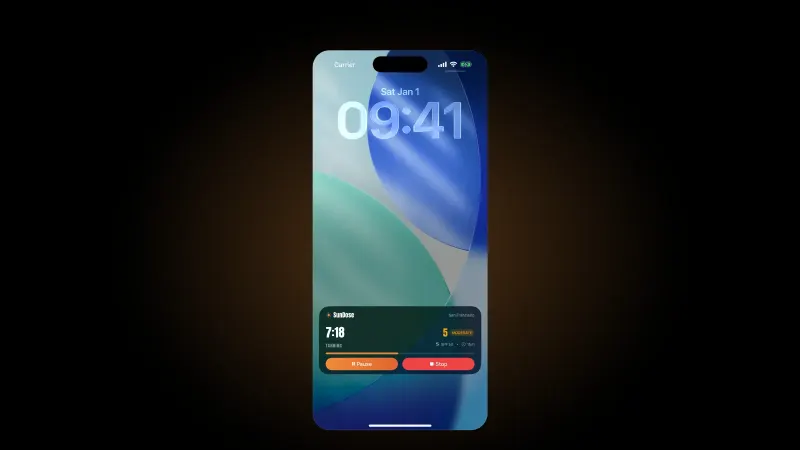
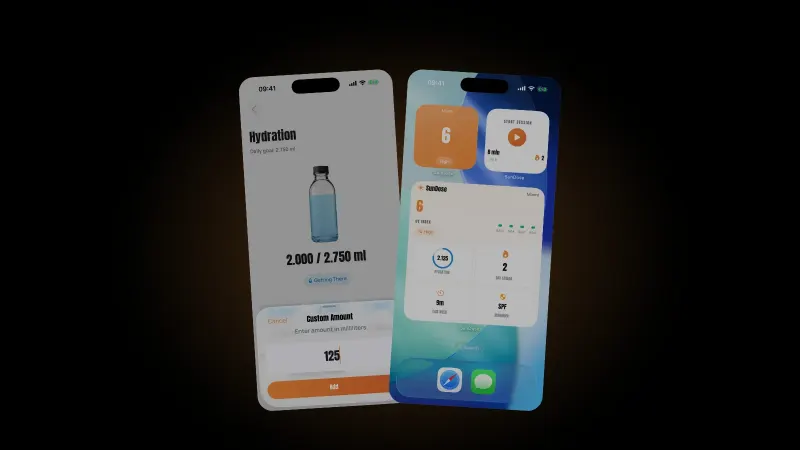
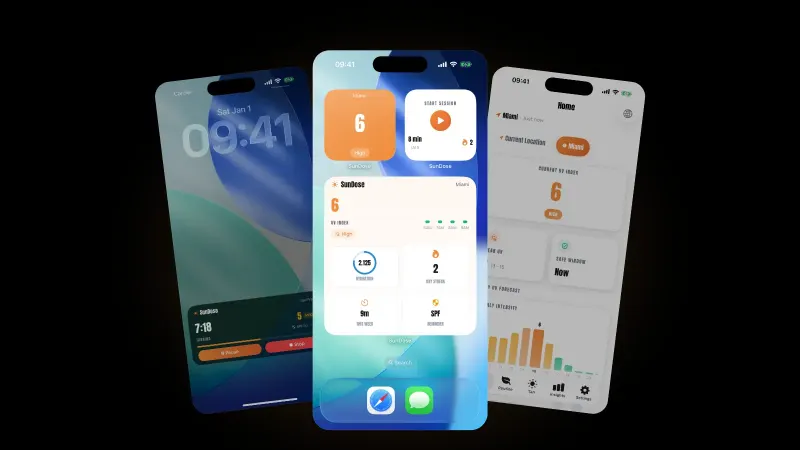
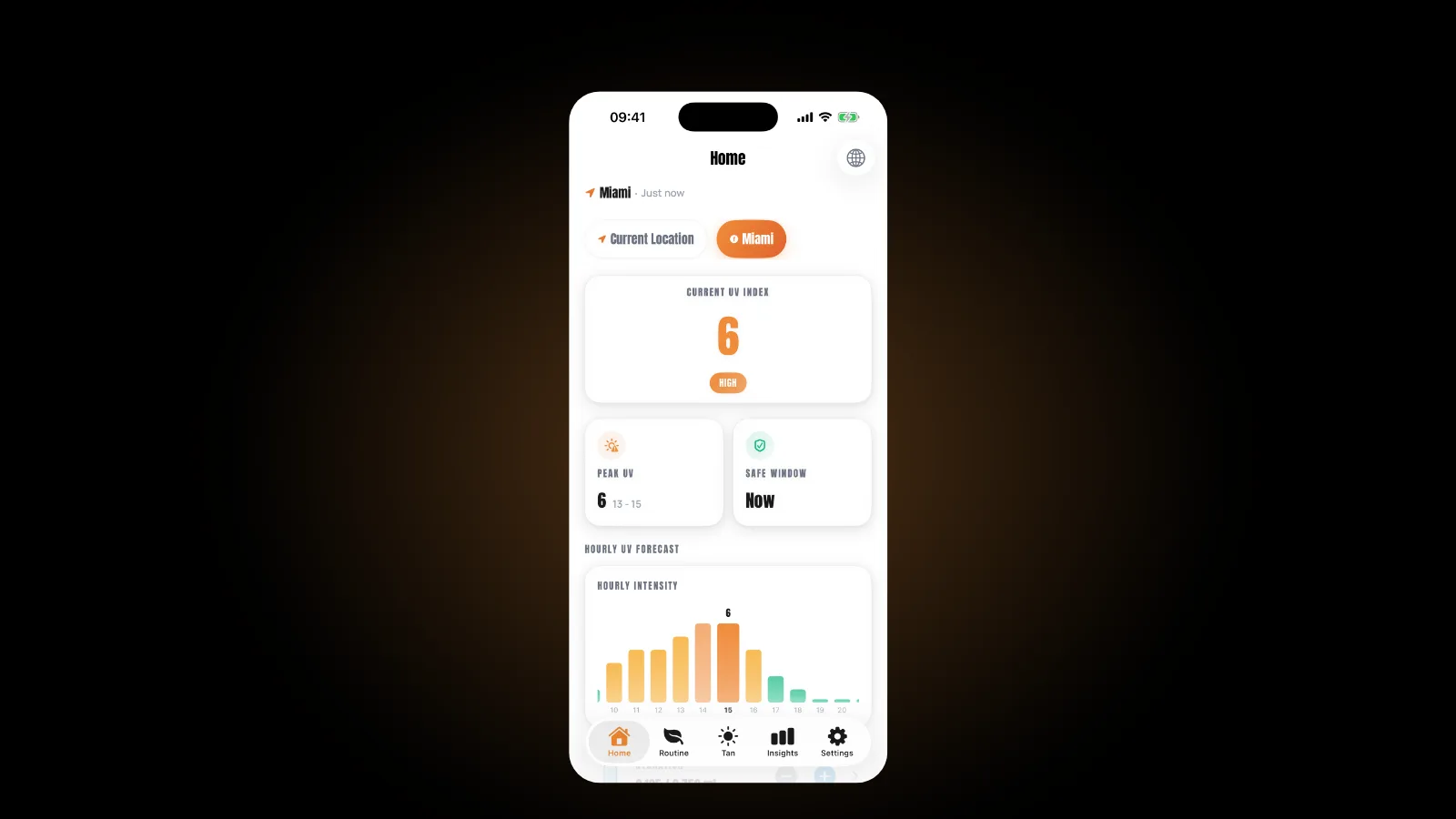
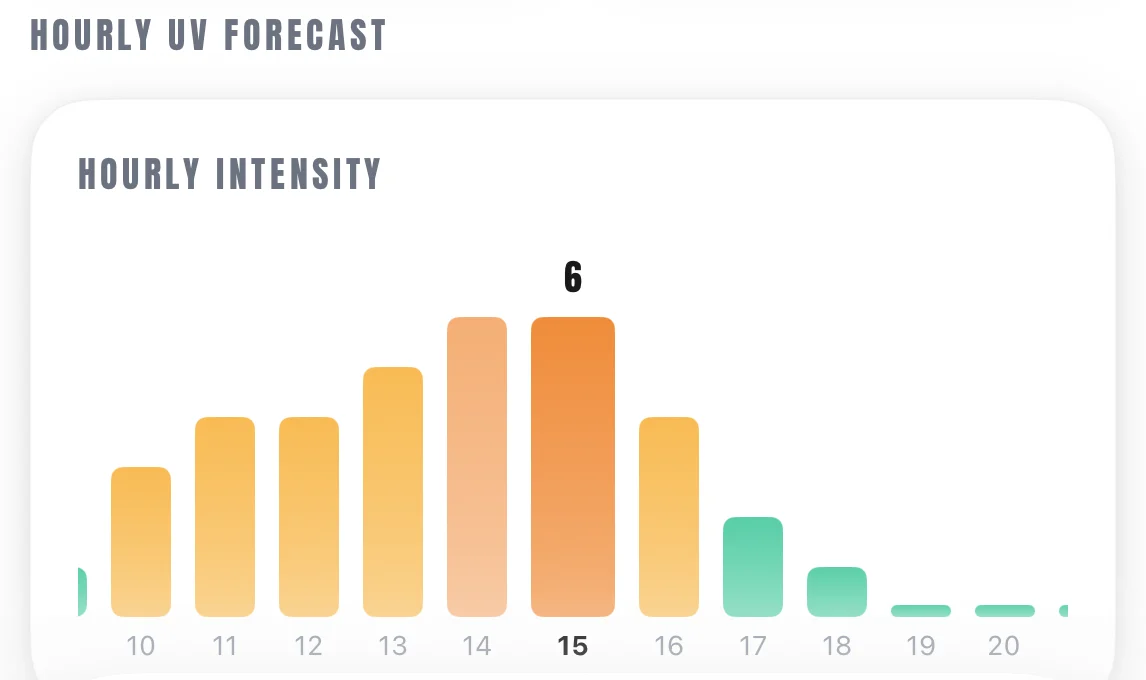
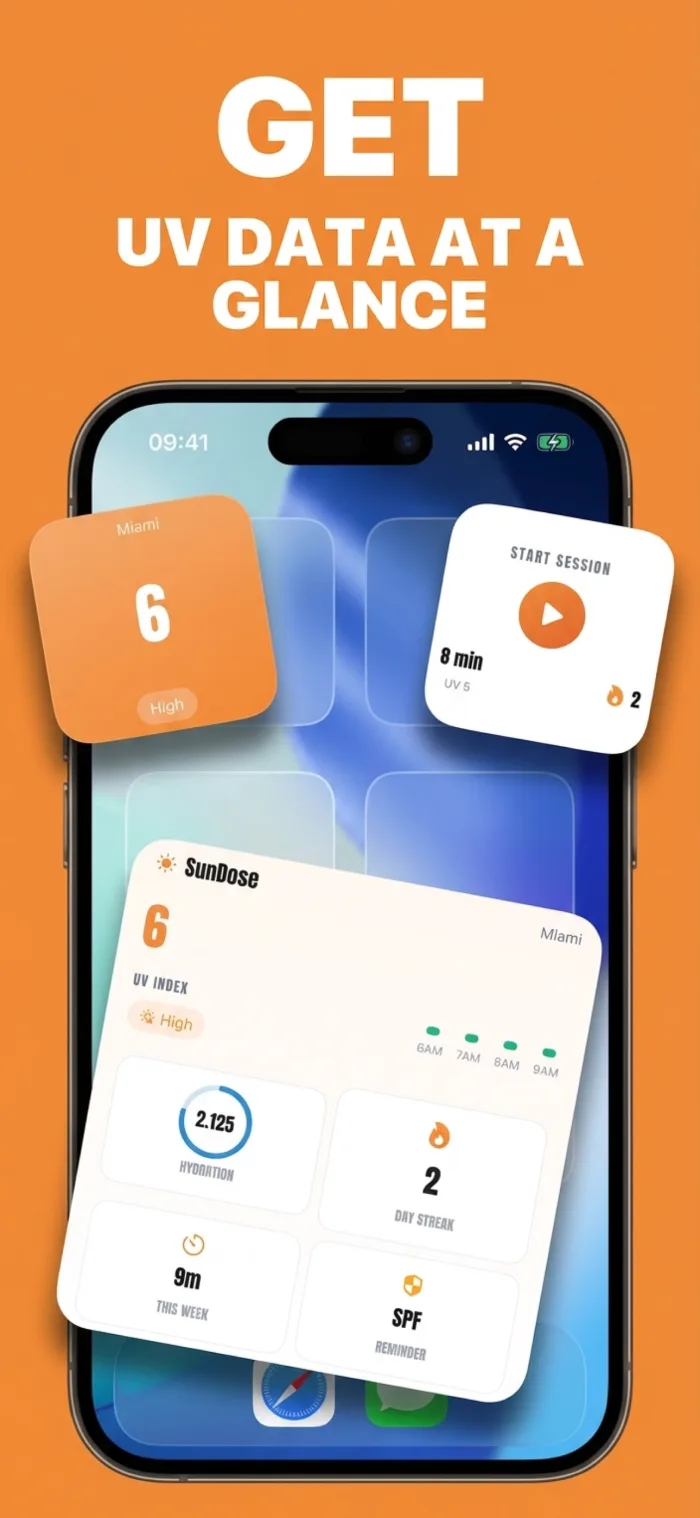
SunDose shows the live UV index for your location, read from Apple WeatherKit, with an hourly forecast, so you can see which hours sit at 3 or above. Home Screen widgets keep the number in view. It doesn't detect or rate your sunglasses, and the reading doesn't include extra UV reflected off snow, water or sand near you. The index tells you when protection matters; the label tells you whether your pair provides it.
How can you check if your sunglasses block UV?
Read the label first: the AAO says to look for a sticker or tag promising 100% UV protection, or "UV absorption up to 400nm." For an unlabelled pair, the AAO suggests a local optical shop can test the level of UV protection. Ask for a measurement with a UV meter, often called a photometer.
Skip the UV torch and banknote trick. A torch gives off a narrow band of wavelengths, so it can't confirm protection across the full range up to 400 nm.
A quick checklist:
- A UV claim: UV400, or 100% UVA and UVB.
- Coverage: the WHO recommends wraparound-style sunglasses, and the CDC says side shields help too.
- The right category: Cancer Council Australia calls category 4 special-purpose lenses for extreme glare, and the ISO standard rules them out for driving.
- A hat: the AAO says to wear one with your sunglasses, and broad-brimmed hats are best.
FAQ
Is UV400 better than polarized?
They do different jobs. UV400 means the lens blocks UV up to 400 nm, while polarization cuts glare reflected off water and pavement. The AAO says polarization itself doesn't provide UV protection, so a polarized pair still needs a UV400 or 100% UV label. If glare bothers you, look for both.
Do cheap sunglasses protect your eyes?
They can. The AAO says sunglasses don't have to be expensive to be safe and effective, and Cancer Council Australia says price shouldn't be used to gauge UV protection. What matters is a UV400 or 100% UVA and UVB label. The CDC warns that not all sunglasses provide UV protection.
Can your eyes get sunburned?
Yes. Photokeratitis is a sunburn of the cornea, and snow blindness is one form. The AAO says symptoms such as pain, redness and light sensitivity usually ease within a day or two. The WHO says it's reversible and easily prevented by protective eyewear. If symptoms are severe or don't ease, see an eye doctor.
Do children need UV400 sunglasses?
The WHO says a child's eye is more sensitive to UV and needs special protection, and the AAO says to protect children with hats and sunglasses. The same UV400 or 100% UV label applies. Our guide to sun protection for babies and kids covers protecting young children in the sun.
Get started
SunDose is free to download on the App Store for iPhone with iOS 26 or later, with optional premium tiers. The live UV index and hourly forecast work without a subscription, so you can see whether today's UV calls for sunglasses before you leave. SunDose is a wellness app, not a medical device. Read more SunDose articles.