SunDoseSun safety9 min read
Sun protection for runners and cyclists: sweat and timing
Sun protection for runners and cyclists that survives sweat: when to train around peak UV, how often to reapply, stinging eyes and the spots athletes miss.
Sun protection for runners and cyclists starts with timing: train outside the four hours around solar noon when you can. Then let clothing and a brim do the work sweat can't undo, wear a water-resistant SPF 50 on long sessions, and reapply by the 40 or 80 minutes on the label, or straight after a sweaty effort.
Below: timing, sweat, stinging eyes, missed spots and a checklist by session length. We make SunDose, a UV index and sun exposure app for iPhone. This is general information, not medical advice.
Why do runners and cyclists need more sun protection?
Because they spend hours outside, lightly dressed, often in the middle of the day, and it shows on their skin. A 2006 study in Archives of Dermatology, Malignant melanoma in marathon runners, compared 210 marathon runners with an age- and sex-matched control group. The runners had more atypical moles, more solar lentigines (sun spots) and more lesions suggestive of nonmelanoma skin cancer, and those findings rose with training intensity. Almost all of them trained in shorts (96.7%) and shirts (98.6%) that left the back and limbs partly or fully bare, and only 56.2% used sunscreen regularly. The authors concluded that marathon runners had an increased risk of melanoma and nonmelanoma skin cancer. Their advice reads like a training plan: choose training and race times with low sun exposure, wear adequate clothing and use water-resistant sunscreen regularly.
Cyclists collect a similar dose. In a 2000 study in Dermatology, Extreme UV exposure of professional cyclists, six professionals wore UV dosimeters through eight stages of the Tour de Suisse. Their mean daily dose was 8.1 minimal erythema doses, each the smallest dose that reddens skin, and the authors put the race exposure at more than 30 times international limits.
When is the best time to train to avoid peak UV?
Early morning or early evening. The WHO's UV index Q&A says the day's highest UV comes in the four hours around solar noon, which falls between noon and 2pm depending on location and daylight saving time. The Skin Cancer Foundation's Sun Safety Tips for Sports Enthusiasts, written by dermatologists who are also athletes, goes wider: avoid outdoor athletics between 10 AM and 4 PM.
Plan by the UV index, not the thermometer. SunSmart, a Cancer Council Victoria program, says on its UV radiation page that UV "cannot be seen or felt and is not related to temperature." The EPA's UV index scale adds a field check: a shadow shorter than you means higher UV. For the shape of a whole day, see the daily UV curve.
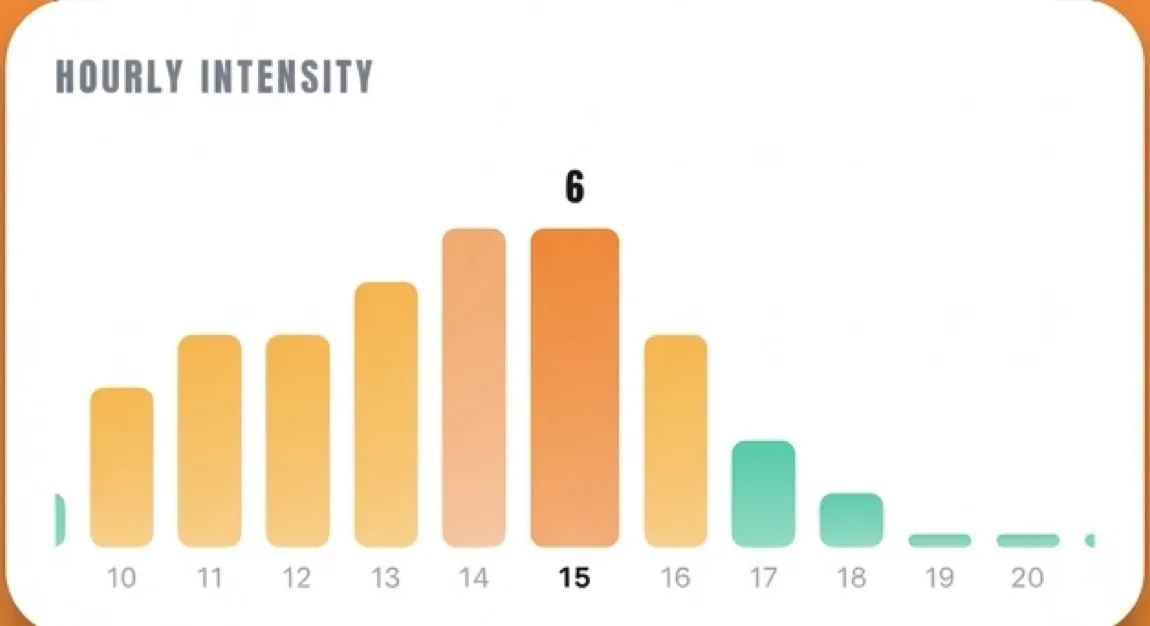
On a high UV day, you may burn in less time than a long run lasts, depending on your skin; see how long it takes to get sunburned. Hikers also climb into stronger UV: the WHO's ultraviolet radiation fact sheet says UV rises with altitude because the air is thinner. Our guide to sunburn on a cloudy day has the figures for altitude, snow and water.
Does sweat wash off sunscreen?
Yes, eventually. The FDA's consumer guide, Sunscreen: How to Help Protect Your Skin from the Sun, says there's no such thing as waterproof sunscreen and all sunscreens eventually wash off. A water-resistant label means it stays effective for 40 or 80 minutes while swimming or sweating, a label we unpack in SPF 30 vs 50.
The FDA says to reapply at least every two hours, and more often if you're sweating. The American Academy of Dermatology's guide on how to apply sunscreen says to reapply immediately after swimming or sweating, and the Skin Cancer Foundation's sunscreen guide calls SPF 50 or higher necessary for distance running and hiking. Friction matters too: in the foundation's sports article, a dermatologist and marathoner puts clothing and hats first, because with heavy perspiration, sunscreen products "can rub off and lose their effectiveness."
A checklist by session length
This is our planning rule, built on FDA, AAD and Skin Cancer Foundation guidance, not an official schedule.
| Session | Before you start | During | Afterwards |
|---|---|---|---|
| Under 40 minutes | Water-resistant SPF 30 or higher, 15 minutes before (AAD); cap and sunglasses | Nothing extra if it fits inside the label time | Reapply if you stay outside (AAD) |
| 40 to 80 minutes | An 80-minute water-resistant SPF 50 | Carry a stick if you'll pass the label time | Reapply before cooling down outdoors |
| 80 minutes to 2 hours | SPF 50, a UPF top or sleeves, a brim | Reapply at the label time, at a water stop | Reapply, or cover up |
| Over 2 hours: long ride, trail run, hike | Route around the four hours near solar noon | Reapply at every stop, at least by the label time; SPF 30 lip balm (AAD) | Check for redness |
How do you keep sunscreen out of your eyes?
Use a mineral formula or a stick near the eyes, and let a brim and sunglasses do the rest. The Skin Cancer Foundation's advice on sunscreen around the eyes says mineral formulas made with zinc or titanium dioxide "won't sting your eyes as you sweat," and that sticks work well near the eyes because they won't melt. Its sports article tells runners to look for a sweat-resistant sunscreen that won't sting if it gets into the eyes.
- Mineral on the forehead and around the eyes: zinc oxide or titanium dioxide.
- A brim: the WHO's fact sheet says a broad-brimmed hat protects the eyes, face, ears and neck. On a run, a cap or visor at least shades the forehead.
- Wraparound sunglasses: the WHO advises 99 to 100% UVA and UVB protection; our explainer on what UV400 means decodes the label.
Which spots do runners and cyclists miss?
The ones you can't see in the mirror on the way out. The foundation's sports article names the hands and the back of the neck as often-missed spots, and one dermatologist adds: "Put sunscreen on your ears. People always forget that!" The AAD's checklist covers the neck, face, ears, tops of the feet and legs, plus the scalp if your hair is thinning.
Shoulders matter too. A 2008 study in Dermatology, Melanoma markers in marathon runners, counted an average of 19.6 sun spots on the left shoulder of 150 marathon runners and none on the left buttock. Lifetime sunburns and the type of sportswear tracked with the count.
- Ears: the tops and backs, which a cap leaves bare.
- Back of the neck: baseball hats don't protect it, the sports article notes.
- Scalp parting and helmet vents: vents that cool your head also let sun onto strips of scalp.
- Backs of the hands: on the handlebars they face the sky all ride.
- Shoulders and upper back: around singlet straps.
- Lips: the AAD recommends a lip balm with SPF 30 or higher.
What should you wear for long sessions in the sun?
Clothing that does the work for you, because fabric doesn't sweat off. The Skin Cancer Foundation's guide to sun-protective clothing says a UPF 50 fabric blocks 98% of the sun's rays and lets 2% through. A plain white T-shirt gives a UPF of about 7, and only about 3 when wet.
| Kit | What it does | Source |
|---|---|---|
| UPF 50 top or arm sleeves | Lets about 2% of UV through, no reapplying | Skin Cancer Foundation |
| Hat with a brim of at least 3 inches on hikes | Shades the face, scalp and neck | Skin Cancer Foundation |
| Wraparound sunglasses | 99 to 100% UVA and UVB protection | WHO |
| Water-resistant sunscreen | Covers the skin clothing can't | WHO, Skin Cancer Foundation |
One catch: the foundation says stretched or wet clothing loses some protection, so a soaked top protects less. Dark or bright colors and dense weaves protect more. Covering up also adds warmth, so pick light, breathable fabric, and see how much water to drink in hot weather for the heat side.
How can SunDose fit into a training day?
SunDose can't put sunscreen on for you, but it can carry the timing. Its FAQ says the timer and reapply reminders apply to any deliberate time in the sun, running included.
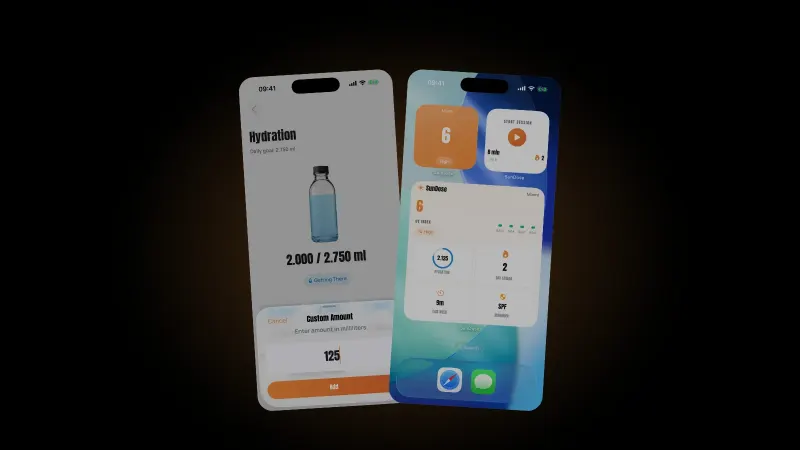
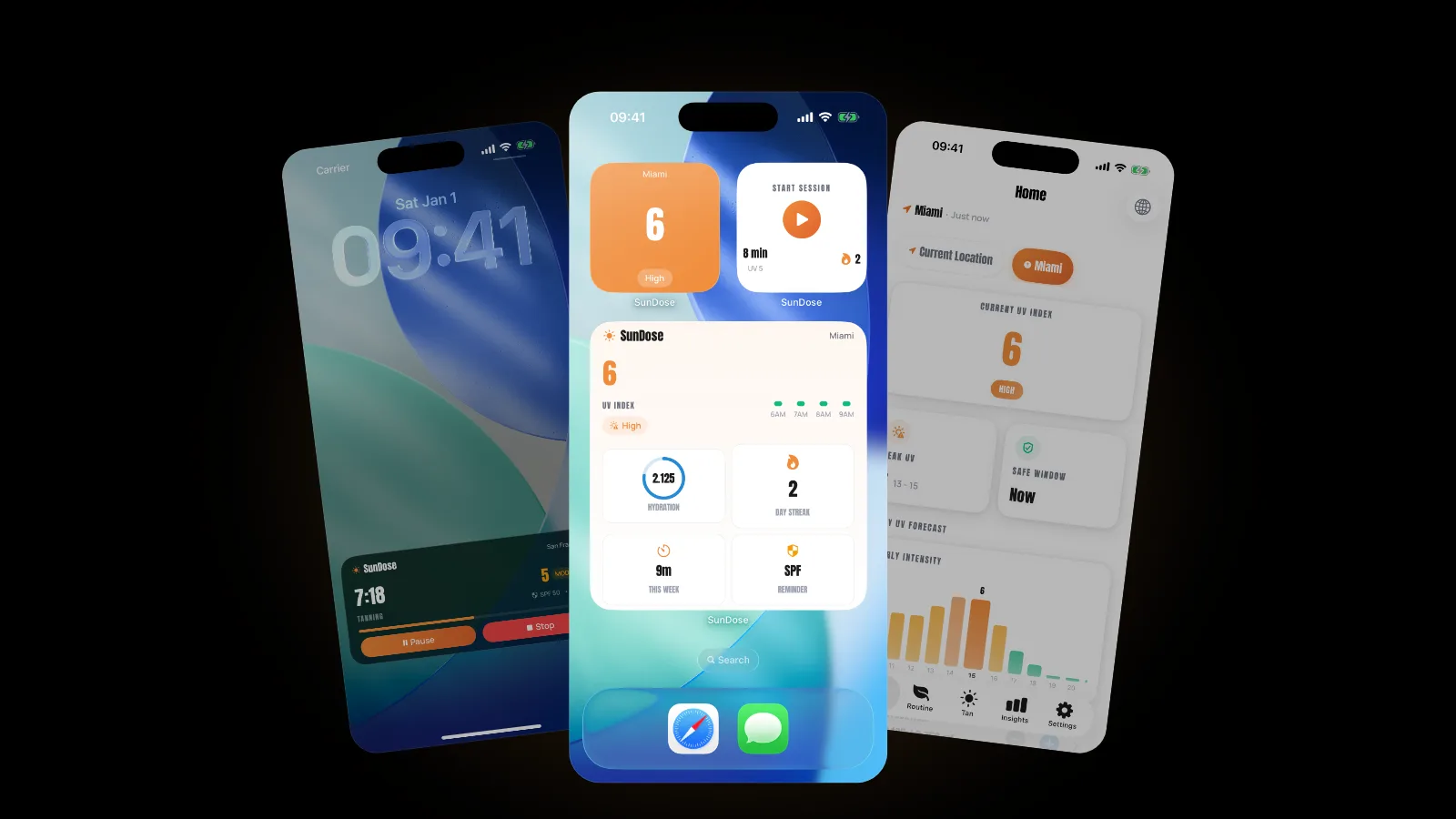
Before you go. SunDose shows the live UV index for your location with an hourly forecast from Apple WeatherKit, so you can see when the peak falls. Home Screen widgets keep the current UV in view and offer a one-tap session start.
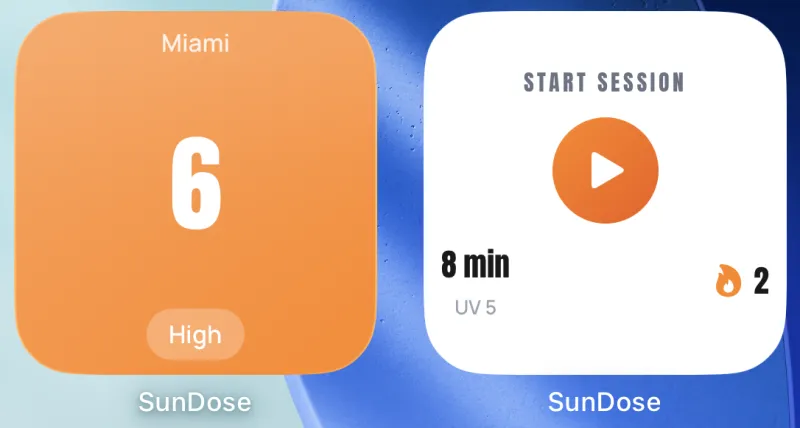
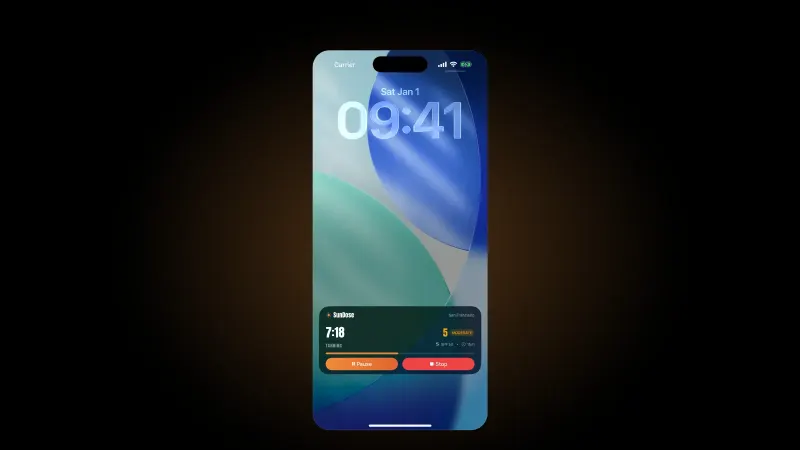
While you're out. The reapply prompt runs on the session clock, not a wall clock, so it lands while you're actually in the sun. The session appears as a Live Activity: check, pause or stop it from the Lock Screen, or the Dynamic Island on iPhones that have one.
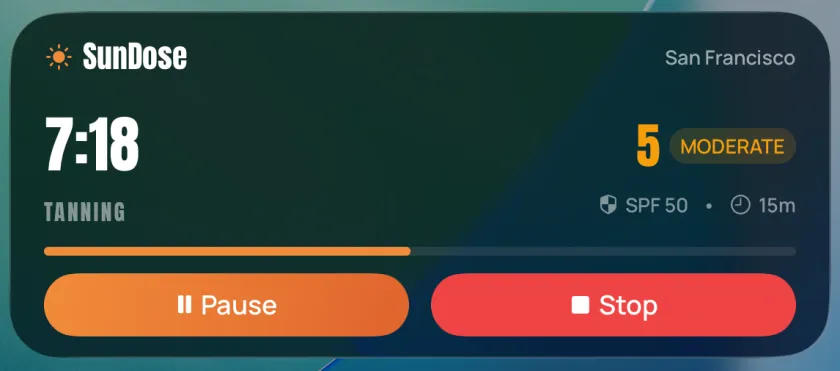
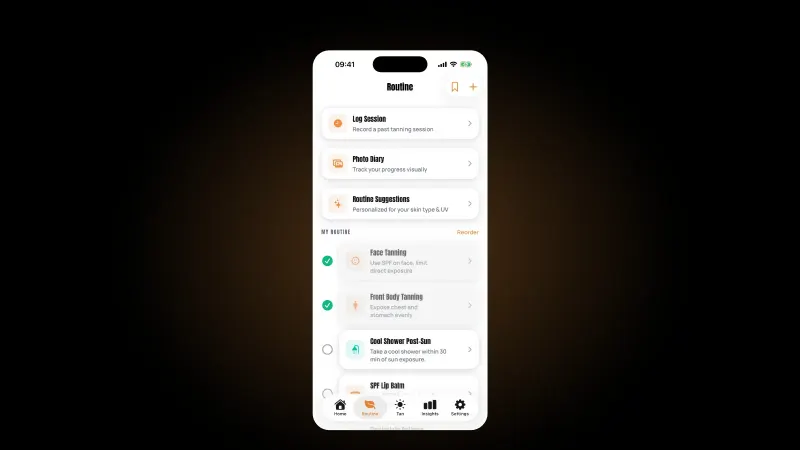
Afterwards. Forgot to start the timer? Sessions can be logged after the fact, so the long ride still counts in your history.
SunDose works from the UV index reported for your location; it isn't a dosimeter on your skin and can't tell how hard you sweated. After a sweaty effort, reapply when you stop, whatever the timer says. The rest is on the SunDose page.
FAQ
How often should you reapply sunscreen when sweating?
The FDA says at least every two hours, and more often if you're sweating. The AAD and the Skin Cancer Foundation say to reapply immediately after swimming or heavy sweating. On a long run or ride, a practical marker is the 40 or 80 minutes on a water-resistant label.
What is the best time to run to avoid UV?
Early morning or early evening, outside the four hours around solar noon when the WHO says UV peaks. Solar noon falls between noon and 2pm, depending on location and daylight saving time. The EPA's shadow rule helps on the day: a shadow shorter than you means higher UV.
Is there a sweatproof sunscreen?
No. The FDA says there's no such thing as waterproof sunscreen and that all sunscreens eventually wash off. The closest label is water resistant: effective for 40 or 80 minutes while swimming or sweating. The Skin Cancer Foundation says to reapply immediately after sweating.
Do hikers need different sun protection?
Mostly more of it. Hikes run long, and the WHO says UV increases with altitude, while water, sand and fresh snow add reflected UV. The Skin Cancer Foundation lists hiking among activities where SPF 50 or higher is necessary. Add a broad-brimmed hat, sunglasses and planned reapply stops.
Get started
SunDose is free to download on the App Store for iPhone with iOS 26 or later, with optional premium tiers. The live UV index, hourly forecast and session timer work without a subscription, and your profile and sessions stay on your device. SunDose is a wellness app, not a medical device. Read more SunDose articles.