PosturaBreathing9 min read
Box breathing: how to do it, and when it helps at work
Box breathing step by step: four equal counts of in, hold, out, hold. What a 2023 trial found, how it compares with 4-7-8, and a 40-second desk version.
Box breathing is a slow breathing exercise with four equal phases: breathe in for a count of four, hold for four, breathe out for four, then hold with your lungs empty for four. One round takes about 16 seconds. Two NHS trust guides suggest up to four rounds, which is about a minute in all.
Below are the exact steps, what the one randomized trial that included box breathing found, how it compares with 4-7-8, and a 40-second version for a workday. It is the same pattern as the Box Breathing habit in Postura, our posture and break reminder app. This is general information, not medical advice.
What is box breathing?
Box breathing, also called square breathing, is a breathing exercise made of four equal parts: in, hold, out, hold. Picture a square and travel one side per phase. The North London NHS Foundation Trust's Waiting Room guide puts it plainly: inhale for four seconds, hold for four, exhale for four, hold for four, and repeat. The Cumbria, Northumberland, Tyne and Wear NHS Foundation Trust self-help guide uses the same count of four, suggests breathing into your tummy, and says to do it three to four times. It also advises practising before you need it, so the pattern already feels familiar when a tense moment arrives. Because every phase has the same length, box breathing is easy to remember and easy to do quietly at a desk, with no equipment and no quiet room. What sets it apart from most breathing exercises is the second hold: a short pause with your lungs empty before the next breath in.
How do you do box breathing, step by step?
Sit in a chair that supports your back, with both feet flat on the floor, as the NHS guide to breathing exercises for stress suggests. Then follow the four steps:
| Step | What to do | Count | Running time |
|---|---|---|---|
| 1. Breathe in | Breathe in gently through your nose, letting the air reach your belly | 4 | 0-4 s |
| 2. Hold | Keep the air in, with your shoulders and jaw relaxed | 4 | 4-8 s |
| 3. Breathe out | Let the air out slowly and steadily | 4 | 8-12 s |
| 4. Hold | Pause with your lungs empty | 4 | 12-16 s |
| Repeat | Go back to step 1 | 16 s per round |
A few details make it easier:
- Breathe low. Let your belly move rather than lifting your shoulders.
- Trace a shape. A breathing exercises leaflet from Sherwood Forest Hospitals NHS Foundation Trust suggests tracing around your phone or notepad, one edge per phase.
- Keep the holds soft. A hold is a pause, not a strain.
Is there a shorter version?
Yes: use a count of three, or do fewer rounds. In the 2023 trial below, people were told to shorten every phase if they had to strain, and the Sherwood Forest leaflet says to repeat up to four times if comfortable.
- Count of four: 16 seconds per round, so four rounds take just over a minute.
- Count of three: 12 seconds per round, so three rounds take 36 seconds.
- A 40-second break: about two and a half rounds at four, or about three at three.
Does box breathing work?
In 2023, the journal Cell Reports Medicine published a remote randomized controlled trial, Brief structured respiration practices enhance mood and reduce physiological arousal. It compared three 5-minute daily breathing exercises with 5 minutes of mindfulness meditation over one month. Box breathing was one of the three. The others were cyclic sighing, which stretches out the exhale, and cyclic hyperventilation with retention.
What the study reported:
- Breathwork as a group improved mood and lowered respiratory rate more than mindfulness meditation did.
- The exhale-focused cyclic sighing did best on both measures.
- Every group, mindfulness included, reported less anxiety and fewer negative feelings, with no clear difference between breathwork and meditation on those two.
- No group showed changes in sleep.
The limits matter. Of the 108 people enrolled, only 21 were assigned to box breathing. Most came from one undergraduate psychology class, practice was remote and self-reported, and the study lasted four weeks with no follow-up. The authors call it exploratory, and note that the groups were too small to compare the breathing methods with each other properly.
So what can you take from it? Box breathing is a low-cost calm pause, but this is not proof that it beats other methods.
How does box breathing compare with 4-7-8 and other methods?
All four exercises below slow your breathing. The real differences are where the pauses go and how long you breathe out.
| Exercise | Pattern | Holds | Breath out vs breath in | Suggested amount |
|---|---|---|---|---|
| Box breathing | In 4, hold 4, out 4, hold 4 | Two, after each breath in and out | Equal | 3 to 4 rounds, or a 2-minute guided video |
| 4-7-8 breathing | In through the nose for 4, hold for 7, out through the mouth for 8 | One long hold, after breathing in | Twice as long | 3 to 5 rounds |
| Cyclic sighing | In through the nose, a second short breath in to fill the lungs, then a slow breath out through the mouth | None | Longer | 5 minutes a day |
| NHS belly breathing | In through the nose, out through the mouth, counting 1 to 5 each way if it helps | None | Equal | At least 5 minutes, regularly |
The 4-7-8 steps follow a 4-7-8 belly breathing guide in the ColumbiaDoctors health library, cyclic sighing is shown as the 2023 trial taught it, and belly breathing comes from the NHS stress page, which does not mention box breathing.
Box breathing is the only one with a pause after you breathe out. If holds feel uncomfortable, belly breathing and cyclic sighing have none, and cyclic sighing is the exhale-heavy style that did best in the trial.
When can box breathing help during a workday?
The Sherwood Forest leaflet chose box breathing for staff because it is easy to adapt during a busy shift. At a desk, it fits into three natural gaps.
Before a call or meeting
Do two or three rounds while the call connects, eyes open, counting silently. Nobody will notice.
After a long focus block
Finish a hard task, then breathe while you look across the room. It pairs well with the 20-20-20 rule for eye strain, which asks you to look about 20 feet away for 20 seconds. Let your shoulders drop on each breath out, or add a few desk stretches for your neck and shoulders. Our guide to micro-breaks at work has more short resets.
At the end of the day
Close the laptop and do a few rounds as a line between work and the evening. If you want to notice how you feel after a stressful day, a short note in a mood journal can reveal patterns over a few weeks.
Is box breathing safe for everyone?
The holds don't suit everyone. The Sherwood Forest leaflet notes that you might feel a little dizzy at first, and that sitting or lying down can help until you get used to it. If you have breathing-related issues, it adds, grounding techniques may suit you better.
- Stop if you feel dizzy or short of breath. Go back to breathing normally.
- Shorten the holds. Drop to a count of three, or leave the holds out.
- Check with a doctor first if you have a breathing or heart condition. The trial excluded people with conditions such as heart disease, a history of seizures and pregnancy, so it says nothing about those groups.
A breathing exercise is a calm pause, not a treatment for an anxiety condition. If stress or anxiety is affecting your daily life, talk to a doctor.
How do you make box breathing a daily habit?
Practise before you need it, as the CNTW guide advises: tie it to something you already do, and repeat it on calm days too.
- Pick one anchor. Before your first call, after lunch, or as you close the laptop.
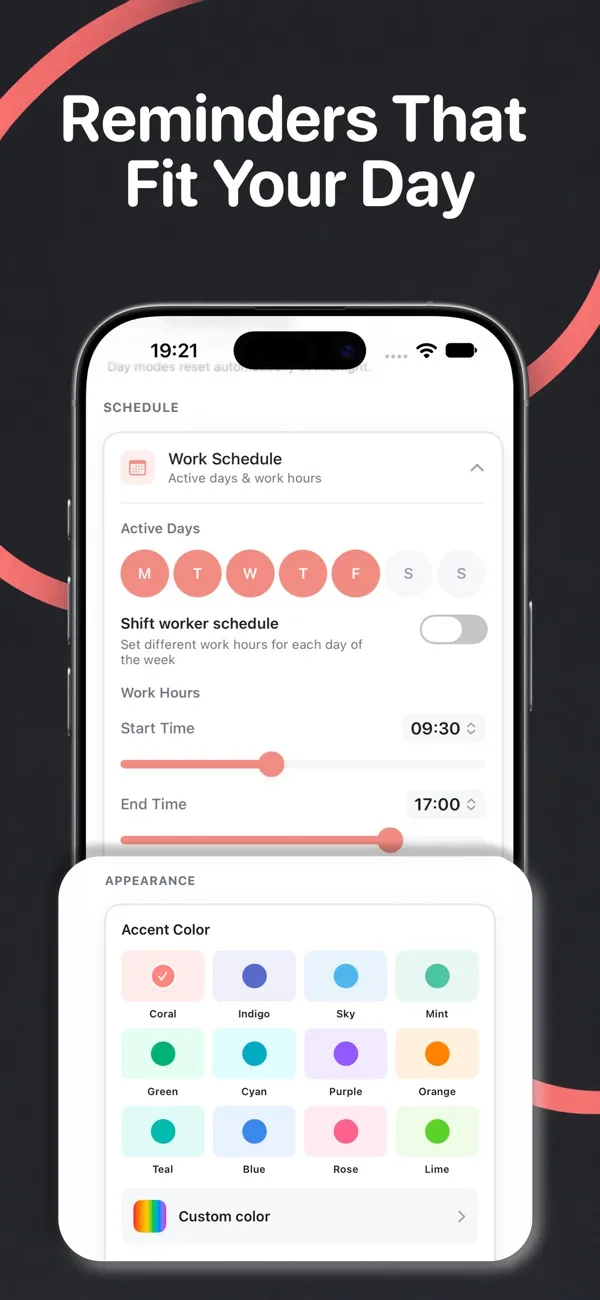
- Keep it inside work hours. A reminder at your desk is easier to act on.
- Start with once a day, then add a second moment when it feels automatic.
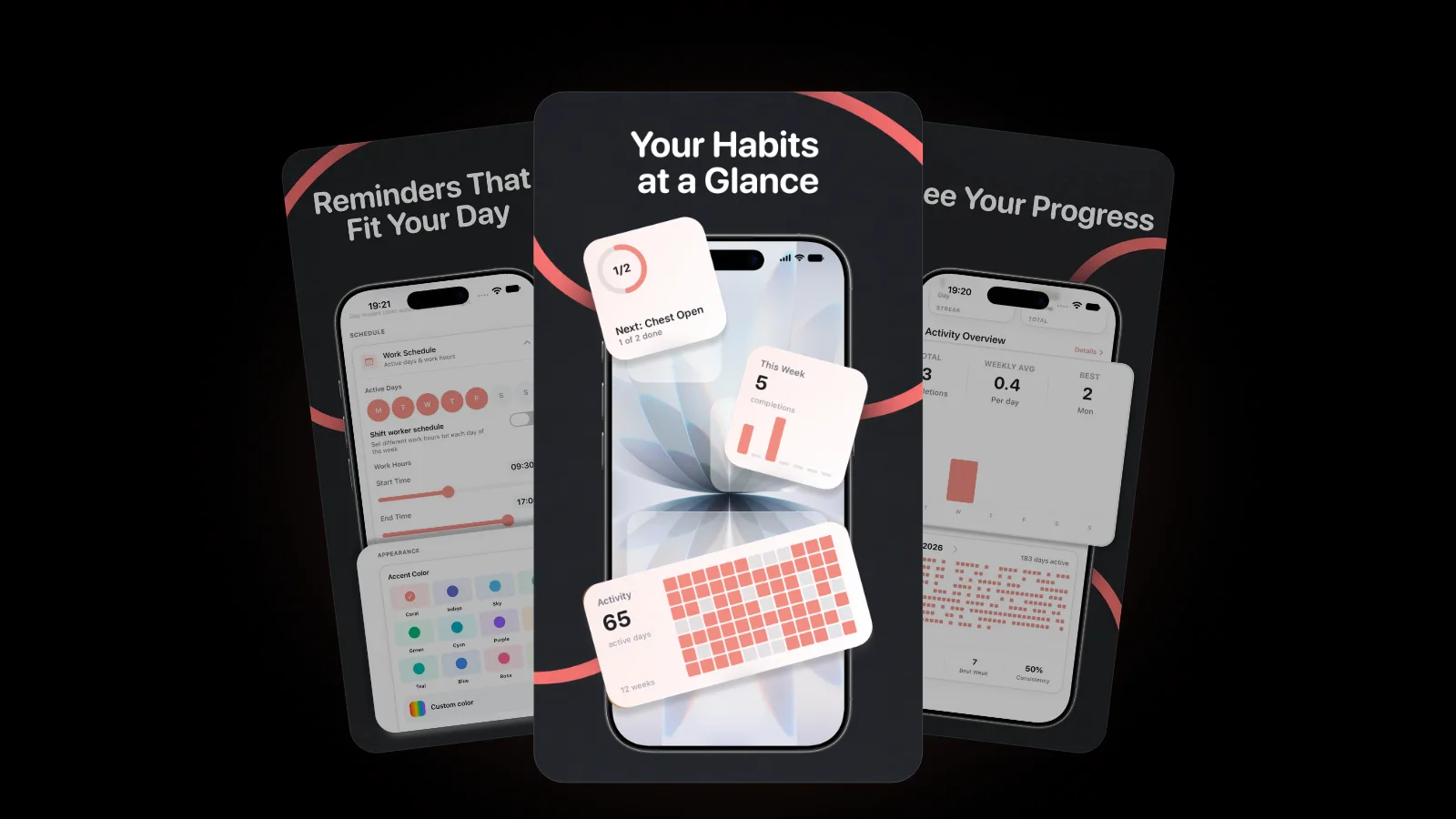
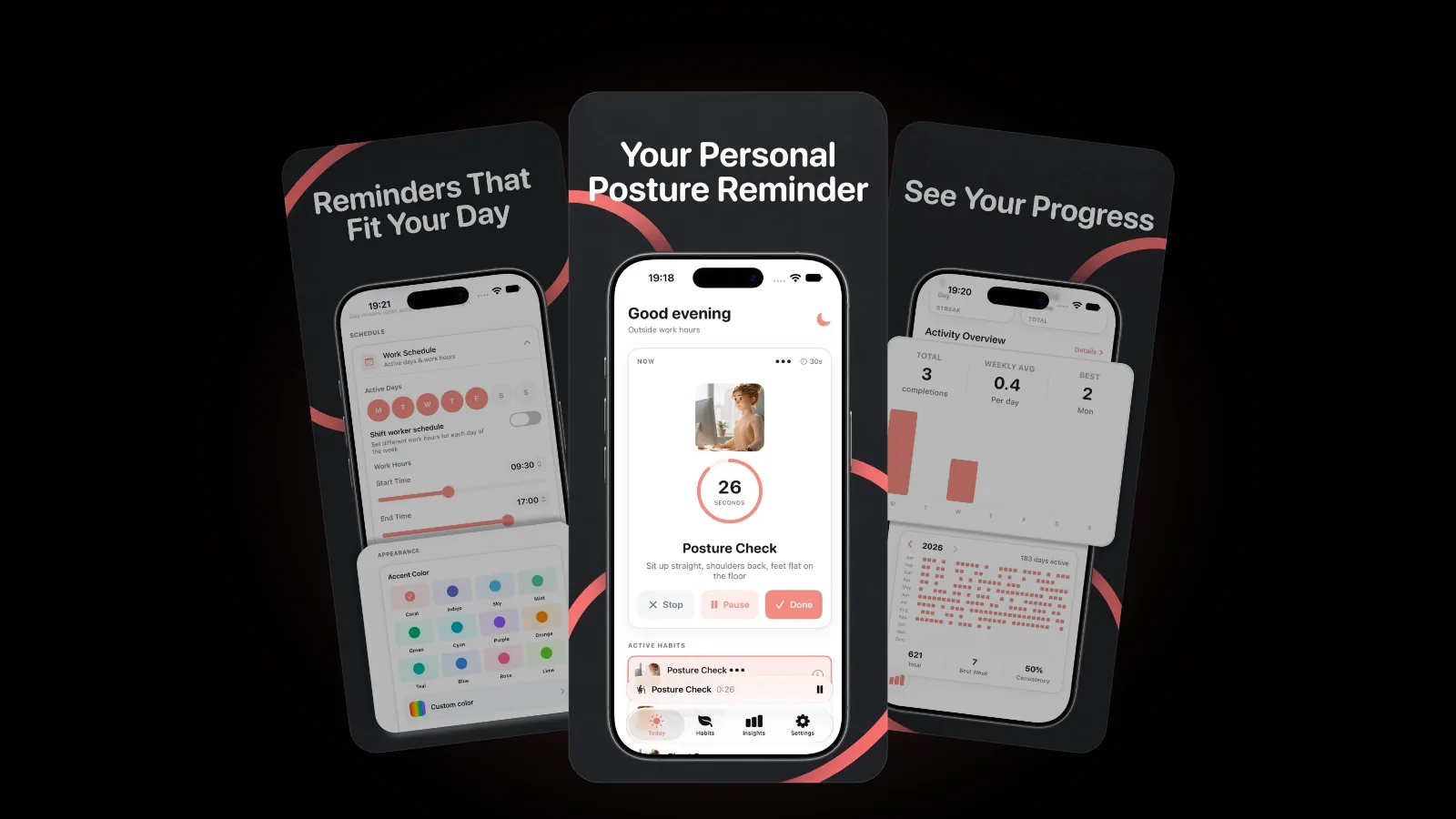
Box Breathing is one of Postura's 12 built-in habits, in the Breath category next to Deep Breath. Its instruction reads "Breathe in for 4, hold for 4, out for 4, hold for 4", and its timer is 40 seconds by default. Deep Breath asks for 5 slow, deep breaths through your nose over 30 seconds. Reminders arrive only within your work hours and on your active days. Each habit has a reminder priority of Off, Low, Normal or High, plus a daily target. Postura sends one reminder at a time, rotates suggestions, and can pause reminders once you reach the day's goal.
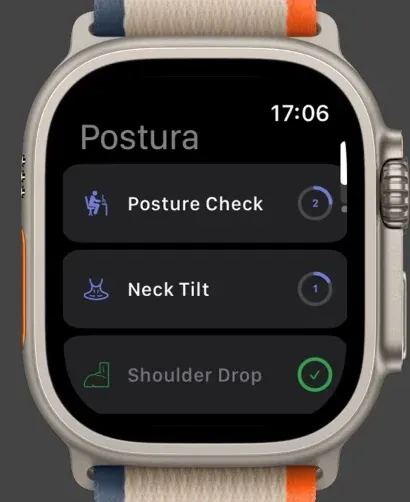
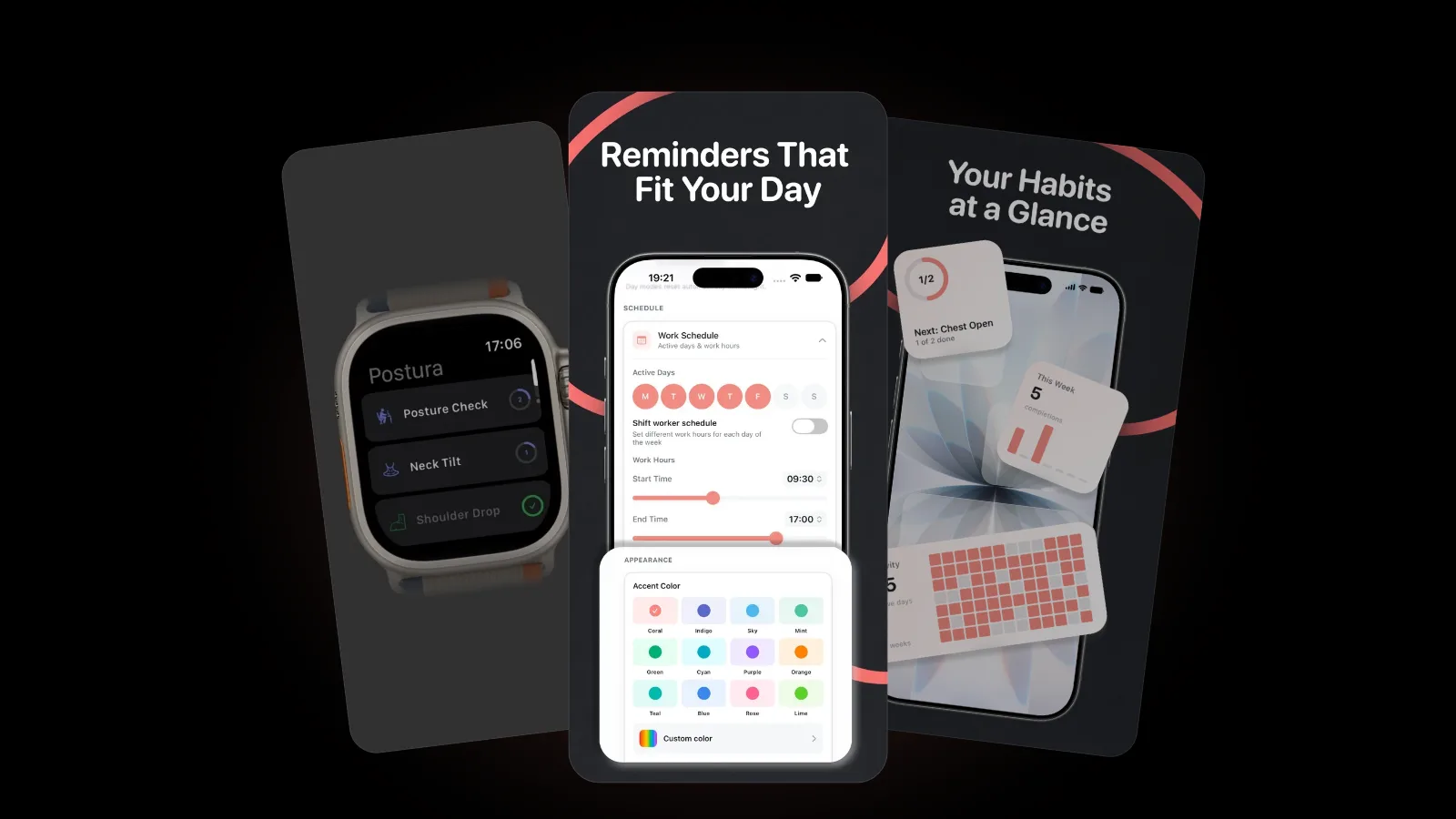
On Apple Watch with watchOS 26 or later, open Postura, tap a habit, start its timer and mark it done. The completion syncs back to your iPhone. Our guide to posture reminders on Apple Watch explains how reminders reach your wrist.
FAQ
How long should you do box breathing?
Start with about a minute. The CNTW guide suggests three to four rounds, the North London NHS guided video lasts 2 minutes, and the 2023 trial used 5 minutes a day. Short and regular beats long and rare.
Can you do box breathing at your desk?
Yes. Sit with your back supported and feet flat, and count silently with your eyes open. A Sherwood Forest Hospitals leaflet picked it for staff because it adapts easily to a busy shift.
Is box breathing the same as square breathing?
Yes. The CNTW guide calls it box or square breathing, and 4-4-4-4 breathing refers to the same four counts. The 2023 trial paper also mentions the name tactical breathing.
Is box breathing good for sleep?
There is little evidence either way. In the 2023 trial, where people practised during the day, no group showed changes in sleep. If the holds keep you alert at bedtime, try NHS belly breathing, which has none. For ongoing sleep problems, talk to a doctor.
Get started
Postura is free to download on the App Store for iPhone and Apple Watch, and on Google Play for Android, with an optional Pro subscription. It brings posture checks, stretches, eye breaks and breathing moments together on a schedule you set. Postura is not a medical app; it is a gentle way to build better desk habits. See everything it does on the Postura page or read more Postura articles.