SunDoseSunscreen9 min read
Mineral vs chemical sunscreen: which should you choose?
Mineral vs chemical sunscreen: both mostly absorb UV, blood absorption isn't proof of harm, and the EU caps oxybenzone at 6%. Pick by skin type.
Mineral sunscreens use zinc oxide or titanium dioxide as their active ingredients; chemical sunscreens use filters such as avobenzone, oxybenzone or octocrylene. Both protect mainly by absorbing UV, and no regulator has told people to stop using either. Dermatologists favor mineral for sensitive skin. Otherwise, the best choice is the one you'll apply generously and reapply.
Below: the reflection myth, the FDA's blood absorption studies, the EU's limits on oxybenzone and homosalate, what "reef safe" means, and a table by skin type. Then we show where SunDose fits. This is general information, not medical advice.
What is the difference between mineral and chemical sunscreen?
The difference is the active ingredient. The American Academy of Dermatology's Sunscreen FAQs put it in two lines: if the active ingredient is titanium dioxide, zinc oxide or both, you have a physical, or mineral, sunscreen; if it contains neither, you have a chemical one. US regulators treat the two groups differently. In its Questions and Answers on regulatory actions for OTC sunscreen, current as of September 10, 2026, the FDA proposes zinc oxide and titanium dioxide as generally recognized as safe and effective at concentrations of up to 25%. For 12 other filters, including avobenzone, oxybenzone, homosalate, octinoxate, octisalate and octocrylene, it has asked for more data. In June 2026 it also added bemotrizinol, an organic filter, to the list of permitted actives. The Skin Cancer Foundation's What's the Sunscreen Situation? notes that both labels mislead a little: every sunscreen ingredient is a chemical, so some dermatologists say inorganic and organic instead.
| Mineral (inorganic) | Chemical (organic) | |
|---|---|---|
| Active ingredients | Zinc oxide, titanium dioxide | Avobenzone, oxybenzone, octocrylene, homosalate and others |
| How they stop UV | Mostly absorption; 4 to 5% reflected | Absorption |
| FDA status, 2026 | Proposed safe and effective up to 25% | 12 filters awaiting more data |
| Long UVA, above 360 nm | Zinc oxide strong, titanium dioxide weaker | Avobenzone strong when stabilized |
| Common drawback | Whitish hue, especially on skin of color | Oxybenzone is the most common filter photoallergen |
Do mineral sunscreens really reflect UV?
Mostly, no. The AAD's FAQ still says physical sunscreens "reflect the sun's rays", and that's how mineral formulas are usually sold. But a 2016 study in Photodermatology, Photoimmunology and Photomedicine, Metal oxide sunscreens protect skin by absorption, not by reflection or scattering, measured both oxides in an optical integrating sphere. Across the UV range they reflected only 4 to 5% of light, which the authors put at less than SPF 2; absorption did the rest. Two of its three authors worked for a consumer products company.
Only in long UVA and visible light do the oxides mainly reflect, up to 60%. A 2021 review in the American Journal of Clinical Dermatology, Sunscreens and Photoaging, says they protect against visible light only when pigmentary grade, not micronized.
So "mineral reflects, chemical absorbs" is wrong. Both families mostly absorb UV; they differ in coverage, look and regulatory status.
Is chemical sunscreen safe?
The FDA hasn't concluded that the chemical filters under review are unsafe, and still tells Americans to use sunscreen alongside other sun protection. Blood studies showed these filters are absorbed, so it wants more data. Europe has tightened limits on two.
FDA scientists ran two randomized trials published in JAMA. In the 2019 pilot, 24 adults applied sunscreen to 75% of their body four times a day for four days. In the 2020 trial, 48 adults tested six filters, including oxybenzone and homosalate. Every filter passed 0.5 nanograms per milliliter of blood after one application.
That figure is the FDA's threshold for potentially waiving some extra safety studies: a trigger for more testing, not the line where harm begins. The 2020 authors wrote: "These findings do not indicate that individuals should refrain from the use of sunscreen." The AAD agrees that "just because an ingredient is absorbed into the bloodstream does not mean that it is harmful or unsafe." Where the FDA did find a problem, it acted: in September 2026 it ruled PABA and trolamine salicylate not generally recognized as safe and effective, citing safety issues.
Europe's Scientific Committee on Consumer Safety, in its 2021 opinion on benzophenone-3, the EU name for oxybenzone, found the endocrine evidence "not conclusive enough" either way, but judged it safe only up to 6% in face, hand and lip products and 2.2% in body products. Regulation (EU) 2022/1176 set those caps. The committee's advice on homosalate found it safe up to 7.34% in face cream and pump spray, and Regulation (EU) 2022/2195 now allows it only in face products, not propellant sprays, with non-compliant products off the EU market since July 1, 2025.
Our reading: regulators are trimming specific filters at specific doses, not telling anyone to stop wearing sunscreen.
Which protects better against UVA?
Neither family wins outright; specific filters do. A 2010 study in the American Journal of Clinical Dermatology, Characterization of the UVA protection provided by avobenzone, zinc oxide, and titanium dioxide, found that 3% avobenzone or 5% zinc oxide blocked UVA above 360 nanometers better than 5% titanium dioxide, which "cannot be considered a substitute" for them. Its first author worked for a consumer health company.
Avobenzone breaks down under prolonged UV unless the formula stabilizes it; the same study found well-formulated products kept losses small. The 2021 review adds that the US has "a paucity" of approved filters covering long UVA.
For a mineral formula with strong long UVA coverage, the evidence points to zinc oxide rather than titanium dioxide alone. On either type, look for broad spectrum; our guide to UVA vs UVB explains the labels.
What does reef safe mean?
Legally, very little. The AAD's guide to decoding sunscreen labels says "reef safe" is a term the FDA has not defined for sunscreen, and that more studies are needed on how ingredients affect reefs.
Some places regulate ingredients instead. Hawaii's Act 104 of 2018 made it unlawful, from January 1, 2021, to sell or distribute sunscreen containing oxybenzone or octinoxate without a prescription.
The science is unsettled. NOAA's page on skincare chemicals and coral reefs, updated in September 2026, lists oxybenzone, octinoxate and octocrylene among sunscreen chemicals that can harm marine life, but it lists nano-sized zinc oxide and titanium dioxide too. A 2022 National Academies report found limited toxicity data for marine species, and warned that fewer sunscreen choices could mean less sunscreen use, which would be expected to harm health.
Swimming near a reef? Read the active ingredients, not the front label, and lean on UV protective clothing, which NOAA calls "a great option."
Which suits sensitive, acne-prone or darker skin?
Skin type shifts the answer more than the safety debate does:
- Sensitive skin: mineral. The AAD says dermatologists recommend physical sunscreens for sensitive skin, and the 2021 review names oxybenzone as the most common photoallergen among UV filters. A reaction to the sun itself while on a retinoid or doxycycline is a different problem, covered in medications that cause sun sensitivity.
- Acne-prone skin: either type. The AAD's acne tips say to look for "non-comedogenic" or "won't clog pores".
- Darker skin and white cast: the 2021 review says mineral filters can leave a whitish hue, especially on skin of color. The AAD suggests tinted sunscreen: its iron oxide helps protect against visible light, which can increase skin darkening, particularly in darker skin tones, and the tint avoids the cast.
- Children: the AAD points to titanium dioxide or zinc oxide as less likely to irritate; see sun protection for babies and kids.
- Water sports: water resistance, 40 or 80 minutes, matters more than the filter family; see our guide for runners and cyclists.
How do you choose the right one for you?
Start with your skin's needs, then pick a formula you'll actually wear. The AAD's FAQ says "The best type of sunscreen is the one you will use again and again."
| Your situation | Leans toward |
|---|---|
| Sensitive or reactive skin | Mineral, fragrance-free |
| Acne-prone skin | Either, labeled non-comedogenic |
| Darker skin, white cast bothers you | Tinted mineral with iron oxide, or a chemical formula |
| Long hours in strong sun | Zinc oxide or stabilized avobenzone |
| Prefer to avoid oxybenzone | Mineral, or check the actives |
| Swimming or sweaty sport | Either, water resistant |
Whichever you pick, the amount matters more than the family. The AAD says most adults need about 1 ounce, roughly a shot glass, reapplied about every two hours, or after swimming or sweating. Our guide to SPF 30 vs 50 shows what a thin layer costs you.
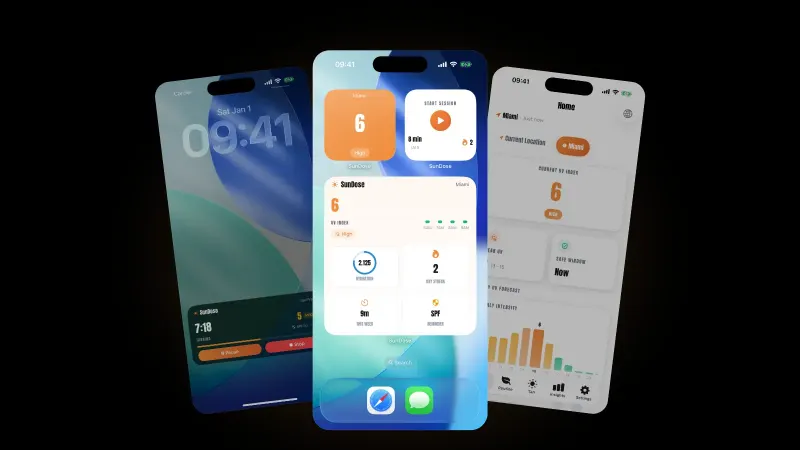
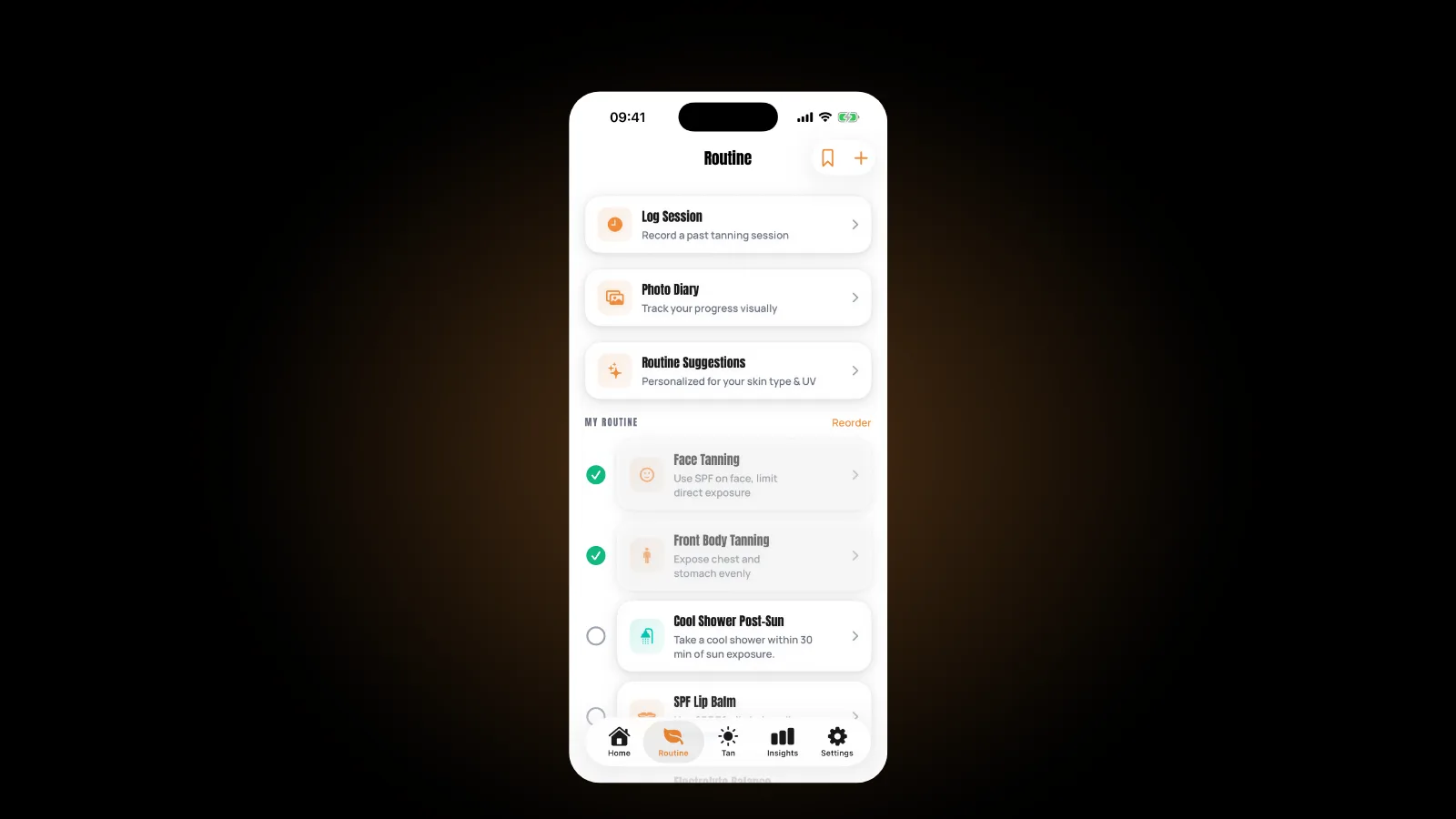
SunDose doesn't recommend a filter type. It asks which SPF you applied and weighs it with your skin type and the live UV index to suggest a session length. Routine suggestions include SPF on the face and an SPF lip balm.
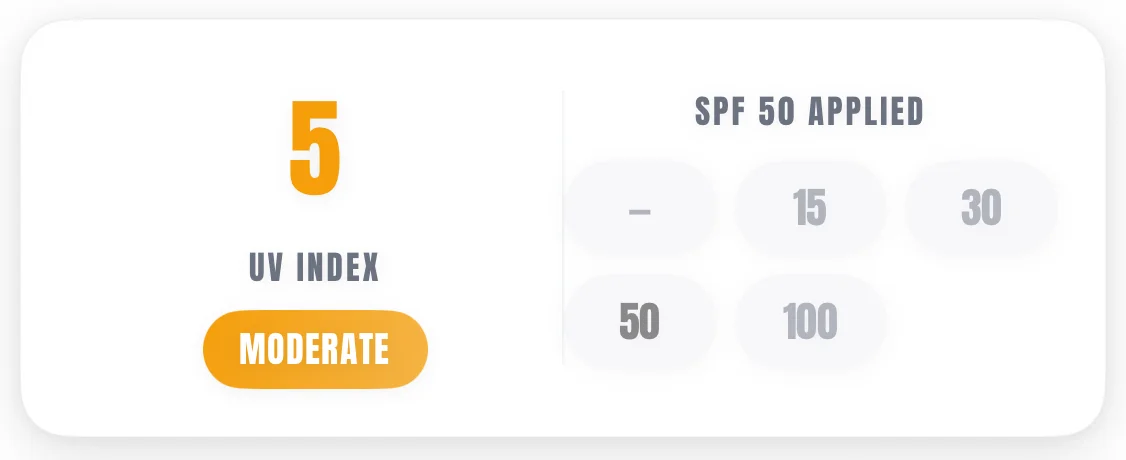
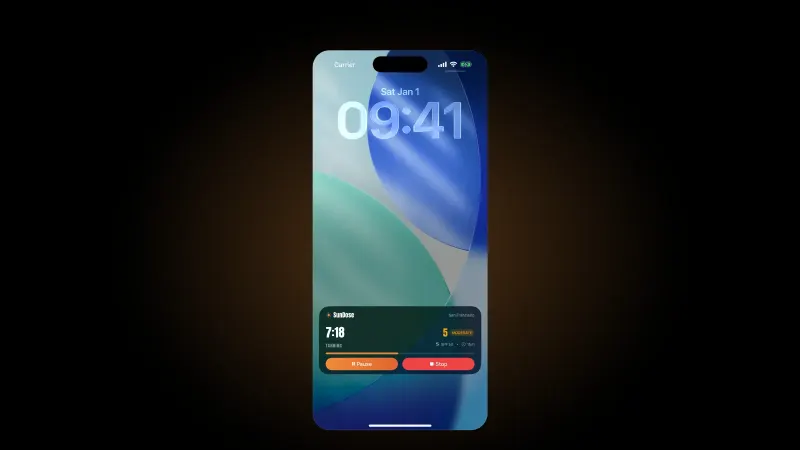
Reapply prompts run on the session clock, not a wall clock, so they arrive while you're outside. A running session also sits on the Lock Screen.
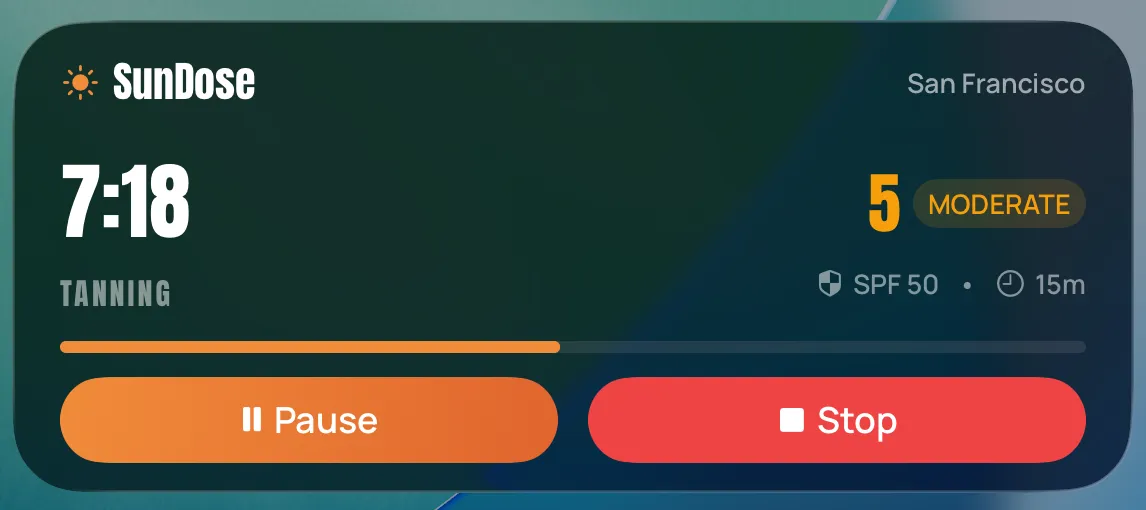
SunDose can't see which filters your sunscreen contains or how thickly you applied it. Treat a suggested length as a plan for time you'd spend outside anyway, not a reason to stay longer.
FAQ
Is mineral sunscreen better than chemical sunscreen?
Not across the board. Dermatologists recommend mineral for sensitive skin (AAD), and the FDA proposes zinc oxide and titanium dioxide as safe and effective at up to 25%. Otherwise, the AAD's rule applies: the best sunscreen is the one you'll use again and again.
Is oxybenzone safe?
The FDA wants more data on it but says that isn't a conclusion that it's unsafe. The EU's scientific committee found the endocrine evidence inconclusive and capped oxybenzone at 6% in face products and 2.2% in body products. Hawaii has banned its sale in sunscreen, without a prescription, since January 2021.
Does mineral sunscreen leave a white cast?
It can. A 2021 dermatology review says zinc oxide and titanium dioxide can leave a whitish hue that many people find unacceptable, especially on skin of color. The AAD suggests tinted sunscreen, which helps avoid the cast and adds iron oxide for visible light protection.
Is reef safe sunscreen the same as mineral sunscreen?
No. The AAD says the FDA has not defined "reef safe" for sunscreen, so the label has no fixed meaning. NOAA lists nano-sized zinc oxide and titanium dioxide, as well as oxybenzone and octinoxate, among ingredients that can harm marine life. Check the active ingredients instead.
Get started
SunDose is free to download on the App Store, with optional premium tiers; the live UV index, hourly forecast and session timer work without a subscription. It runs on iPhone with iOS 26 or later. See everything it does on the SunDose page or read more SunDose articles. SunDose is a wellness app, not a medical device.