PlateRecipes9 min read
How to preserve handwritten recipes and old recipe cards
How to preserve handwritten recipes: scan old recipe cards at 300 dpi, store the originals safely, decode old measurements and keep a version you can cook.
To preserve handwritten recipes, keep two versions of every card: an image that records the handwriting, stains and margin notes exactly as they are, and a typed copy you can cook from. Then store the originals somewhere cool, dry and dark, away from the kitchen, and keep backups of the scans in more than one place.
We make Plate, an AI recipe keeper for iPhone that reads printed and handwritten recipes. This guide is about the cards themselves: scanning, storage, old handwriting and measurements, food safety updates and a family cookbook.
What is the best way to preserve handwritten recipes?
Preserving a handwritten recipe means protecting two things: the object and the recipe. The object is the card, with its handwriting, splashes and notes in the margin. The recipe is the information written on it. The best approach treats them separately. First, scan or photograph each card at good resolution, front and back, after removing any clips or staples that come away cleanly. Save that image untouched as your archive copy. Second, transcribe the recipe into a typed, searchable version, by hand or with an app that reads handwriting, and check every amount against the card. Third, store the original flat in an acid-free box or a polyester sleeve, in a cool, dry room rather than a kitchen, attic or basement. Finally, back the scans up in at least two places, ideally three. Done once, this takes a few minutes a card, and the recipe survives even if the paper doesn't.
How do you scan old recipe cards without damaging them?
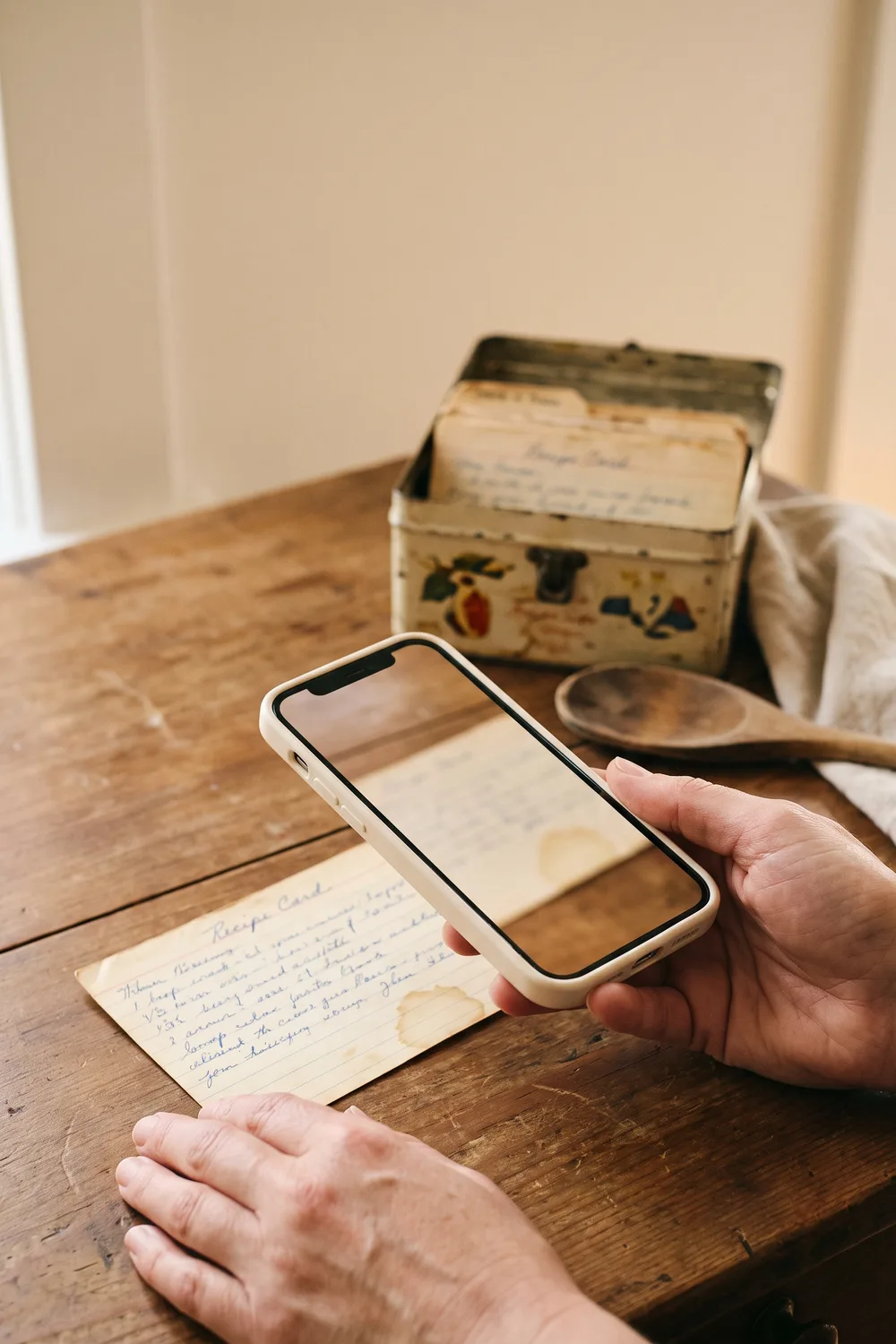
Scan at 300 dpi and handle the card as little as possible. The Library of Congress guide Scanning Your Personal Collections recommends 300 dpi for documents in general, and notes that grayscale "may capture music and handwriting details better than bitonal scans." For a recipe card, color is worth the extra file size: it keeps the faded blue ink, the grease spots and the corrections in a different pen.
- Wash your hands first. The National Archives says to wash before handling paper, skip lotion, which can stain it, and not to eat or drink around originals.
- Remove clips and staples only if they come away cleanly. The Library of Congress guide suggests removing paper clips, staples and tape without damaging the document.
- Scan both sides. The back often holds a note or a date.
- Use 300 dpi, in color. With a phone, shoot in daylight, hold it parallel to the card and fill the frame.
- Keep the raw image. Don't crop margins or clean up stains in the archive copy.
- Name files consistently. The Library of Congress suggests descriptive names and one naming system you stick to.
How should you store the original recipe cards?
Cool, dry, dark and away from food. The National Archives' guide to storing family papers recommends keeping the temperature below 75°F and relative humidity below 65% to prevent mold growth and reduce insect activity, while avoiding humidity below 15%, which can cause brittleness. It also says to store items out of damp basements, garages and hot attics, away from food and water that attract insects and rodents. The Library of Congress adds minimal exposure to light, and none that's direct or intense.
That rules out a kitchen drawer. Here's what to use instead:
| Use | Avoid |
|---|---|
| Acid-free, lignin-free boxes and folders | Drawers and shelves near the stove or sink |
| Polyester sleeves for brittle, torn or heavily used cards | "Magnetic" photo albums with self-stick pages |
| Stable plastics: polyester, polypropylene or polyethylene | White glue, hot glue and pressure-sensitive tape |
| Stainless steel clips, or no clips at all | Rubber bands, ordinary staples and steel paper clips |
| A shelf in a dry interior room or closet | Attics, basements and garages |
Then cook from the copy, never the card. A printout in a plastic sleeve can take a splash of batter; a decades-old index card can't.
How many copies of the scans should you keep?
Three, if you follow the archivists. The National Archives recommends the 3-2-1 rule for family files: "Three copies, stored on two different media, and one copy located off-site." It also advises keeping your originals after you digitize them, "because digital files have their own preservation risks and can easily be lost."
The Library of Congress guide adds two habits: store copies as far apart as practical, and move your scans to a current storage medium about every five to seven years. In practice, that's one copy on your computer, one on an external drive and one in cloud storage or with a relative in another home.
How do you read old handwriting and measurements?
Read slowly and use context. Recipes list ingredients first and then the method, so a word you can't read is usually an ingredient or a verb. A few habits help:
- Find a word you know. Match the letters in "flour" or "sugar" to decode the rest.
- Zoom in on the scan. A 300 dpi image on screen is often easier to read than the card.
- Ask whoever cooked it. Relatives often remember the dish better than the card does.
Old measurements are the other puzzle. In a 2022 post on the Library of Congress blog about baking from an 1876 cookbook, the author notes the original baker "would have no temperature control dial to manipulate" and might test the oven by throwing flour on its floor to see how fast it blackened. For a moderate heat, the author found "350-375 degrees in a modern oven is a close approximation."
| On the card | A sensible modern reading |
|---|---|
| Moderate oven | 350 to 375°F |
| Soda | Baking soda, which the same post found works where an old recipe says soda |
| Oleo | Margarine, short for oleomargarine |
| Butter the size of an egg | Sources disagree; start with about 1 ounce (2 tablespoons) and adjust |
| A teacup or a coffee cup | The family's own cup, not a standard measure |
| Scant or heaping | A little under, or a little over, a level measure |
The egg shows why old measures need testing. A cookbook in the University of Guelph Library's historical exhibit equates butter the size of an egg with one ounce, yet a dozen large eggs must weigh at least 24 ounces under USDA egg standards, about 2 ounces each in the shell. As for the teacup: if the family's own cup still exists, fill it with water and measure it.
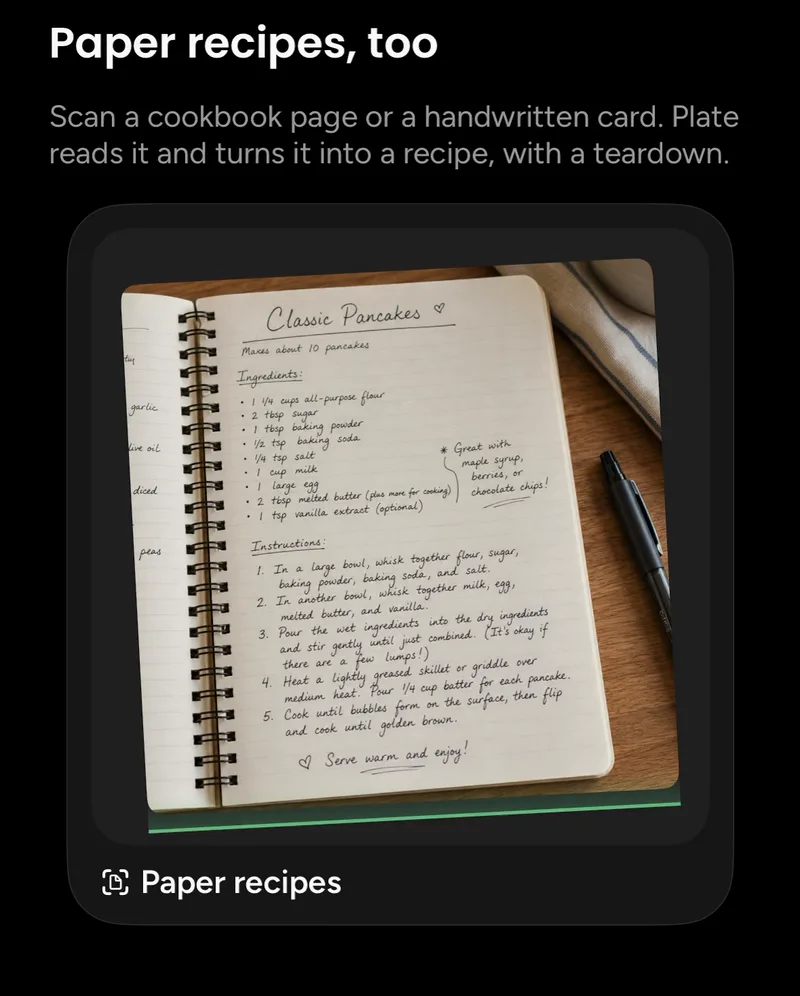
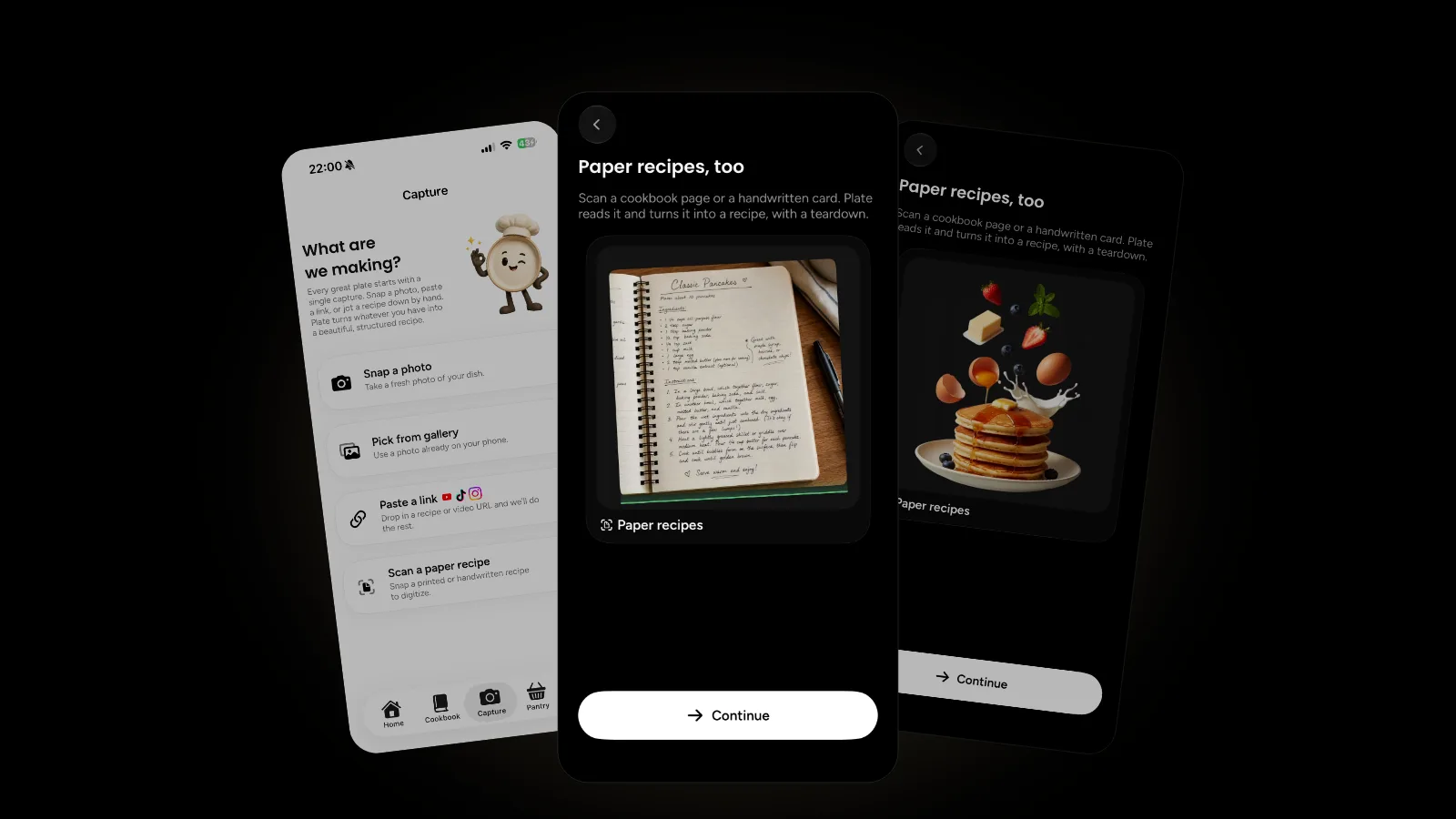
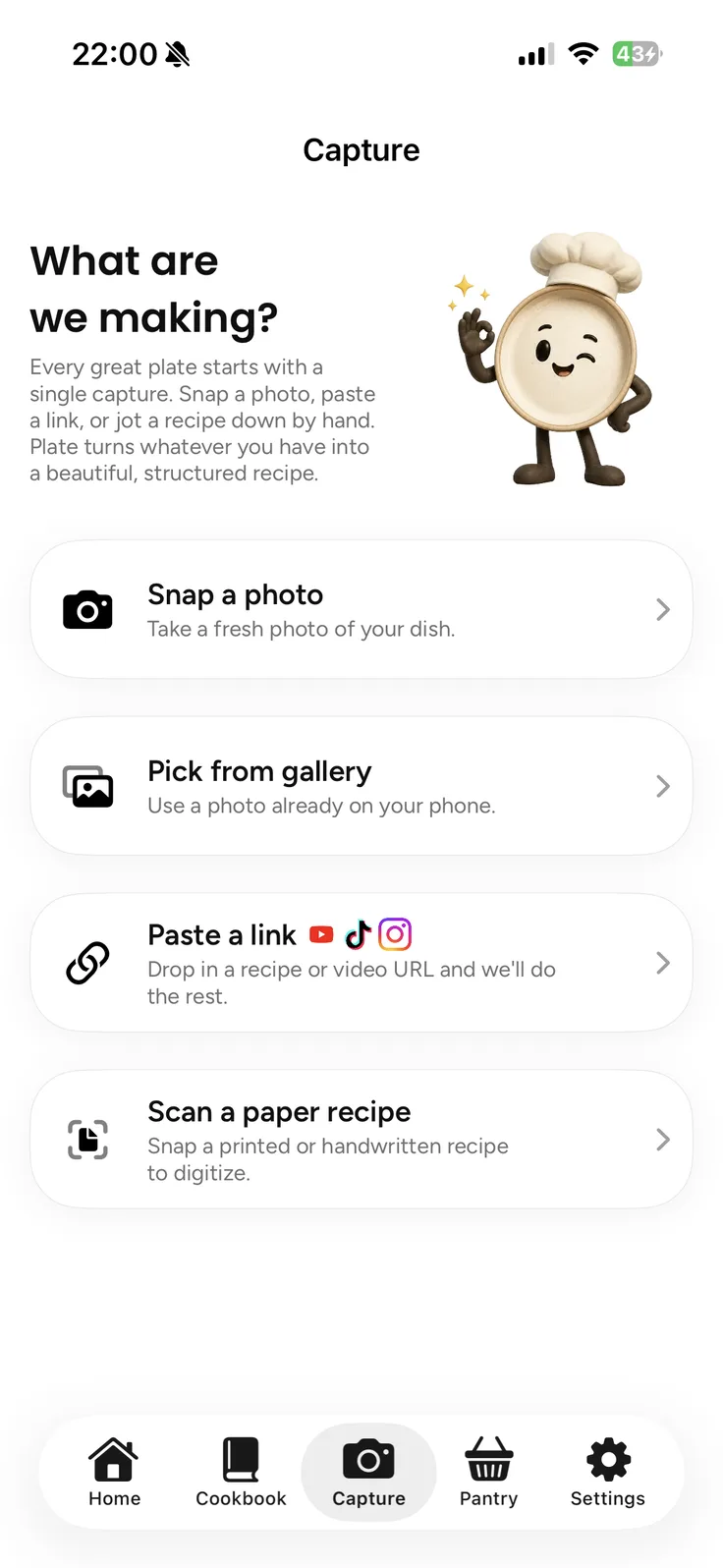
In Plate, choose Scan a paper recipe, then photograph the card or pick an image from your photos. Plate reads the page, organizes the ingredients, estimates nutrition and creates the visuals. You see the whole recipe before it's saved, so check it line by line against the card, especially the numbers. If Plate finds no text, it asks you to try again with better lighting or a flatter angle. Paper recipe scanning is part of Plate Pro.
Should you update old family recipes for today's food safety advice?
Keep the card exactly as it is, but cook from an updated copy when a recipe involves home canning, raw eggs or meat cooked "until done." In June 2026, Kansas State University published Are Old Canning Recipes Safe?, which warns that heirloom canning recipes may be unsafe because of improper acidity, the wrong processing method, too short a processing time or no processing at all. Its advice: "Always use updated, tested recipes to ensure the safety of the food."
The usual updates:
- Home canning. Follow a current tested recipe, such as one from the USDA Complete Guide to Home Canning.
- Raw or lightly cooked eggs. For dishes where eggs are raw or undercooked when served, such as Caesar dressing or homemade ice cream, the FDA advises pasteurized egg products or shell eggs treated to destroy Salmonella. Casseroles and other egg dishes should reach 160°F.
- Meat and poultry. "Cook until done" isn't a temperature. The CDC lists 165°F for all poultry, 160°F for ground beef and pork, and 145°F for whole cuts of beef, veal, lamb and pork, followed by a 3-minute rest.
Keep a note of each update with your typed copy, never on the card itself.
How do you turn family recipes into a cookbook?
Once the cards are scanned and typed, a family cookbook is mostly assembly:
- Bring every card into one place. In Plate, each scanned card becomes a recipe in your cookbook, synced to your account so it survives a new phone.
- Group them. Plate lets you group recipes into lists of your own, such as one per relative.
- Pair each recipe with its card. The scan of the handwriting is what turns a collection into a keepsake.
- Export and share. Plate exports any recipe as a high-resolution image card or a printable PDF with the dish image, the full ingredient list and every step, ready for the share sheet or the printer. Free exports include a Plate watermark; Plate Pro removes it.
If your recipes are scattered beyond the recipe box, our guide to organizing recipes from TikTok, Instagram, web and paper covers the bigger cleanup. If a family recipe feeds twelve and you're cooking for two, scaling a recipe up or down explains the math. And for a dish from a restaurant rather than a relative, see copycat recipes. More guides are in the Plate category.
FAQ
Should I keep the original recipe cards after scanning them?
Yes. The National Archives advises keeping originals after you digitize them, because digital files have their own preservation risks and can easily be lost. Store the cards flat in acid-free boxes or polyester sleeves, and cook from a copy.
What resolution should I scan recipe cards at?
300 dpi, the Library of Congress's general recommendation for documents. Scan in color to keep faded ink and stains, scan both sides, and keep the untouched image as your archive copy.
Can an app read handwritten recipes?
Yes. Plate scans printed and handwritten recipes and turns them into structured recipes with ingredients, steps and estimated nutrition. Old handwriting can be misread, so check every amount against the card before you save. Paper recipe scanning is part of Plate Pro.
Where should I store old recipe cards?
In a cool, dry, dark room. The National Archives suggests a temperature below 75°F and relative humidity below 65%, and says to keep family papers out of damp basements, garages and hot attics. A drawer next to the stove is the opposite of all three.
Get started
Pick the card you'd least like to lose and scan it this week. Plate is free to start on the App Store, and the Plate page shows everything else it can do.