PosturaShoulders9 min read
Rounded shoulders: what causes them and how to fix them
Rounded shoulders are usually a habit, not damage. What causes them, a quick check, the stretches and upper back exercises that help and how long it takes.
Rounded shoulders are when your shoulders sit forward of your ears and your upper back curves, often after long hours leaning toward a desk, laptop or phone. For most people it's a habitual resting position, not damage. The fix is a simple pairing: stretch the front of your chest, strengthen your upper back and change position often.
Below: the causes, a quick check, the exercises NHS physiotherapy teams suggest and a realistic timeline. At the end, we show how Postura can remind you. This is general information, not medical advice. If you have pain that doesn't settle, numbness or weakness, see a doctor or physiotherapist.
What are rounded shoulders?
Rounded shoulders describe a posture in which the shoulders roll forward and inward, the shoulder blades drift apart and the upper back curves, so the chest looks closed. It describes how you're holding yourself, not a diagnosis. Leeds Community Healthcare NHS Trust, on its page about mid and upper back problems, notes that people with postural pain sometimes develop a rounded posture, especially when sitting. That can leave your head poking forwards and may lead to stiffness and weakness. The same physiotherapy team is just as clear that there is no one correct posture, and that sitting for long periods is not dangerous because our spines are strong and robust. That framing matters. Rounded shoulders usually reflect where your body settles after hours in one position, so they respond to the same thing that shaped them: what you do over and over, day after day.
You may also see the term upper crossed syndrome. A 2026 narrative review from Arizona State University, Upper Crossed Syndrome in the Workplace, describes it as a muscle imbalance: tight upper trapezius, levator scapulae and chest muscles, with weak deep neck flexors and weak middle and lower trapezius. Rounded shoulders and a forward head are among the changes it lists. In short: tight at the front, weak at the back. If your head drifts forward too, our guide to tech neck covers that part.
What causes rounded shoulders?
Mostly, long stretches in one forward-leaning position. Typing, driving and reading a phone put your hands and eyes in front of you, and your shoulders follow. The 2026 review links upper crossed syndrome to long computer days and suggests workstation ergonomics and hourly breaks as prevention.
| Habit | What your shoulders do | What helps |
|---|---|---|
| Screen too low or too far away | You lean in, and they come with you | Top of the screen level with your eyes, about an arm's length away (HSE) |
| Laptop on a desk for hours | Low screen, chest closes | A separate keyboard and mouse so the screen can sit on a riser (HSE) |
| Chair too low for the desk | They hitch up to reach the keys | Sit high enough that you don't need to shrug (HSE) |
| Phone at chest or lap height | They tip forward with your head | Raise it closer to eye level, and put it down between tasks |
| Sitting still for hours | They settle into the easiest slump | Get up and move after 30 minutes (Leeds Community Healthcare) |
The HSE rows come from the UK Health and Safety Executive's display screen guidance. For the full desk setup, see how to sit at a desk properly.
How can you tell if your shoulders are rounded?
A quick side-on check is enough. Stand as you normally would, arms relaxed, and ask someone to take a photo from the side. If the front of your shoulder sits well ahead of your ear and your upper back curves forward, your shoulders are resting rounded.
Researchers do the same thing more precisely: the 2022 trial below measured shoulder angles from photographs. At home you're not chasing a number. For more self-tests, see our guide to checking your posture, or browse all our posture articles.
Can rounded shoulders be fixed?
Usually, yes, in the sense that the resting position changes. In 2022, a randomized controlled trial in the International Archives of Occupational and Environmental Health, by researchers from Shahid Beheshti University in Tehran and Denmark's National Research Centre for the Working Environment, tested corrective exercise for office workers with upper crossed syndrome. Thirty-six office workers with neck and shoulder pain did online-supervised exercise, exercise at work, or carried on as usual. After 8 weeks, both exercise groups had improved their rounded shoulder, forward head and rounded back angles, and their pain, compared with where they started.
It's a small trial, 12 people per group. Shoulder blade research points the same way. In 2024, a meta-analysis in BMC Musculoskeletal Disorders from West China Hospital of Sichuan University pooled 8 randomized trials with 313 participants on scapular treatment for chronic neck pain. It found moderate evidence that treating the shoulder blades eased pain intensity, though not neck disability, and forward head posture appeared to be corrected.
One detail from the 2022 trial is worth knowing: the authors note that some studies found stretching improved tolerance to the stretch without changing muscle length. So the plan below pairs stretches with strengthening and movement.
Rounded shoulders are not the same as kyphosis, which the NHS describes as a curve in the spine that makes the top of your back look hunched or rounded; if you think you have it, see a GP rather than relying on stretches or an app.
Which exercises help rounded shoulders?
Open the front, wake up the back and keep moving. Go slowly and stay in a comfortable range.
- Doorway chest stretch. South Tees Hospitals NHS Foundation Trust's anterior shoulder stretch starts with your forearm against a door frame and your elbow at shoulder level, until you feel a gentle stretch across the front of the chest. UMass Memorial Health's doorway pectoral stretch uses both arms: step forward with one foot without leaning, hold for 15 seconds and repeat 3 times. If it hurts, move your elbows down slightly.
- Shoulder blade squeeze. Dynamic Health, an NHS physiotherapy service, has you sit with your hands on your thighs, pull your shoulder blades together, then relax: 5 to 10 repetitions, 3 to 5 times a day.
- Shoulder rolls. WWL Teaching Hospitals NHS Foundation Trust's Neck and Upper Back Exercises Level 1 leaflet has you roll your shoulders 10 times forwards and backwards, for 2 sets.
- Seated trunk rotation. From the same leaflet: sit tall with your arms folded across your chest and twist until you feel a stretch in your side and back. Hold for 1 to 2 seconds, 5 times each side, for 2 sets.
For heavier strengthening of the middle and lower trapezius, a physiotherapist can set the right load. Dynamic Health adds that exercises shouldn't cause severe pain or make your pain worse. For a short seated routine, see our desk stretches for neck and shoulders.
How long does it take to fix rounded shoulders?
Think weeks to months, with no fixed finish line. In the 2022 trial, shoulder angles improved after 8 weeks of exercise three times a week, in sessions of about 50 to 60 minutes. The authors still called 8 weeks a limitation: posture and pain improved sooner, but shoulder blade muscles may need longer to change how they fire.
That's more than most home routines, and NHS plans set a gentler pace:
| Source | How often | Notes |
|---|---|---|
| 2022 office-worker trial | 3 sessions a week, about 50 to 60 minutes | Shoulder angles improved after 8 weeks |
| WWL NHS upper back leaflets | 3 to 4 times a week | At least 1 day off between; discomfort should ease within 2 hours |
| Dynamic Health NHS neck advice | 5 to 10 repetitions, 3 to 5 times a day | Shouldn't make your pain worse |
| Leeds Community Healthcare NHS | Throughout the day | Change position; move after 30 minutes |
So which pace is right? The one you'll keep. Pick a dose you can repeat for two months, then judge the change.
How do you keep your shoulders back at a desk?
Not by holding them back all day, which is just another fixed position. Aim for a setup that doesn't pull you forward, plus small, frequent resets:
- Bring the screen to you. HSE puts the top of the screen level with your eyes, about an arm's length away.
- Relax your shoulders. Sit high enough that you don't need to shrug.
- Split up your laptop. Use a separate keyboard and mouse so the screen can be raised.
- Move every 30 minutes. Leeds Community Healthcare says to change position as regularly as you can.
- Reset, then let go. Drop your shoulders away from your ears, squeeze your shoulder blades together for a moment, then relax.
Noticing that you've drifted is most of the work; our guide on how to stop slouching covers that awareness.
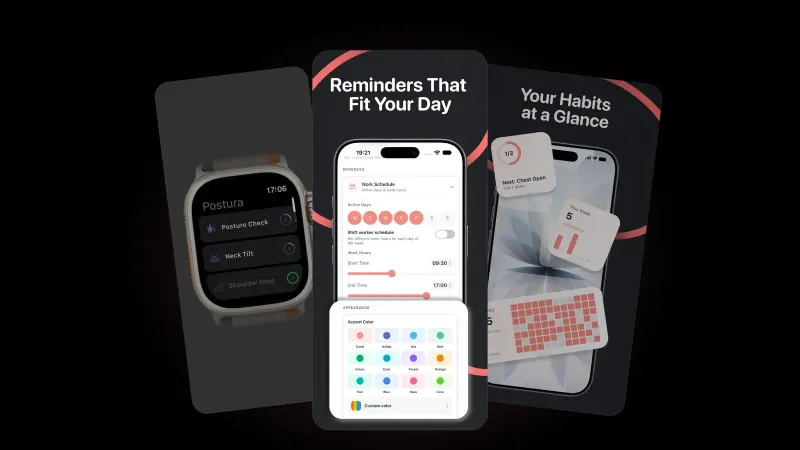
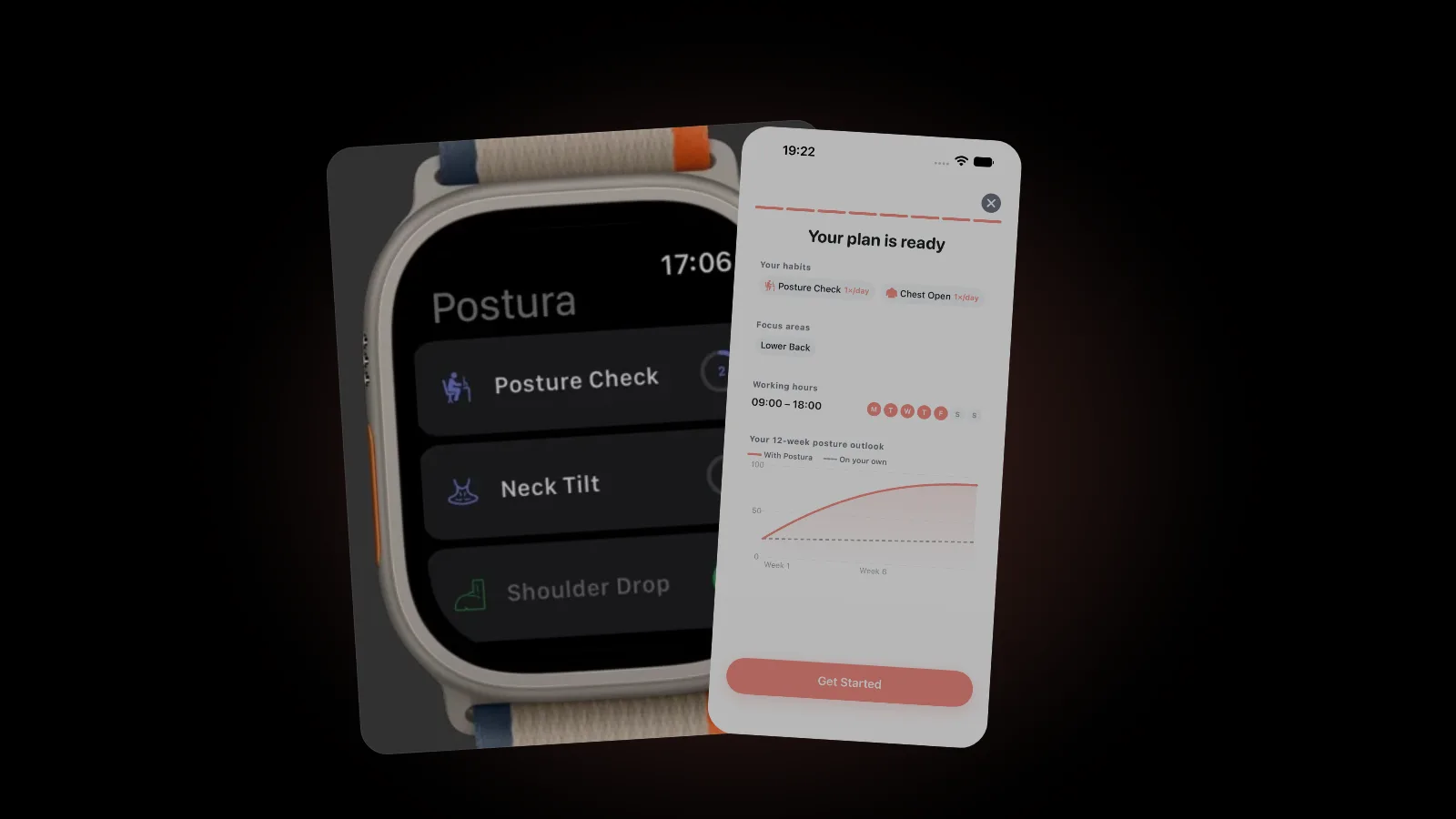
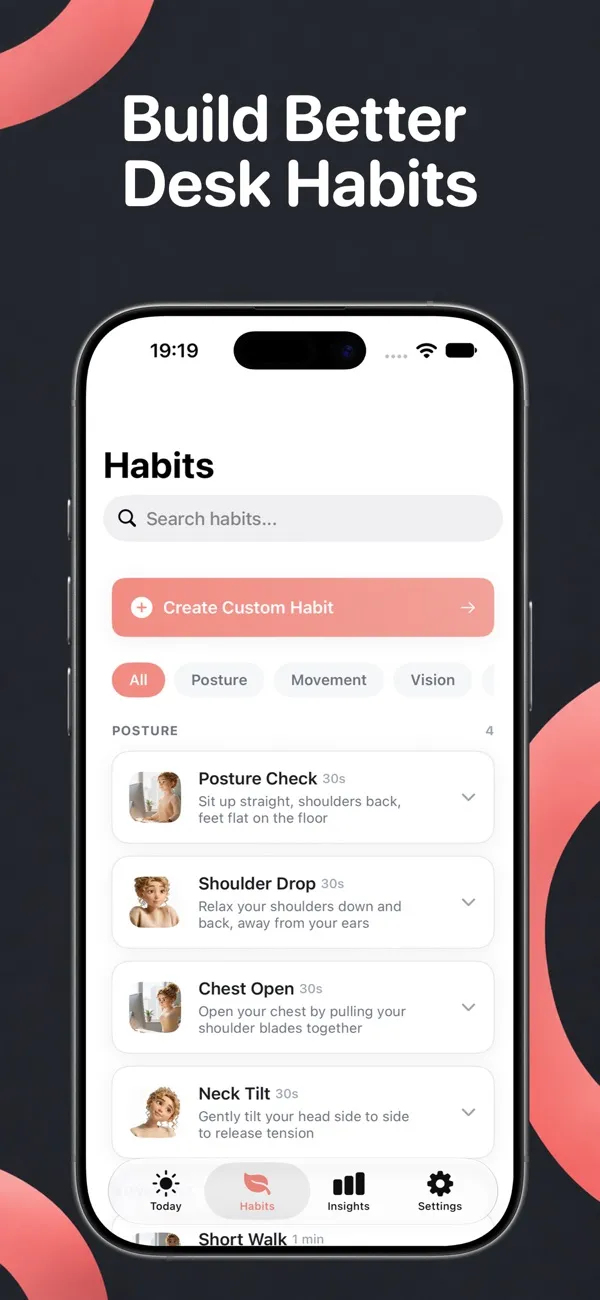
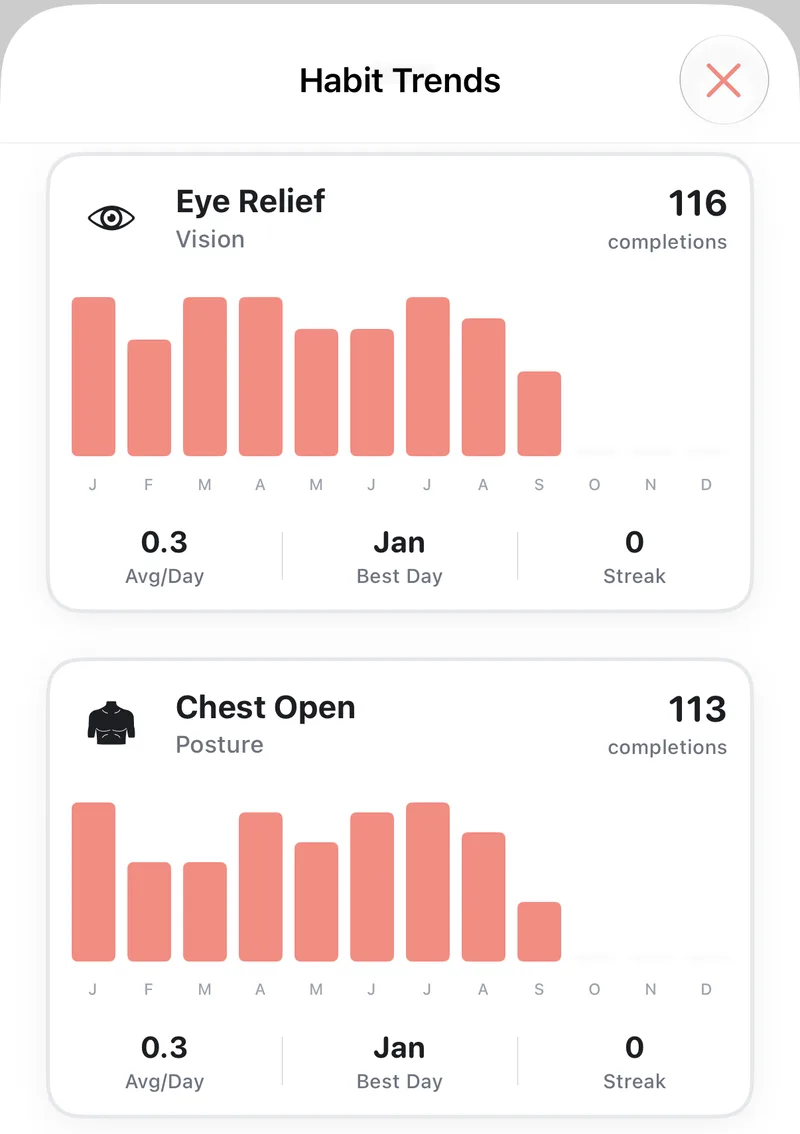
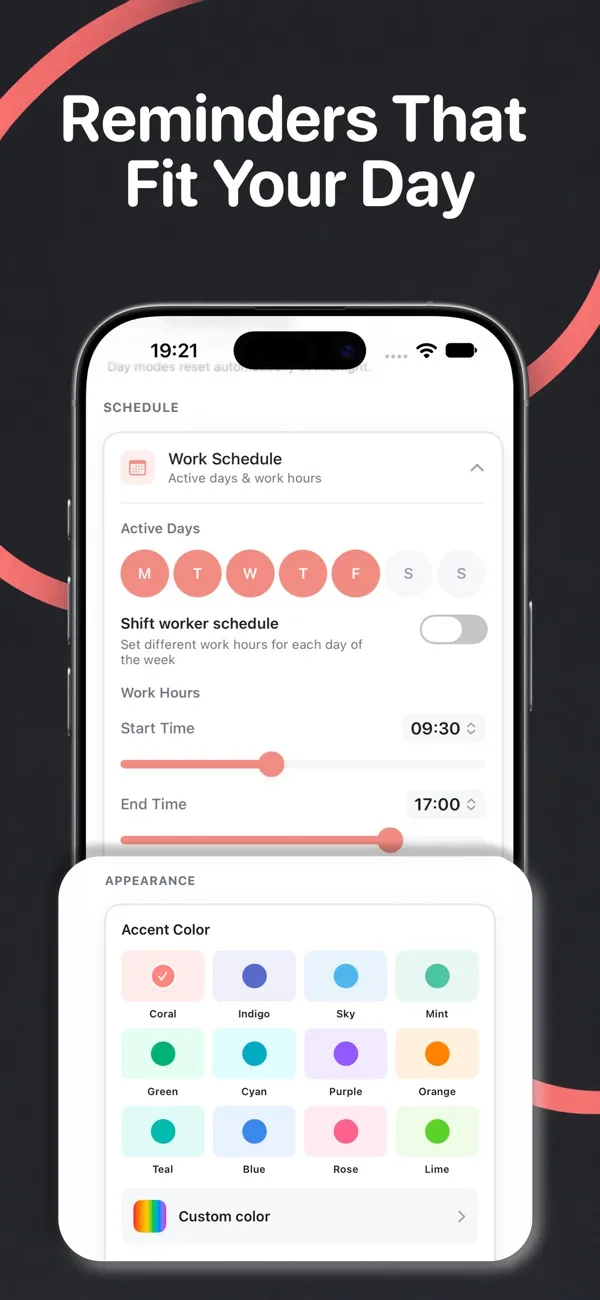
A reminder helps with the rest. Postura has three 30 second habits that match this plan: Chest Open ("Open your chest by pulling your shoulder blades together"), Shoulder Drop ("Relax your shoulders down and back, away from your ears") and Shoulder Roll ("Roll your shoulders forward and backward 5 times each"). Reminders arrive only within the work hours and active days you set, and on iPhone there's an Apple Watch app for a tap on the wrist.
FAQ
Are rounded shoulders permanent?
Usually not. In a 2022 trial, office workers' rounded shoulder angles improved after 8 weeks of corrective exercise. If your upper back looks fixed in a hunched curve, see a GP, since kyphosis needs a clinician to assess it.
How often should you do exercises for rounded shoulders?
NHS plans vary. WWL's upper back leaflets suggest 3 to 4 times a week, with a day off in between. Dynamic Health suggests 5 to 10 repetitions, 3 to 5 times a day. Short daily resets plus a few longer sessions works for most people.
Should you pull your shoulders back all day?
No. Leeds Community Healthcare says there is no one correct posture, and HSE advises relaxing your shoulders. Holding them back is just another static position.
Can an app fix rounded shoulders?
No app can fix your posture, and Postura does not claim to. A reminder app helps with the hard part: remembering to stretch, reset and move during a busy day.
Get started
Postura is free to download on the App Store and on Google Play, with an optional Pro subscription. It reminds you to open your chest, drop your shoulders, stretch and rest your eyes during the hours you choose. Postura is not a medical app; it is a gentle way to build better desk habits. See everything it does on the Postura page.