PosturaBack pain9 min read
Upper back pain from sitting: why it aches and what helps
Why your upper back aches between the shoulder blades at a desk, the breaks and gentle moves NHS physios suggest, how long it lasts and when to see a GP.
Upper back pain from sitting is usually an ache or tightness between and around the shoulder blades after long, still hours at a desk. NHS physiotherapy guidance says it is very common, is not usually serious and often settles within about 6 weeks. What helps: moving around after 30 minutes, regular stretches, and heat or massage.
Below: the causes, what to change at your desk, moves from NHS exercise leaflets, how long it lasts and when to see a doctor, plus how Postura can remind you to get up. This is general information, not medical advice. If your pain is severe, getting worse or started after a fall, see a doctor.
Why does your upper back hurt when you sit?
Usually because you have held one position too long, not because something is damaged. Leeds Community Healthcare NHS Trust says on its mid and upper back page that pain and stiffness in the mid and upper back, the thoracic spine, is very common and can occur at any age. It can start suddenly after an injury, but usually builds up gradually. The trust lists five common causes: long periods spent working at a desk or computer, long periods of inactivity, carrying heavy bags, sprains and strains, and stress and poor sleep. You may feel it in the muscles either side of your back and around your shoulder blades, and sometimes at the tops of your shoulders or into your neck. The chair is not the enemy: the trust says sitting for long periods is not dangerous, as "our spines are strong and robust". Its advice is to change position as often as you can, and to get up and move around after 30 minutes.
How common is it? In 2009, a systematic review in BMC Musculoskeletal Disorders, Thoracic spine pain in the general population, included 33 studies. Across them, the share of people reporting any thoracic spine pain over a year ranged from 15% to 27.5%. The review found links with postural, psychological, lifestyle and backpack factors, among others, but called that evidence limited.
Is pain between the shoulder blades from sitting serious?
Usually not. The Leeds trust says pain in the mid and upper back is not usually serious and does not usually need any scans or investigations. A few rare signs need a doctor quickly; they are in the last section.
Posture gets most of the blame online, but the NHS page says there is no one correct posture. It does note that people with postural pain sometimes develop a rounded posture when sitting, which may lead to stiffness and weakness.
In 2023, a study of 99 office workers with neck and shoulder blade pain, Prevalence of scapular dyskinesis in office workers with neck and scapular pain, found 90% had scapular dyskinesis, an altered position or movement of the shoulder blade. It only studied people already in pain, so it shows a link, not a cause. Our guide to rounded shoulders goes further.
Which desk habits make upper back pain worse?
The ones the Leeds trust lists as causes: long desk spells, little movement, heavy bags, and stress and poor sleep.
| Habit (a common cause, per Leeds NHS) | What to try |
|---|---|
| Long spells working at a desk or computer | Get up and move around after 30 minutes |
| Long periods of inactivity through the day | Stand up between tasks and add short walks |
| Carrying a heavy bag to work | Carry less where you can |
| Stress and poor sleep | Treat both as part of the fix, not extras |
Setup still matters for comfort. For chair height, screen position and keyboard reach, see how to sit at a desk properly. If whole days pass in a chair, read our piece on sitting all day.
How do you ease upper back pain at your desk?
Move more often, in smaller doses. HSE guidance on work routine and breaks says to take short breaks often rather than longer ones less often: 5 to 10 minutes every hour is better than 20 minutes every 2 hours. Breaks should let you get up and move around, or at least stretch and change posture.
- Get up after 30 minutes. The Leeds trust says to change position as regularly as you can.
- Stretch and shift position. Regular stretches and position changes can reduce stiffness.
- Try heat or massage. Heat and massage, with a ball or foam roller, can help relieve muscle tightness.
- Build strength over weeks. Strengthening exercise is likely to reduce the risk of the pain returning.
More ideas are in our guide to micro-breaks at work.
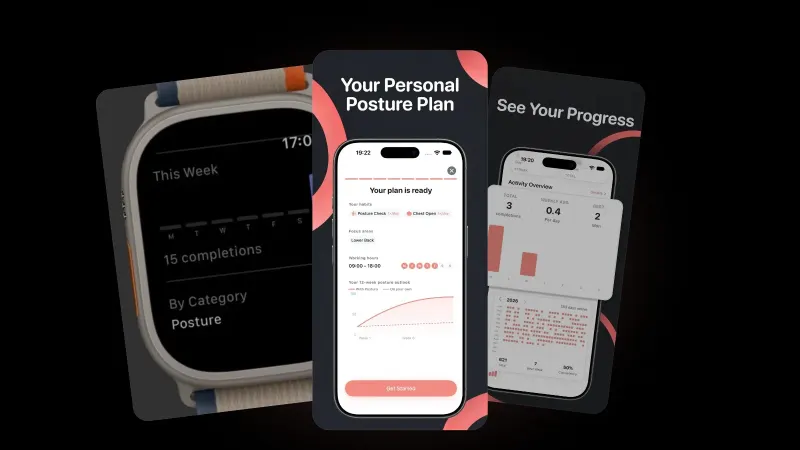
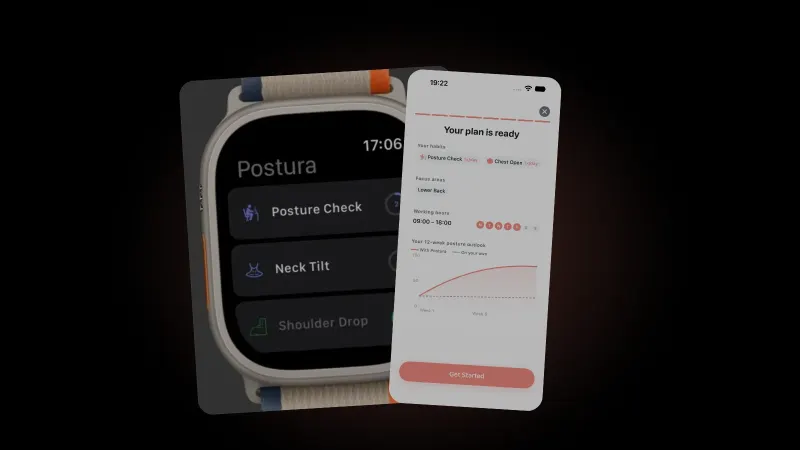
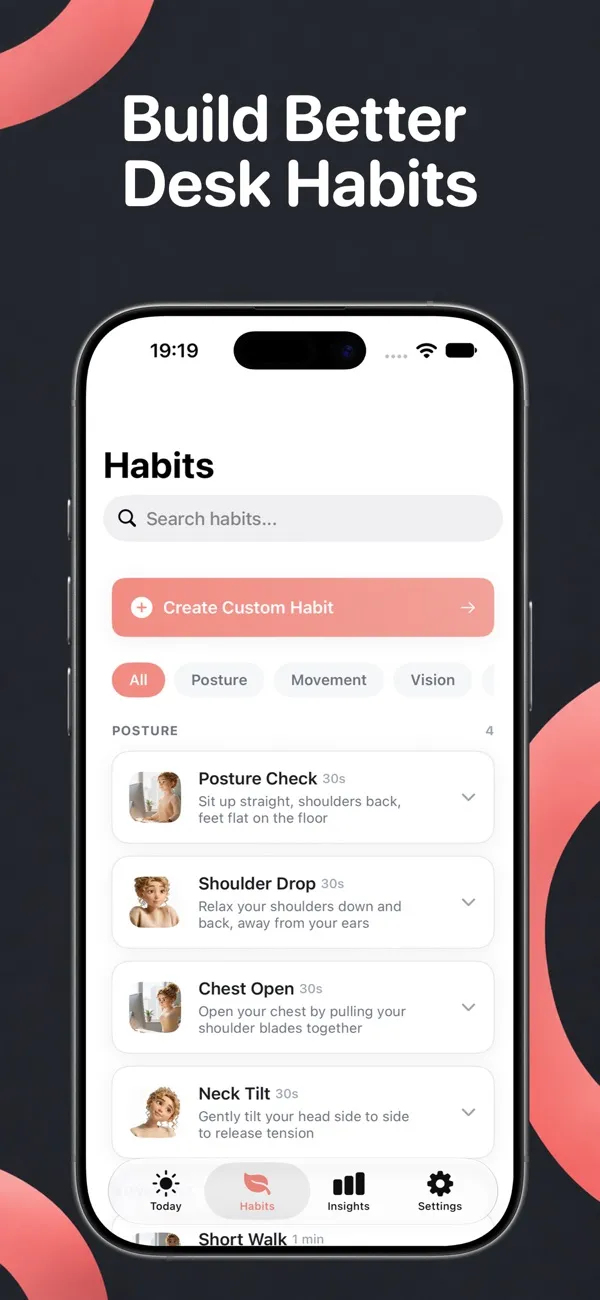
The hard part is remembering. HSE notes that "break-monitoring software can remind users to take regular breaks", and that is the job Postura was built for. On iPhone, setup asks where you feel tension. There is no upper back option, but choosing Shoulders suggests Shoulder Roll, a 30-second habit: "Roll your shoulders forward and backward 5 times each." Posture Check is always suggested. You can add Stand Up, "Stand up and stretch your legs for 30 seconds", and Short Walk, a 60-second "quick walk around your space".
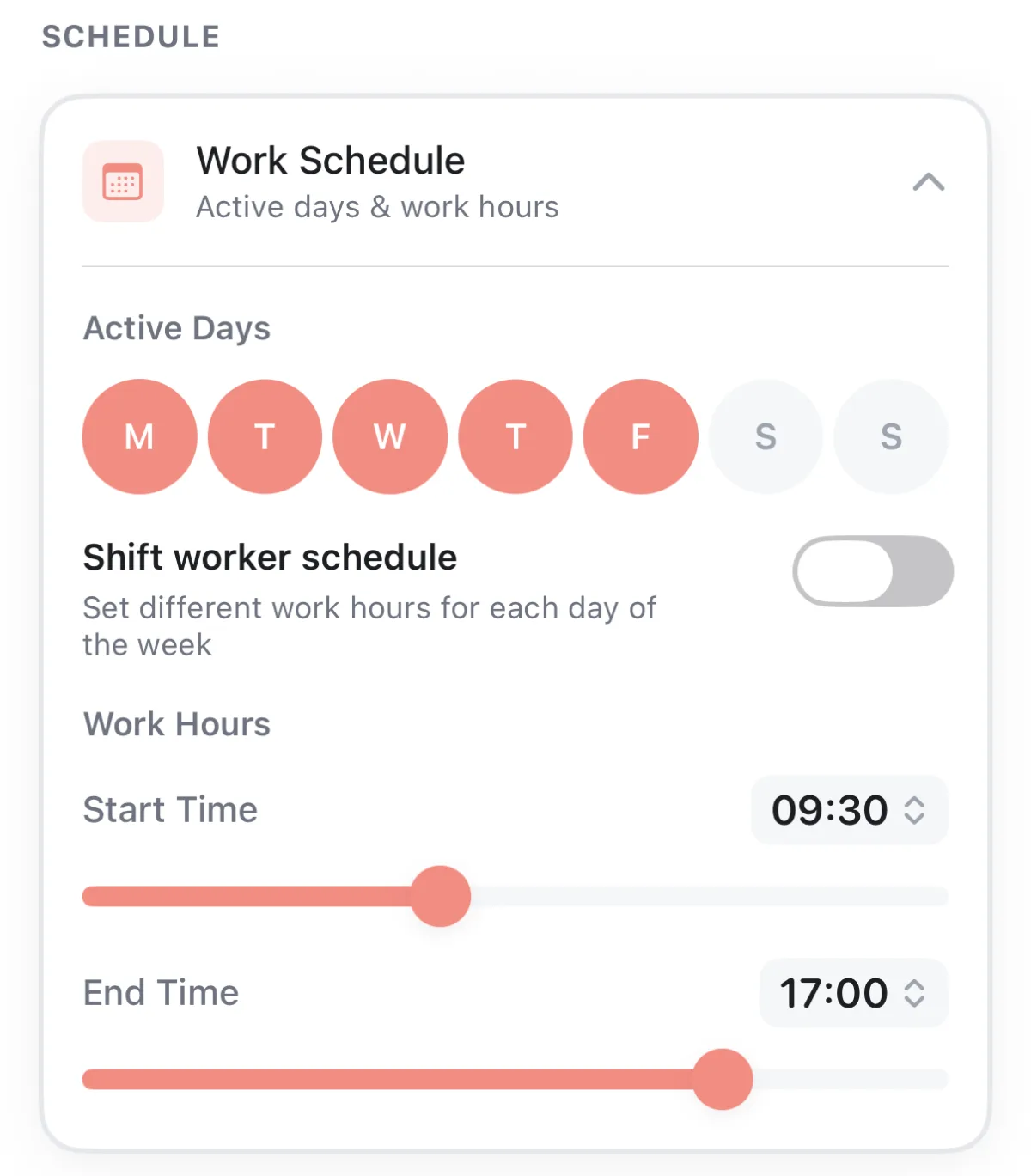
Reminders follow your working hours and active days. If your hours change from day to day, the shift worker schedule sets different hours for each day, including shifts that end the next day. On a packed day, switch from Normal to Busy Day, Meeting-Heavy or Silent Day; day modes reset at midnight.
Which gentle moves help a stiff upper back?
Slow twists and arches of the upper back. Physiotherapy leaflets from WWL Teaching Hospitals NHS Foundation Trust, Neck and Upper Back Exercises Level 1 and Level 2, include these four. Two work in a chair; the other two need floor space, so save them for home.
| Move | How to do it | Dose in the leaflet |
|---|---|---|
| Seated trunk rotation | Sit up straight, arms folded across your chest. Twist your trunk until you feel a stretch in your side and back | Hold 1 to 2 seconds, 5 times each side, 2 sets |
| Shoulder rolls | Sit or stand and roll your shoulders in both directions | 10 times forwards and backwards, 2 sets |
| Cat and camel | On hands and knees, hollow and then arch your back | Hold a couple of seconds, 10 times each way, 2 sets |
| Thread the needle | On all fours, reach one arm under the other armpit, then back up towards the ceiling, moving from your upper back | 10 times each direction, 2 sets |
The leaflets suggest 3 to 4 sessions a week with a rest day in between. Stop if a move makes you dizzy or unwell, and ask your GP or a physiotherapist first if you have an injury or are unsure.
At your desk, Postura's Chest Open fits between these: a 30-second habit that asks you to "open your chest by pulling your shoulder blades together". Its Shoulder Roll is a shorter version of the second move. For neck turns and tilts, see our desk stretches for neck and shoulders.
How long does upper back pain from sitting last?
Often not long. The Leeds trust says that for many people, mid and upper back pain will often resolve by itself over about 6 weeks. Strengthening exercise is likely to lower the risk of it coming back or turning into long-term pain.
Six weeks is a typical course, not a deadline. If the pain is getting worse, or simple advice and exercises are not helping, the trust says to see your GP or a healthcare professional. If the ache sits lower, around your waist, read our guide to lower back pain from sitting.
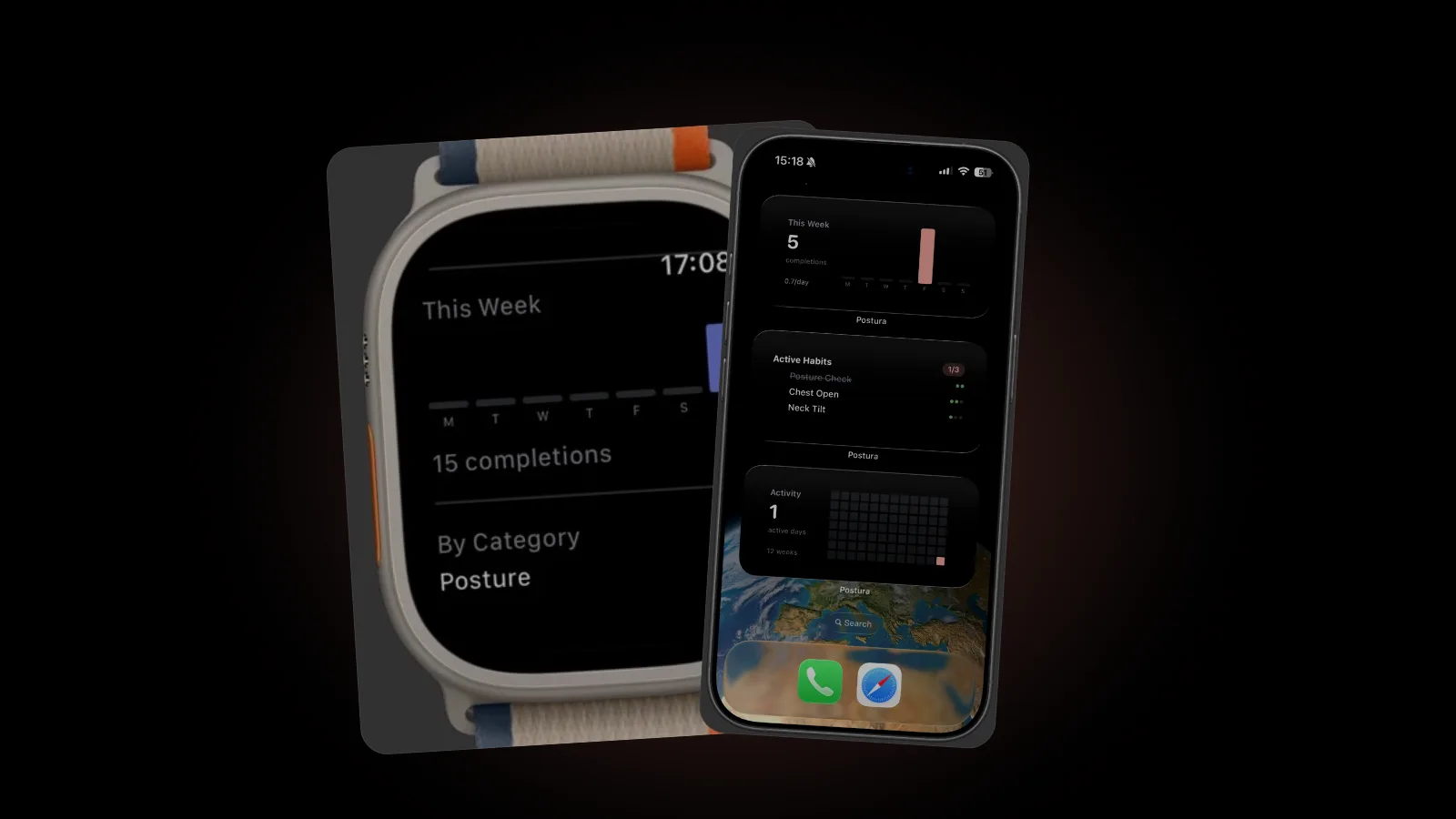
Over those weeks, Postura's progress views and Home Screen widgets show whether the breaks are really happening.
When should you see a doctor about upper back pain?
Most upper back pain from sitting settles with time and movement, but some signs need medical advice. This table summarises the Leeds trust page linked above:
| Sign | What the Leeds trust advises |
|---|---|
| Pain that is getting worse, or not improving with simple advice and exercises | See your GP or a healthcare professional |
| Pain after a fall or trauma, or with a sudden, severe onset | See your GP or a healthcare professional |
| Problems with balance or coordination, or weakness or numbness in your legs | Seek help urgently |
| Loss of feeling or pins and needles between your inner thighs or genitals, or numbness around your back passage or buttocks | Go to A&E immediately |
| New difficulty passing or controlling urine, leaking urine, or being unable to stop a bowel movement | Go to A&E immediately |
The page lists more emergency symptoms, so read it in full if you are unsure. Outside the UK, contact your own doctor or local emergency number.
FAQ
Can sitting cause pain between the shoulder blades?
Long periods at a desk or computer are one of the common causes the Leeds NHS trust lists for mid and upper back pain, alongside inactivity, heavy bags, and stress and poor sleep. It also says sitting itself is not dangerous. Its advice is to move around after 30 minutes.
Does heat help a sore upper back?
It can. The Leeds trust says heat and massage, using a ball or foam roller, can help relieve muscle tightness in the mid and upper back. Pair it with regular stretches and position changes, which the same page says can reduce stiffness.
Is it normal for upper back exercises to hurt a little?
Some discomfort is normal, according to the WWL NHS physiotherapy leaflets, as long as it eases within 2 hours of finishing and does not make your symptoms worse overall. If it lasts longer, reduce the repetitions. Stop if an exercise makes you dizzy or unwell.
Can an app fix upper back pain?
No, and Postura does not claim to; it is not a medical app. A reminder app helps with the hard part: prompting you to stand up, walk and stretch during the hours you work, so the breaks actually happen.
Get started
Postura is free to download on the App Store and on Google Play, with an optional Pro subscription. It reminds you to stand up, take short walks, open your chest and check your posture during the hours you choose, on iPhone and Apple Watch, and on Android. Postura is not a medical app; it is a gentle way to build better desk habits. See everything it does on the Postura page or read more Postura articles.