EmberFrostHealthy gaming9 min read
Healthy gaming habits: breaks, sleep and when to stop
Healthy gaming habits from WHO, eye doctors and the CDC: how long to play, how often to rest your eyes, when to stop before bed and how to end on time.
Healthy gaming habits come down to four things: play because you want to, rest your eyes every 20 minutes, put the phone down well before bed, and pick games that let you stop at any moment. A 2022 Oxford study of 38,935 players found little to no evidence of a causal link between play time and well-being.
We make EmberFrost, a cozy winter survival village builder for iPhone, so we have a stake in how people play. This guide keeps to what health bodies and researchers actually say, with their dates, then shows how one game can make those habits easier. It is general information, not medical advice.
What are healthy gaming habits?
Healthy gaming habits are routines that keep play a choice rather than a pull. The World Health Organization's page on gaming disorder sets no hour limit. Instead, it asks players to watch how much time they spend gaming, especially when it crowds out other daily activities, and to notice changes in their physical or psychological health. Eye doctors at the American Academy of Ophthalmology recommend the 20-20-20 rule against eye strain. The CDC lists turning off electronic devices at least 30 minutes before bedtime among its sleep tips, and WHO says all age groups should limit time spent sitting. Research adds one more signal. In 2022, Oxford researchers found that play people chose freely predicted higher well-being later, while play driven by a sense of compulsion predicted lower. So a healthy habit is less about a number on the clock and more about breaks, sleep and why you pick up the phone.
Here is what each source says, in one place:
| Question | What the source says | Source |
|---|---|---|
| How long can I play? | No hour limit; watch whether gaming crowds out other activities or changes your health | WHO, 2020 |
| Does play time hurt well-being? | Little to no evidence of a causal link; why you play matters | Oxford study, 2022 |
| How often should I rest my eyes? | Every 20 minutes, look 20 feet away for 20 seconds | AAO, 2021 |
| When should screens go off? | At least 30 minutes before bed (CDC); limit screen time 2 to 3 hours before (AAO) | CDC, 2024; AAO, 2021 |
| How much sleep do I need? | 7 or more hours for adults aged 18 to 60; 8 to 10 for teens | CDC, 2024 |
| What about sitting? | All age groups should limit sedentary time | WHO, 2024 |
How many hours of gaming a day is healthy?
There is no official daily number for adults in the sources above. The WHO's questions and answers on gaming disorder, published in October 2020, say the disorder "affects only a small proportion" of people who play. For a diagnosis, the pattern of impaired control and continued play despite harm would normally have been evident for at least 12 months.
The most useful data on hours we found comes from a 2022 study in Royal Society Open Science by researchers at the University of Oxford. They linked six weeks of real play data from 38,935 players, shared by seven game publishers, with three rounds of well-being surveys. Their conclusion: the average effects of play time on well-being "are probably very small".
What did matter was motivation. Playing because you want to went with better well-being later; playing because you feel you have to went with worse. That gives you a better test than a timer. Do you still want to be playing right now? If the honest answer is no, that's your cue.
How often should you take breaks while gaming?
Every 20 minutes for your eyes, and whenever you've been sitting a while for the rest of you. In its 2021 article Should You Be Worried About Blue Light?, the American Academy of Ophthalmology says the best protection against eye strain is the 20-20-20 rule. Every 20 minutes, look at something at least 20 feet away for at least 20 seconds. It also says eye strain "does not cause lasting damage and is easily preventable."
A second AAO article, Computers, Digital Devices, and Eye Strain (2024), explains why. People blink only about 5 to 7 times a minute at a screen, so eyes dry out. It suggests blinking on purpose and setting screen brightness to match the light around you.
Then stand up. The WHO fact sheet on physical activity (June 2024) defines sedentary behaviour as sitting, reclining or lying while awake, and says all age groups should limit it. A phone game played on the sofa counts.
Is gaming before bed bad for sleep?
It can get in the way. The CDC's About Sleep page (2024) recommends 7 or more hours for adults aged 18 to 60 and 8 to 10 hours for teens aged 13 to 17. Among its tips: turn off electronic devices at least 30 minutes before bedtime.
The AAO is stricter. It says too much blue light late at night from a phone, tablet or computer "can make it harder to get to sleep," and suggests limiting screen time in the two to three hours before bed. It also suggests trying the nighttime settings on your devices to cut blue light in the evening.
How do you stop playing at a set time?
Pick the finish line before you start, not when you're tired. A few habits that work:
- Name a stopping point. One goal, one level, one in-game day. Stop there, even if the next one looks close.
- Set a limit on the phone itself. On iOS 27, Apple's guide to Screen Time Schedules and Time Allowances says to open Settings, tap Screen Time, then Time Allowances, where you can set how long you use a category such as Games each day. Schedules set when during the day each category is available. For a child's device, see our parents' guide.
- Stop between tasks, not in the middle. Ending after something is finished leaves nothing hanging.
- Charge the phone away from your bed. Then a quick check at night means getting up first.
- Notice how your eyes feel. The AAO lists blurred vision and dry, achy eyes as signs of eye strain. When you feel them, take the break.
What makes a game easy to put down?
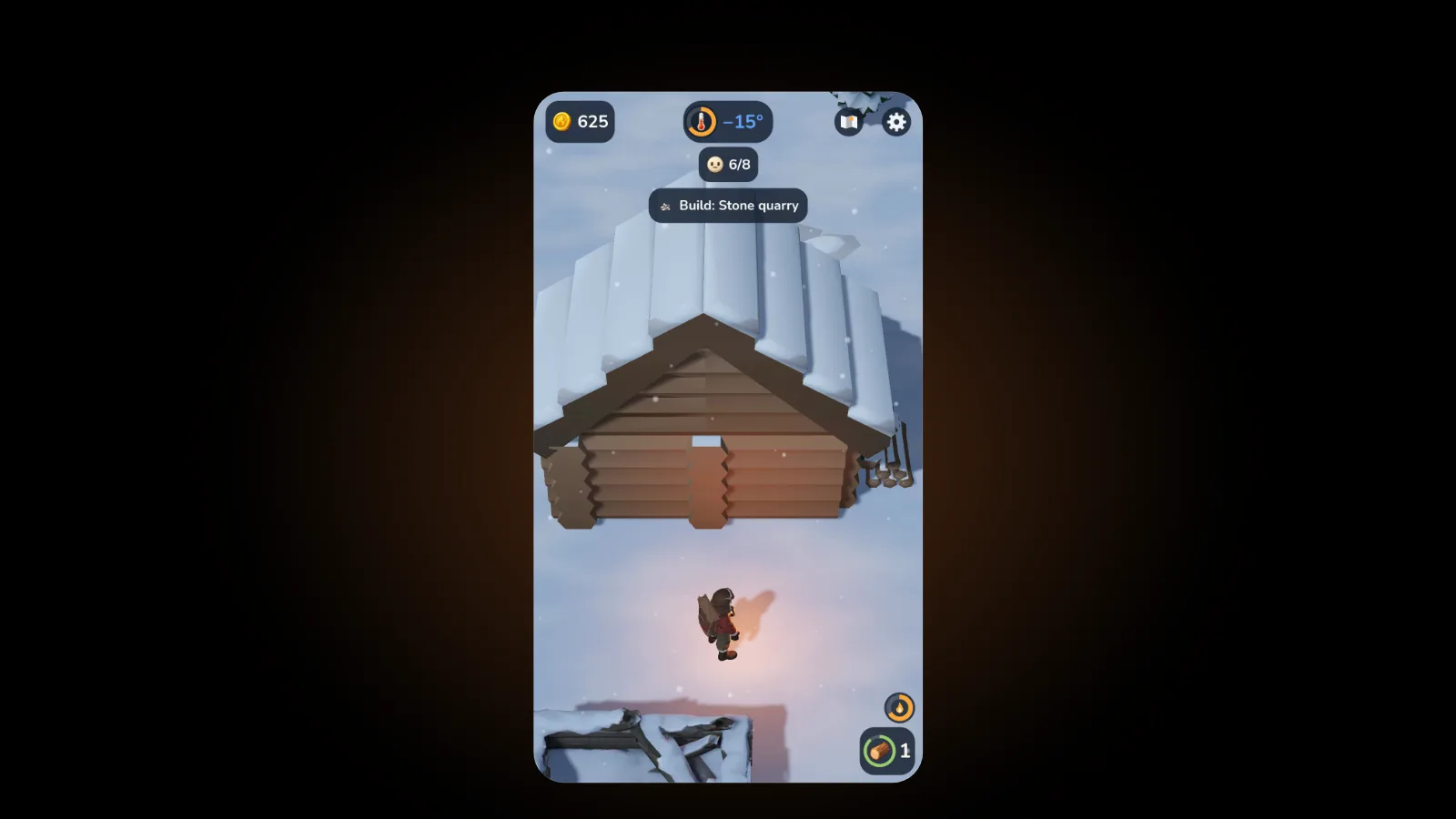
A game is easy to put down when leaving costs you nothing. Look for four things. It should save often and on its own, so closing it mid-task loses no more than a few seconds. Nothing should happen while you're away, so there's no reason to check in. Warnings should come before big events, so you can pick your moment. And it should have no daily streaks or timed rewards that punish a day off.
Design that pulls you back with fear of missing out invites the "feel I have to" kind of play, which the Oxford study linked with lower well-being.
How does EmberFrost make stopping easy?
We designed EmberFrost so that closing it is always safe. Every point below comes from the game's own rules and settings:
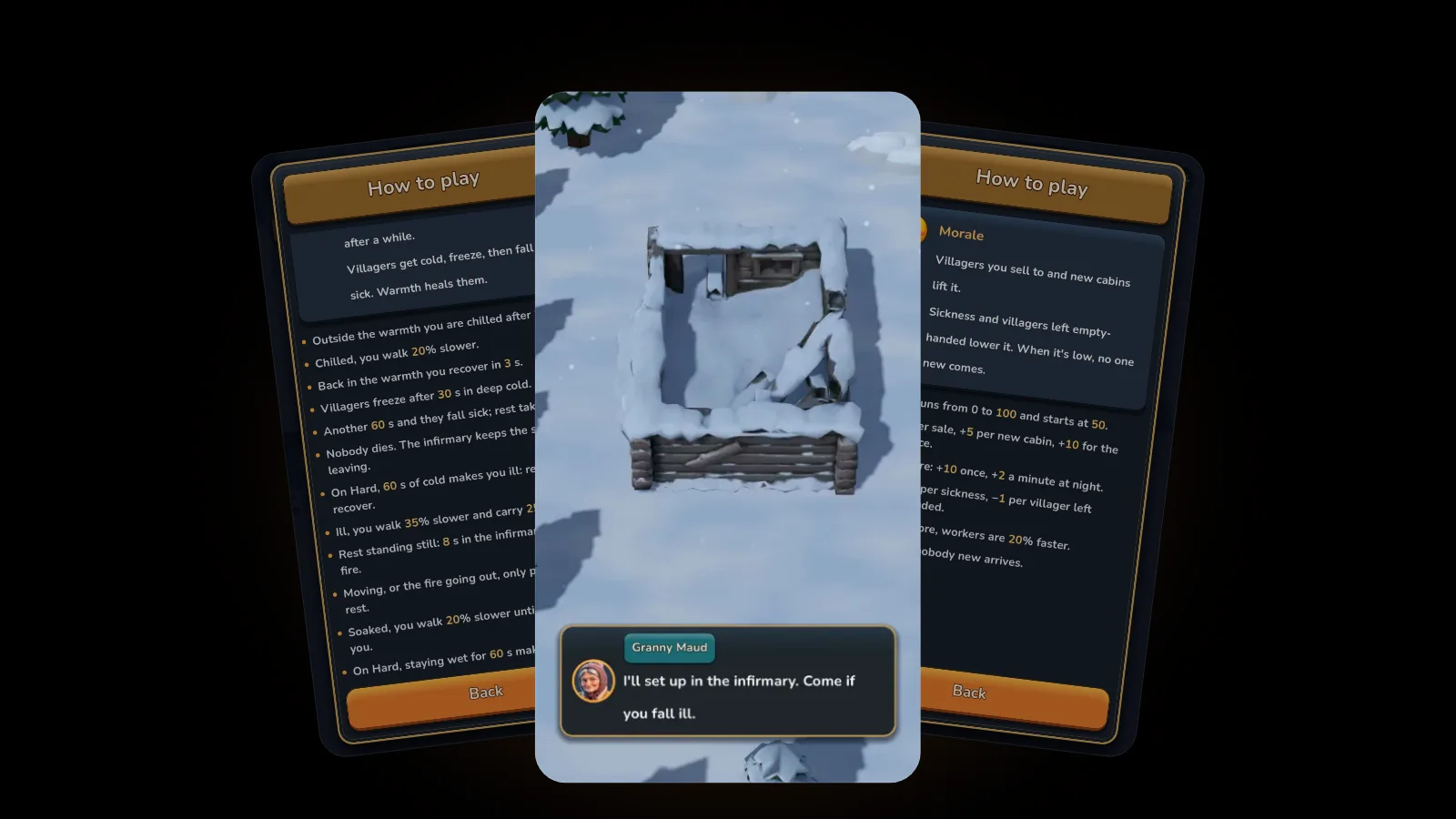
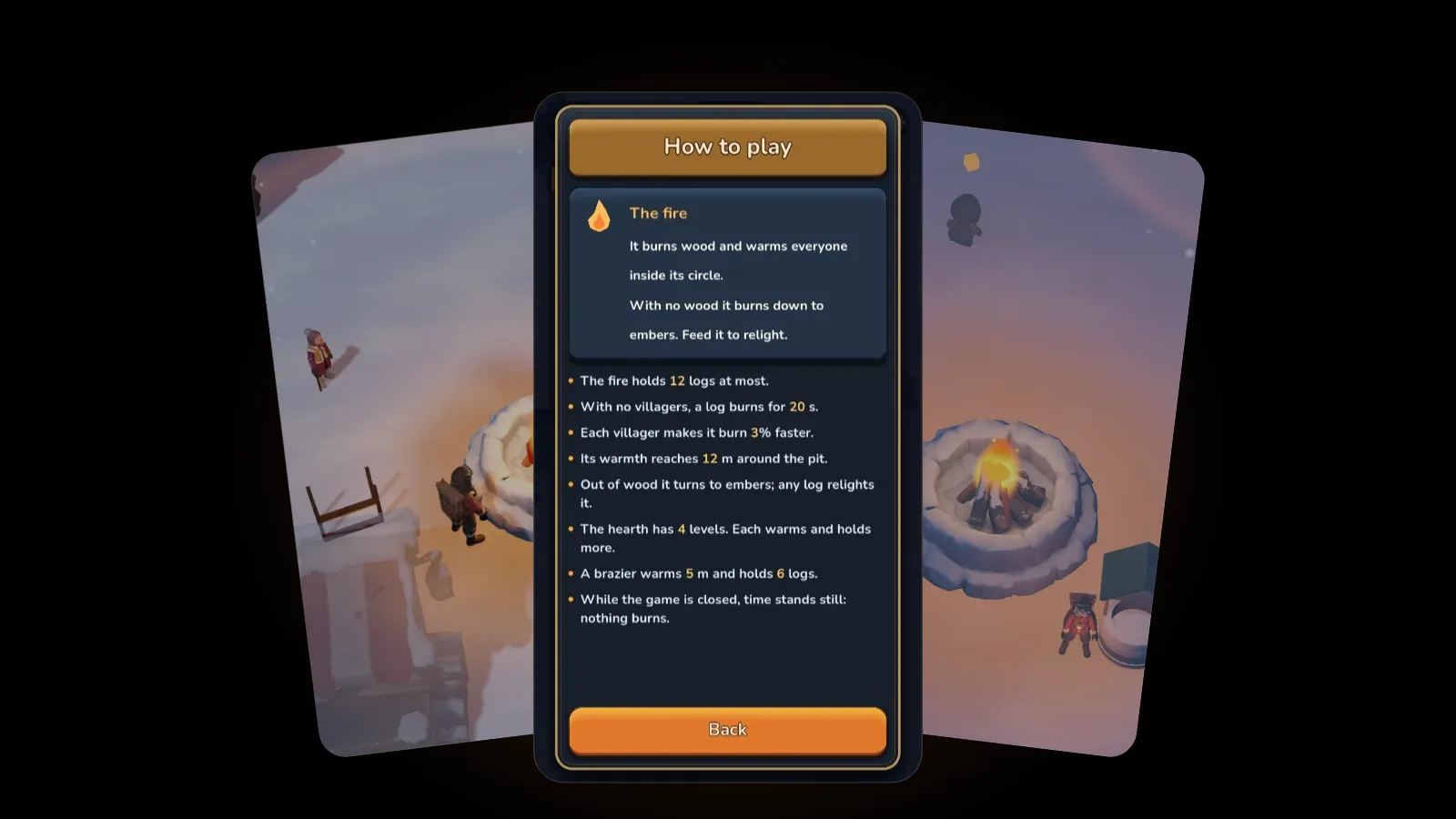
- Time stands still while it's closed. While the app is closed or in the background, nothing burns, nobody falls sick and nobody leaves. When you come back, there's no catch-up and no "while you were away" screen.
- It saves constantly. Every 30 seconds, and whenever you leave the app. Settings also has Save game, and Main menu saves first.
- Menus pause the game. Opening settings pauses play, and so does the map unless you turn that off.
- Storms give 45 seconds' warning, so you can fill the fire and then stop.
- A day is short and countable. Six minutes of daylight and a two-minute night. Turn on Show the day in the settings to see the day number and the time of day.
- You can see your play time. The Load game list shows each village's day, how much is built and the hours and minutes played.
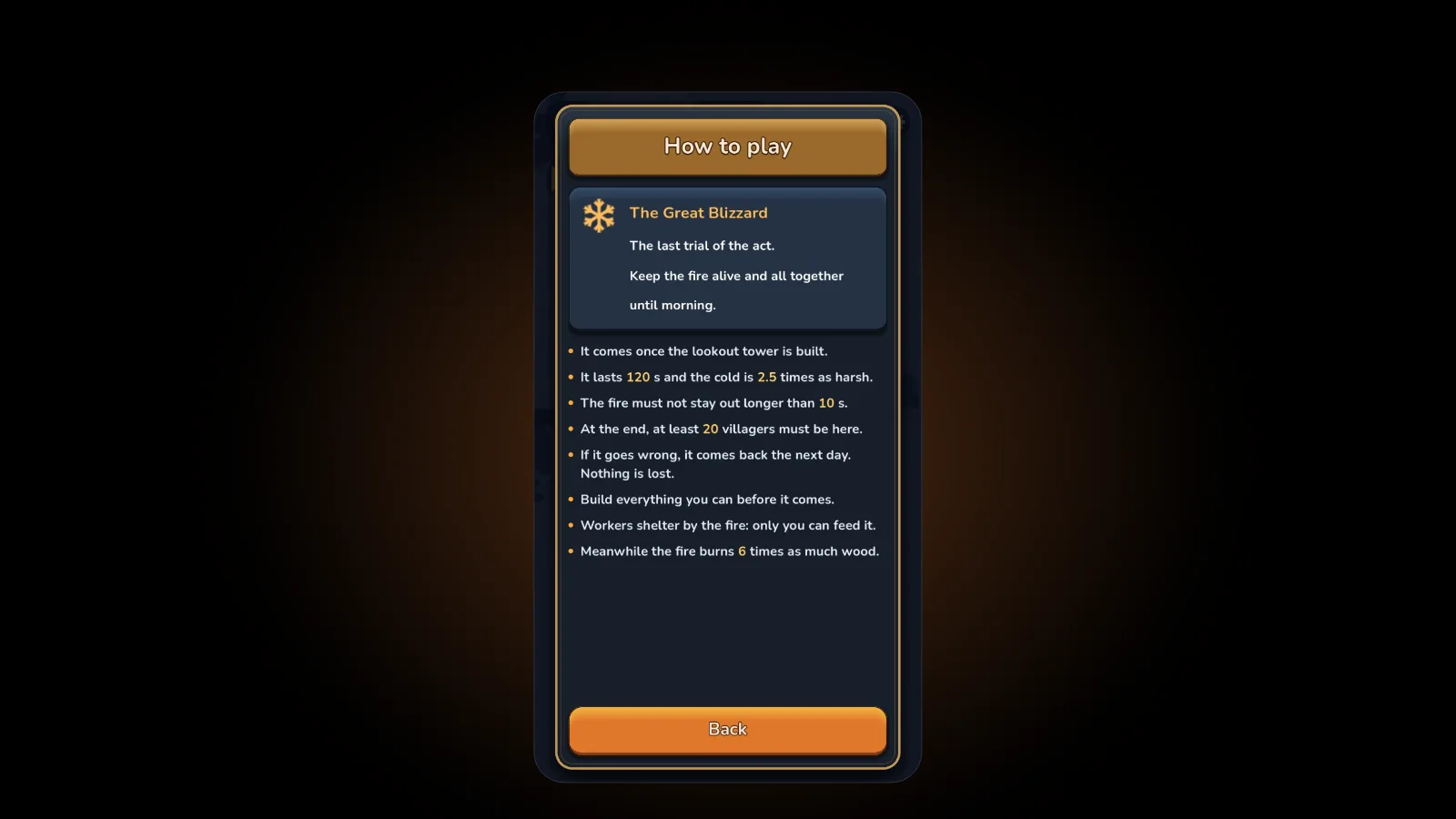
- Failure costs nothing. Nobody dies, and if the Great Blizzard goes wrong, it comes back the next day.
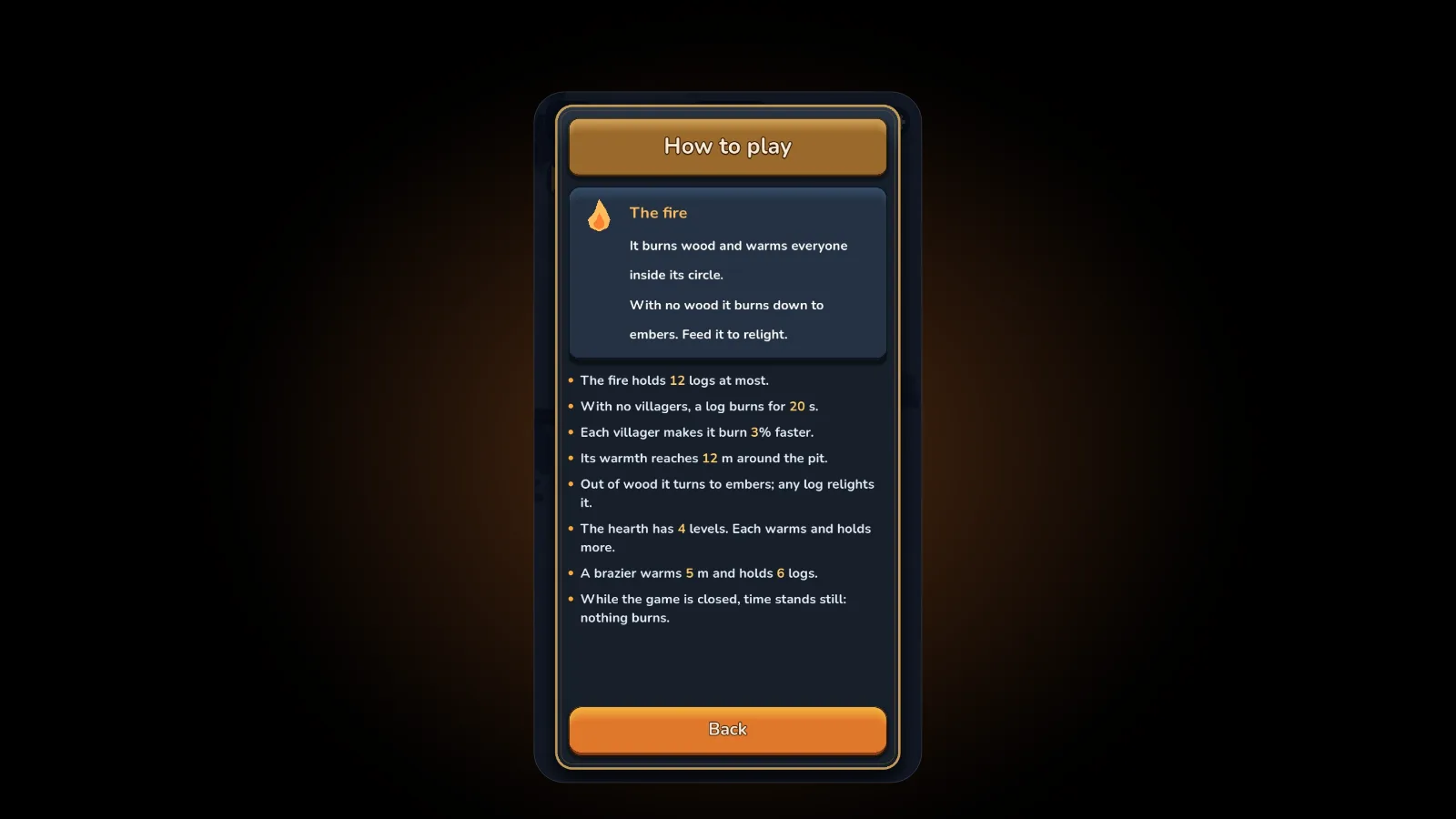
One honest limit: EmberFrost runs in real time while it's on screen. Leave the phone face up on the table and the fire burns down, so close the app when you step away. If you want less pressure overall, Normal mode is the calmer way to play, and you can switch in the settings at any time. It also plays offline with no ads, and Battery saver runs it at 30 frames per second with lighter effects.
New to the game? Our beginner's guide covers the first hour.
FAQ
Is 2 hours of gaming a day too much?
Not by any official adult standard in the sources here. The WHO's gaming disorder page names no hour limit; it asks players to watch whether gaming crowds out other activities or affects their health. In 2022, Oxford researchers found the average effect of play time on well-being was probably very small. Sleep, work and mood are better checks than the clock.
Does the 20-20-20 rule work for phone games?
It applies to any screen. The American Academy of Ophthalmology gives the rule for digital devices in general: every 20 minutes, look at something at least 20 feet away for at least 20 seconds. It adds that eye strain does not cause lasting damage and is easily preventable. On a phone, a window or the far side of the room works well.
How long before bed should you stop gaming?
The CDC's sleep tips say to turn off electronic devices at least 30 minutes before bedtime. The American Academy of Ophthalmology goes further and suggests limiting screen time in the two to three hours before bed, because late blue light can make it harder to fall asleep. The CDC recommends 7 or more hours of sleep for adults aged 18 to 60.
Does EmberFrost keep running when you close it?
No. While the app is closed or in the background, time stands still: nothing burns, nobody falls sick and nobody leaves. The game saves every 30 seconds and whenever you switch away, so stopping mid-task costs you at most about half a minute of play.
Get started
EmberFrost: Survival Tycoon is free to start on the App Store, with no ads, and it plays offline. Read more on the EmberFrost game page, or browse every EmberFrost post.