PosturaDesk habits9 min read
Sitting all day: what it does to your body, and what helps
Is sitting all day bad for you? What WHO and a study of over 1 million adults found, how much activity offsets long sitting, and how to sit less at work.
Sitting all day is linked to a higher risk of cardiovascular disease, type 2 diabetes, cancer and early death, according to WHO. Movement changes that picture. In a 2016 analysis of more than 1 million adults, about 60 to 75 minutes of moderate activity a day seemed to eliminate the extra risk of death tied to long sitting.
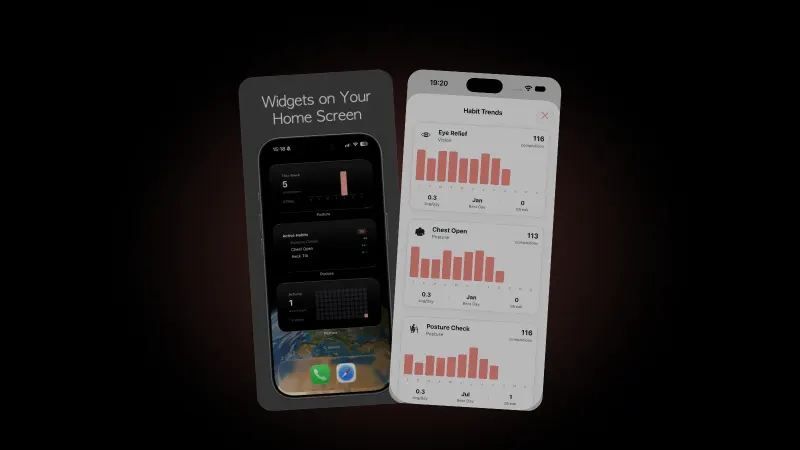
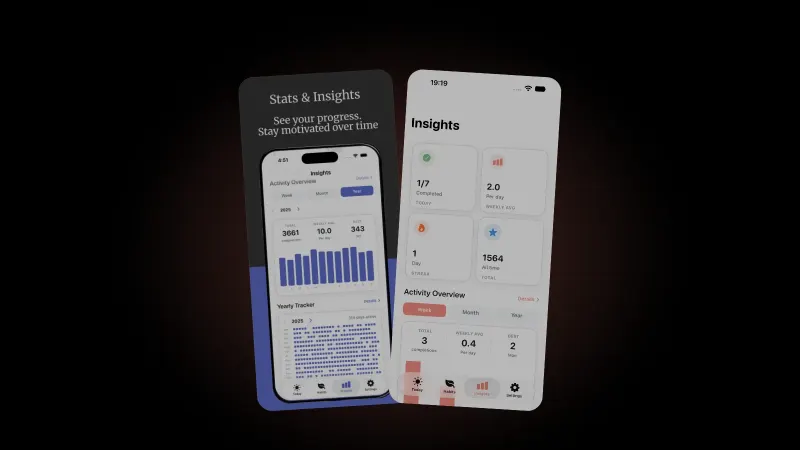
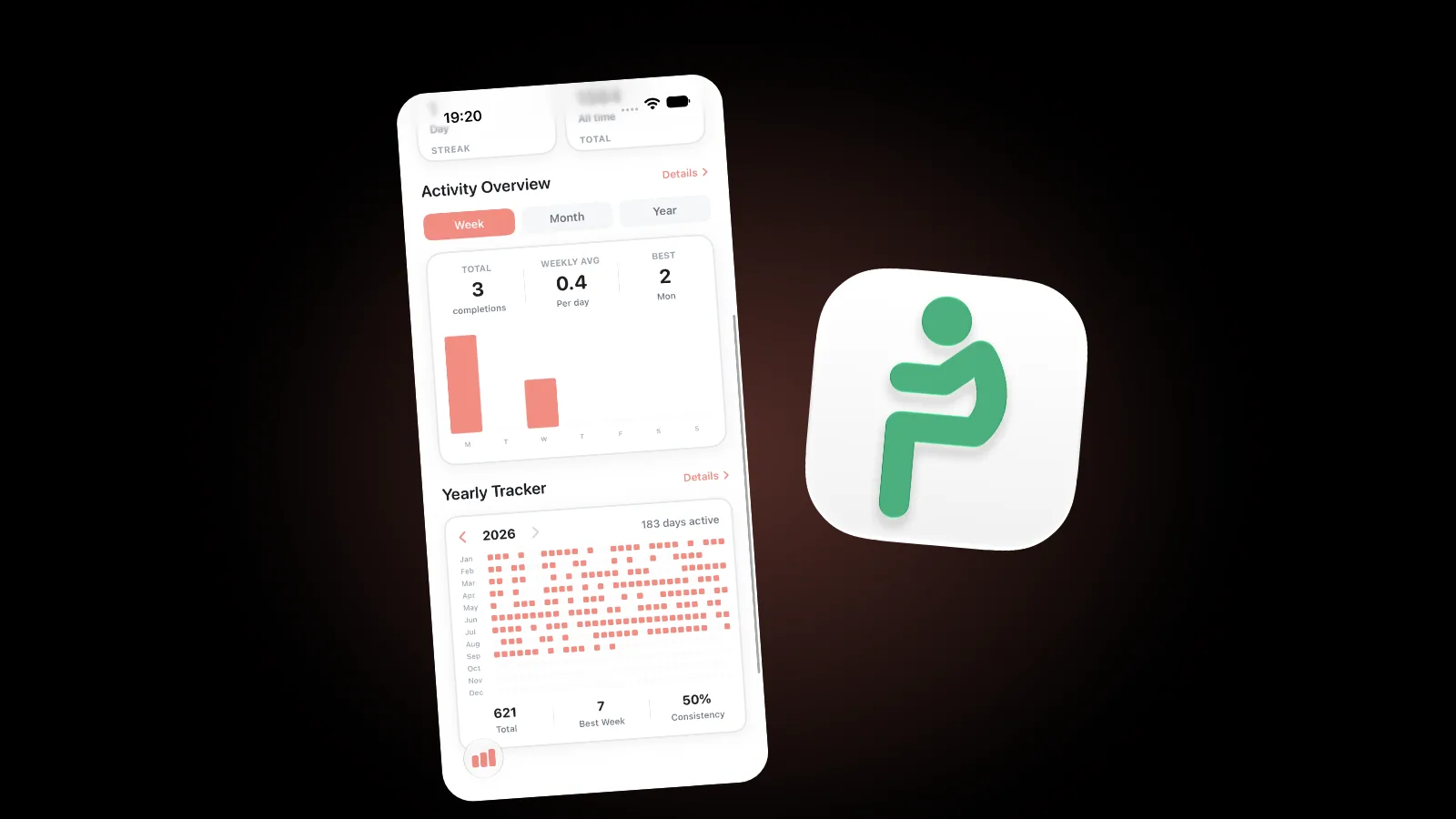
Below: what the research measured, whether sitting really is the new smoking, how much is too much and what to change with a desk job, including how Postura, our app for posture checks and movement breaks, can remind you to get up. This is general information, not medical advice.
What does sitting all day do to your body?
Over years, a lot of sitting is linked to poorer health. Over hours, it changes how your body handles a meal. WHO defines sedentary behaviour as "any period of low-energy expenditure while awake such as sitting, reclining or lying." Its 2020 guidelines, summarised in the British Journal of Sports Medicine, say that in adults, higher amounts of sedentary behaviour are linked to higher death rates overall and from cardiovascular disease and cancer, and to more new cases of cardiovascular disease, type 2 diabetes and cancer. In the short term, lab studies show that blood sugar after a meal stays higher with unbroken sitting than when the sitting is broken up with standing or light walking. Still, most of the long-term evidence is observational, so it shows links, not proof that the chair causes disease. And people who sit a lot often move little overall. WHO's physical activity fact sheet says people who are not active enough have a 20% to 30% higher risk of death.
What about your back? Leeds Community Healthcare NHS Trust's posture page is reassuring: "Sitting down for more than 30 minutes in one position is not dangerous." It calls the spine "a robust, adaptable structure," and adds that "moving and changing positions can be helpful, and being physically active is important for your health." For back aches, see our guide to lower back pain from sitting.
Is sitting the new smoking?
No. In 2018, the American Journal of Public Health published Is sitting really the new smoking?. The authors cite a meta-analysis of sedentary behaviour and health that reported a hazard ratio of 1.22. For current smokers compared with never smokers, the relative risk of death from any cause is 2.80, and for people smoking more than 40 cigarettes a day it is 4.08.
Absolute numbers make the gap clearer: more than 2,000 excess deaths per 100,000 people a year for the heaviest smokers compared with never smokers, against 190 for the most sitting compared with the least. That's a gap of more than ten times.
The authors warn that distorted information about health risks "can lead to confusion and public doubt with respect to health recommendations." Sitting less is still worth doing. It just doesn't belong in the same category as smoking.
How much sitting is too much?
Nobody has a precise number. WHO recommends reducing sedentary behaviour for all ages and abilities, but the 2020 guidelines summary notes that "evidence was insufficient to quantify a sedentary behaviour threshold." So there's no official daily limit in hours.
Here is what WHO's 2020 guidelines do say for adults:
- Limit it. "Adults should limit the amount of time spent being sedentary."
- Swap some of it. Replacing sedentary time with physical activity of any intensity, including light activity, provides health benefits.
- Hit the weekly target. Adults should do 150 to 300 minutes of moderate-intensity activity a week, or 75 to 150 minutes of vigorous activity.
- Go further if you sit a lot. To reduce the effects of high sedentary time, adults should aim to do more than those recommended levels.
- Start anywhere. The guidelines reaffirm that "some physical activity is better than none."
Many people are far from the target. WHO's June 2024 fact sheet says 31% of adults worldwide, 1.8 billion people, are physically inactive.
Can exercise undo a day of sitting?
Largely, if you do enough of it. In 2016, The Lancet published a harmonised meta-analysis, Does physical activity attenuate, or even eliminate, the detrimental association of sitting time with mortality?, pooling data from more than 1 million men and women followed for 2 to 18 years. People who sat more than 8 hours a day but were in the most active quarter showed no increased risk of death during follow-up.
| Daily sitting | Physical activity | Risk of death, compared with the reference group |
|---|---|---|
| Less than 4 hours | Most active quarter | Reference group |
| More than 8 hours | Most active quarter | No increased risk |
| Less than 4 hours | Least active quarter | Higher (hazard ratio 1.27) |
| More than 8 hours | Least active quarter | Higher still (hazard ratio 1.59) |
The most active quarter did more than 35.5 MET-hours of activity a week. MET-hours weigh how long you move by how hard you work. The authors translate that level into "about 60-75 min per day" of moderate-intensity activity, far above WHO's weekly minimum.
Two details stop this from being a free pass. People who sat the least but moved the least still had a higher risk than the active group. And TV was different: 3 hours or more a day was linked to higher mortality regardless of activity, except in the most active quarter, where the rise appeared only at 5 hours or more.
These were observational cohort studies, so they show links, not cause and effect. And can you fit in an hour a day? Many people can't. The practical reading: add what you can, and break up the sitting you can't avoid.
Why do short movement breaks matter?
Because they change how your body handles a meal within hours, even when the breaks are light. In 2022, a systematic review and meta-analysis in Sports Medicine on interrupting prolonged sitting pooled seven studies. Standing breaks lowered blood sugar after meals compared with unbroken sitting. Light walking lowered both blood sugar and insulin, and beat standing on both. Neither changed systolic blood pressure.
A 2026 network meta-analysis in the Journal of Sports Sciences looked wider: 72 trials and 1,369 participants. Six strategies reduced glucose responses, from light standing and light resistance exercise to light, moderate and vigorous aerobic breaks. High-frequency interruptions "showed the most favourable acute effects on glucose and insulin responses." No strategy significantly improved triglycerides.
These are short-term lab effects, not proof that breaks prevent disease over years, but they fit WHO's advice that activity of any intensity beats staying put. For how often to break and what to do in each one, see our guide to micro breaks at work.
How can you sit less with a desk job?
Change the defaults of your day rather than relying on willpower. In 2018, the Cochrane review Workplace interventions for reducing sitting at work pooled 34 studies with 3,397 participants. Sit-stand desks cut sitting at work by about 100 minutes per workday in the short term. The evidence was low quality, and there was no evidence on longer follow-up.
In a single study, short breaks of one to two minutes every half hour cut sitting by about 40 minutes a day compared with long breaks. Walking strategies showed no significant effect, and for most approaches the evidence was low to very low quality.
Small changes that fit most desk jobs:
- Stand for calls. Audio calls are an easy slot for standing.
- Walk the long way. Use a farther printer, kitchen or bathroom.
- Use a smaller glass. You'll get up more often to refill it.
- Alternate at a sit-stand desk. See how long to stand at a standing desk.
- Move outside work. Walk part of the commute or at lunch.
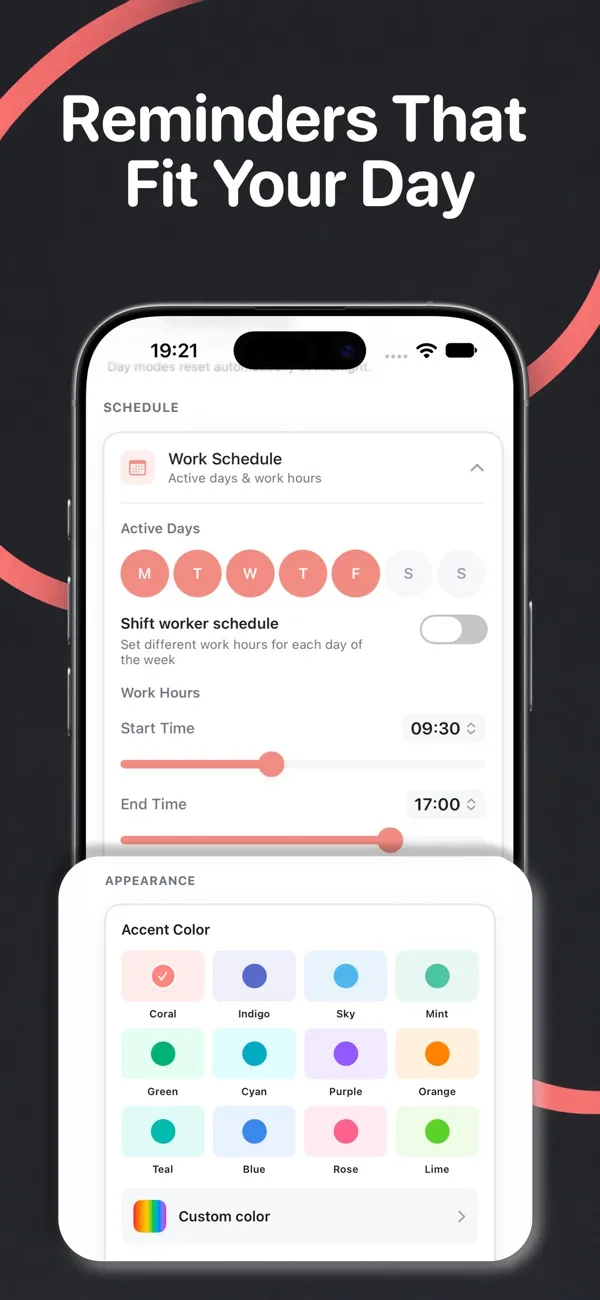
- Let a reminder do the remembering. Tie the cue to your working hours and give it time; here's how long it takes to form a habit.
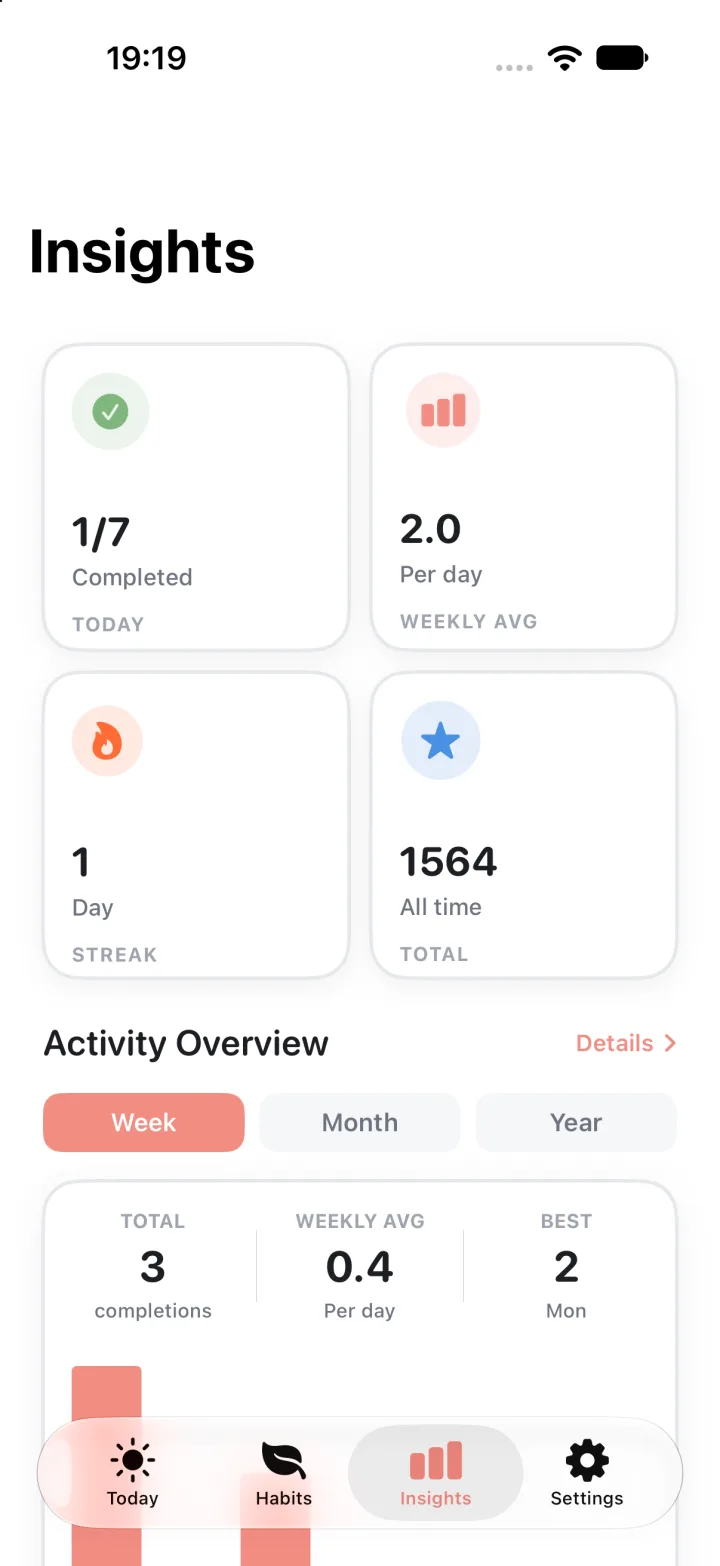
Postura's Movement habits cover the small stuff. Stand Up asks you to "Stand up and stretch your legs for 30 seconds." Short Walk is a 60-second "quick walk around your space," and Shoulder Roll takes 30 seconds. Reminders arrive only inside your work hours and active days. If one comes at a bad moment, tap "Remind me in 15 min" instead of skipping it.
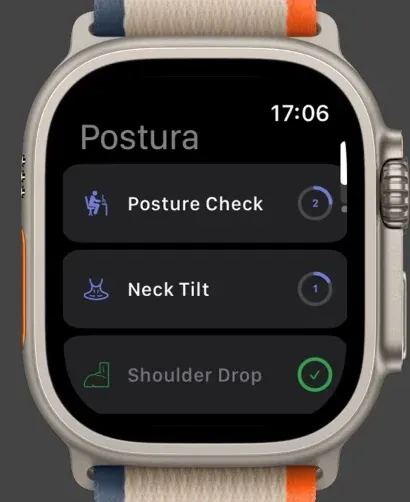
On Apple Watch, Postura's companion app lets you start a habit timer from your wrist and syncs completions with your iPhone. Our guide to a posture reminder on Apple Watch explains how it fits with Apple's Stand ring. On Android, Postura runs on your phone, without a watch companion.
FAQ
Is sitting all day bad for you if you exercise?
Less so, if you exercise a lot. In the 2016 Lancet analysis, people who sat more than 8 hours a day showed no increased risk of death if they were in the most active quarter, about 60 to 75 minutes of moderate activity a day. For the least active, the same sitting time came with a hazard ratio of 1.59.
Does a standing desk solve the problem?
It helps you sit less. A 2018 Cochrane review found sit-stand desks cut workplace sitting by about 100 minutes per workday in the short term, from low-quality evidence. In lab studies, light walking breaks improved blood sugar and insulin more than standing breaks, so moving still adds something.
How many hours of sitting a day is too much?
There is no official limit. WHO's 2020 guidelines found the evidence insufficient to set a threshold and advise adults simply to limit sedentary time. In the 2016 Lancet data, sitting more than 8 hours a day carried no extra risk for the most active, but a higher risk for the least active.
Is sitting bad for your spine?
Not in itself. Leeds Community Healthcare NHS Trust says sitting for more than 30 minutes in one position is not dangerous and describes the spine as robust and adaptable. It adds that moving, changing position and staying physically active are good for your health.
Get started
Postura is free to download on the App Store for iPhone and Apple Watch, and on Google Play for Android, with an optional Pro subscription. Its Stand Up, Short Walk and Shoulder Roll habits sit alongside posture, eye and breathing breaks, and reminders arrive only during the hours you choose. Postura is not a medical app. See everything it does on the Postura page or read more Postura articles.