PlateCooking tips9 min read
Mise en place: what it means and how to do it at home
Mise en place means putting everything in its place before you cook. Here's how to do it at home: read the recipe, prep in order, keep food safe.
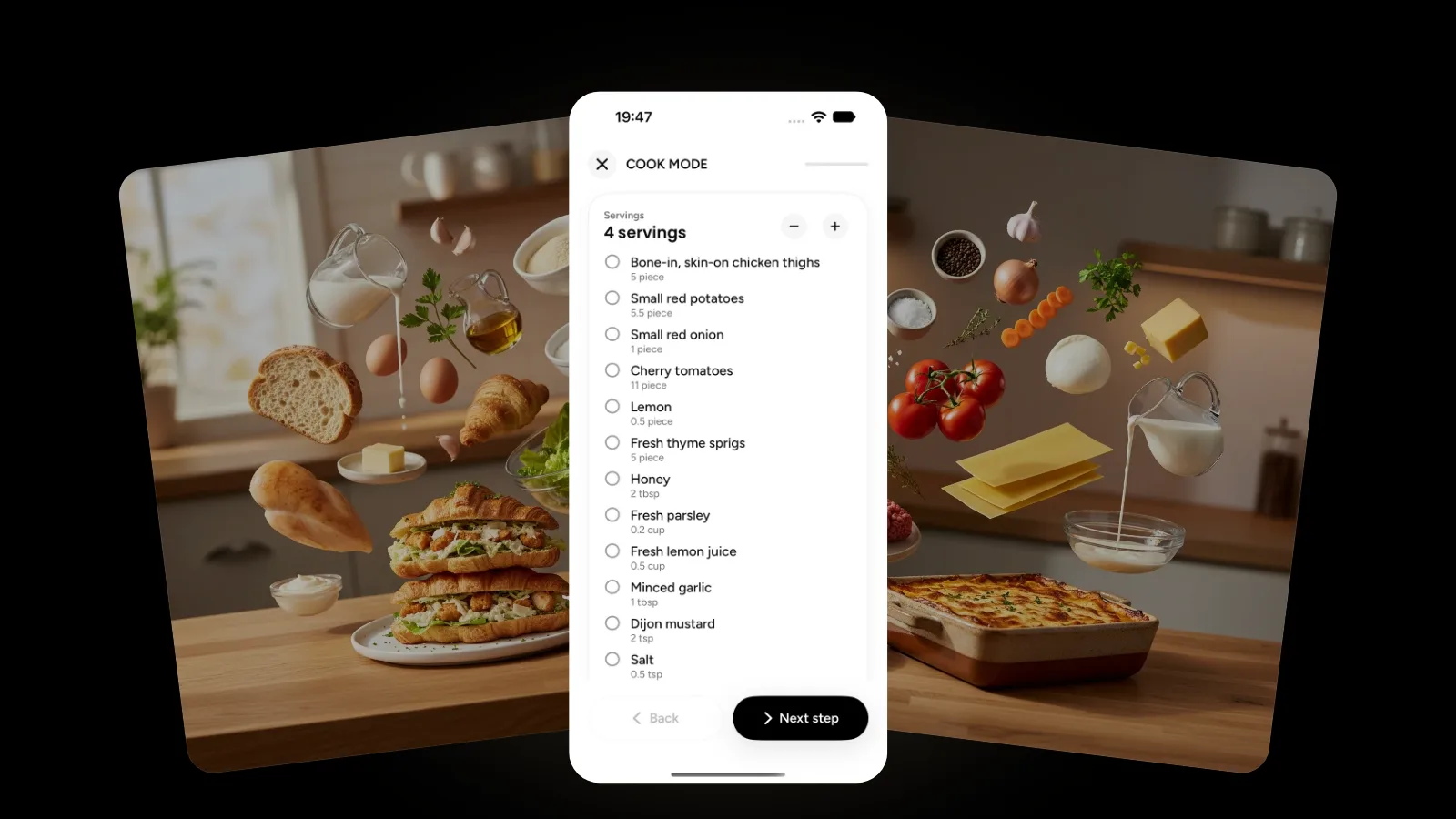
Mise en place (say it "meez ahn plahs") is French for "putting into place." In practice, it means reading the recipe, then measuring, chopping and setting out every ingredient and tool before you turn on the heat. At home, it's the difference between a calm stir-fry and burnt garlic while you hunt for the soy sauce.
We make Plate, a recipe keeper for iPhone whose Cook Mode opens on an ingredient checklist, so we think a lot about what happens before step 1. This guide covers the meaning and pronunciation, a home-sized routine, what to prep ahead and what to leave, when full mise en place isn't worth it, and how to keep prepped food safe.
What does mise en place mean?
Mise en place is a French culinary phrase that Wikipedia translates as "putting into place," and cooks often render it as "everything in its place." It's pronounced [mi zɑ̃ ˈplas], close to "meez ahn plahs" in English. The term covers the setup you do before cooking: reading the recipe, gathering tools, and washing, cutting and measuring ingredients so each one is ready when a step calls for it. In a restaurant, it means a cook's station is stocked for the whole service. At home, it's smaller: one recipe, one cutting board, a few bowls. The point is the same. You do the thinking and the knife work first, so the cooking becomes a sequence of adding things you've already prepared. It pays off most when a dish moves fast, like a stir-fry, or when precision counts, like baking. Many accounts credit the chef Auguste Escoffier with the system, but that's a popular story rather than a documented fact.
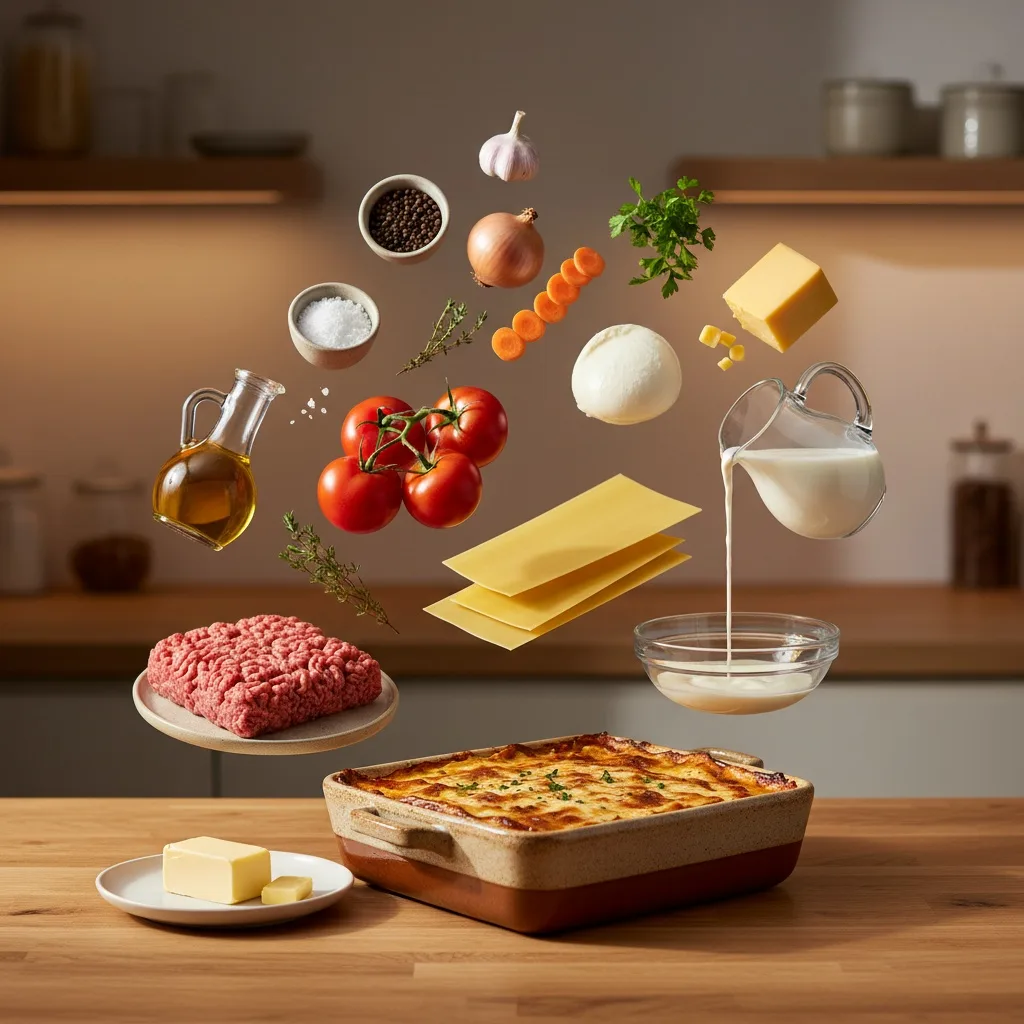
Why does mise en place make home cooking easier?
It moves the slow, fiddly work to a moment when nothing is on the heat. Once a pan is hot, garlic can go from golden to bitter in moments, and that's a bad time to find out you haven't sliced the onion or you're out of an ingredient. Prepping first turns cooking into assembly.
The Auguste Escoffier School of Culinary Arts calls mise en place key to keeping any kitchen running smoothly, home or professional, and says organized kitchens are calmer, and therefore safer, places to work. That's a culinary school's view, not a lab result. No controlled study we know of shows that mise en place cuts mistakes for home cooks. Still, the habit gives you a few things for free:
- A missing-ingredient check. Gaps show up while you can still swap or change plans.
- A built-in checklist. When every measured ingredient sits in its own bowl, an empty bowl means it's in the pot. It's hard to leave out the sugar or add the salt twice.
- Early warnings. You spot the marinade, the preheat or the dough that needs chilling before they hold up dinner.
- Less mess at the end. Scraps and packaging go before the heat goes on.
How do you do mise en place at home, step by step?
Read, set up, then prep in the order you'll cook. Here's the home-sized version:
- Read the whole recipe, start to finish. If it's buried in a long blog post, get just the recipe first. If it lives in a cooking video, turn the video into written steps; you can't prep from a recipe you have to rewind.
- Scale before you prep. Cooking for a different number of people? Change the amounts now, not halfway through. Our guide to scaling a recipe up or down covers the math.
- Do a time and temperature pass. More on that below.
- Clear the counter and set up. A cutting board, a sharp knife, a bowl for scraps, small bowls for measured ingredients and a towel. The CDC says to wash your hands for at least 20 seconds with soap and water.
- Gather everything. Pull out every ingredient and tool before you cut anything. If something's missing, you can still adapt; our guide to cooking with what you have helps.
- Wash, cut and measure. The FDA says to rinse fresh fruits and vegetables under running tap water. Then cut and measure in the order the recipe uses them.
- Group by step. Ingredients that go into the pan together can share a bowl. Line the bowls up near the stove in cooking order.
- Clean once before you cook. Bin the scraps and wipe the board. Then turn on the heat.
Read once for ingredients, once for time
The second read is the one people skip. Look for anything that takes longer than your prep and start it first: preheating the oven, a marinade that needs 30 minutes, butter that has to soften, eggs that should come to room temperature, beans to soak or dough to chill. A recipe that says "ready in 30 minutes" can still hide an overnight step in the method.
What should you prep ahead, and what should wait?
Prep ahead anything that holds its texture and color. Leave until the last minute anything that browns, wilts or weeps. The Escoffier school warns that over-prepping wastes food, because "vegetables can lose their crispiness, herbs may wilt."
| Ingredient | Prep ahead? | Why |
|---|---|---|
| Onions, carrots, celery, peppers | Yes, a few hours ahead, covered in the fridge | Firm vegetables keep their texture better than soft ones |
| Measured flour, sugar and spices | Yes, any time | Nothing to spoil or dry out |
| Sauces and dressings | Yes, mixed in a jar | Flavors have time to come together |
| Cut apples, pears and avocado | Last minute, or toss in lemon juice | Cut surfaces brown in the air |
| Salted cucumber or tomato | Salt at the last minute | They release liquid and thin the dressing |
| Tender herbs like basil and parsley | Chop just before using | They wilt quickly once cut |
| Raw meat, poultry and fish | Yes, but keep cold and separate | Food safety, covered below |
Why do apples brown? Lynne McLandsborough, a food science professor at UMass Amherst, explained in Scientific American in 2007 that cutting lets oxygen into the fruit, where polyphenol oxidase enzymes rapidly oxidize phenolic compounds. Lemon or pineapple juice slows it, because the acid makes the enzyme less active.
When is full mise en place not worth it?
When the recipe gives you waiting time. A stew that simmers for an hour, a tray of vegetables roasting in the oven or a pot of rice gives you a gap to chop the next thing. Call it rolling prep. It's often the smarter use of an evening.
A simple rule: if the gap between two steps is longer than the prep for the next one, use the gap.
Do full mise en place when:
- The steps come seconds apart, as in a stir-fry or a sauté.
- You're baking, where measuring mid-recipe invites mistakes.
- It's a recipe you've never cooked.
- You're cooking for guests and want to talk, not hunt for the paprika.
Even with rolling prep, keep two habits: read the whole recipe and gather every ingredient first. That's mise en place at its minimum, and it still catches the missing can of tomatoes.
How do you keep prepped ingredients safe?
Follow the CDC's four steps to food safety: Clean, Separate, Cook and Chill. Prepping ahead means ingredients sit around longer than usual, so the Separate and Chill steps matter most:
- Use separate boards. The CDC recommends one cutting board or plate for raw meat, poultry and seafood, and a separate one for produce, bread and other foods that won't be cooked.
- Keep raw meat apart. Store raw or marinating meat, poultry, seafood and eggs separately from all other foods.
- Marinate in the fridge. The FDA's advice is plain: "Always marinate food in the refrigerator."
- Mind the 2-hour rule. Refrigerate perishable food, including meat, dairy, cut fruit and some vegetables, within 2 hours, or within 1 hour above 90°F.
- Keep the fridge cold. The CDC says 40°F or below. Bacteria can multiply rapidly between 40°F and 140°F.
In practice, the fridge is part of your station. Prepped chicken waits there in a covered bowl until the pan is hot, not on the counter next to the stove.
How does Plate's Cook Mode help you set up?
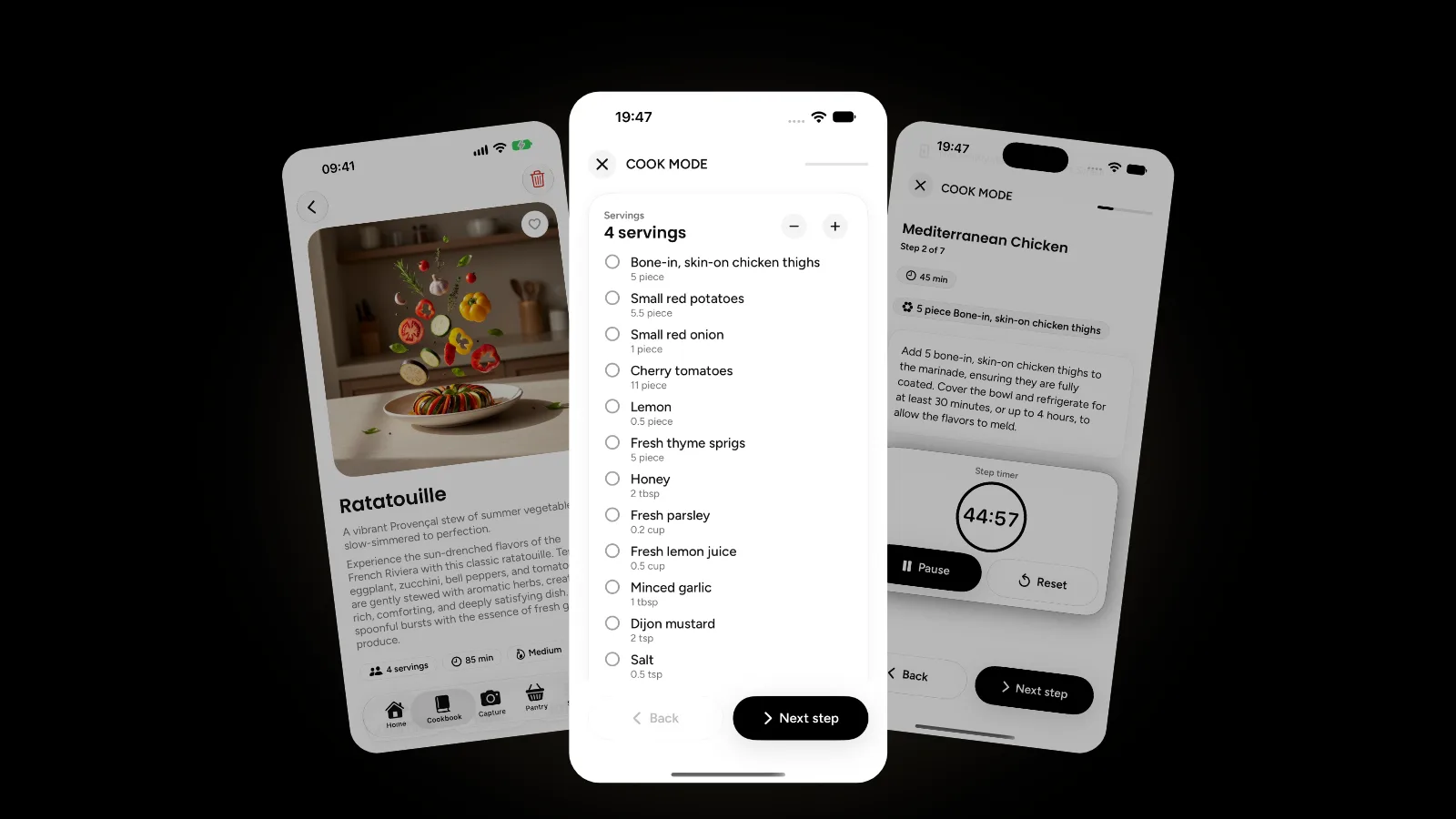
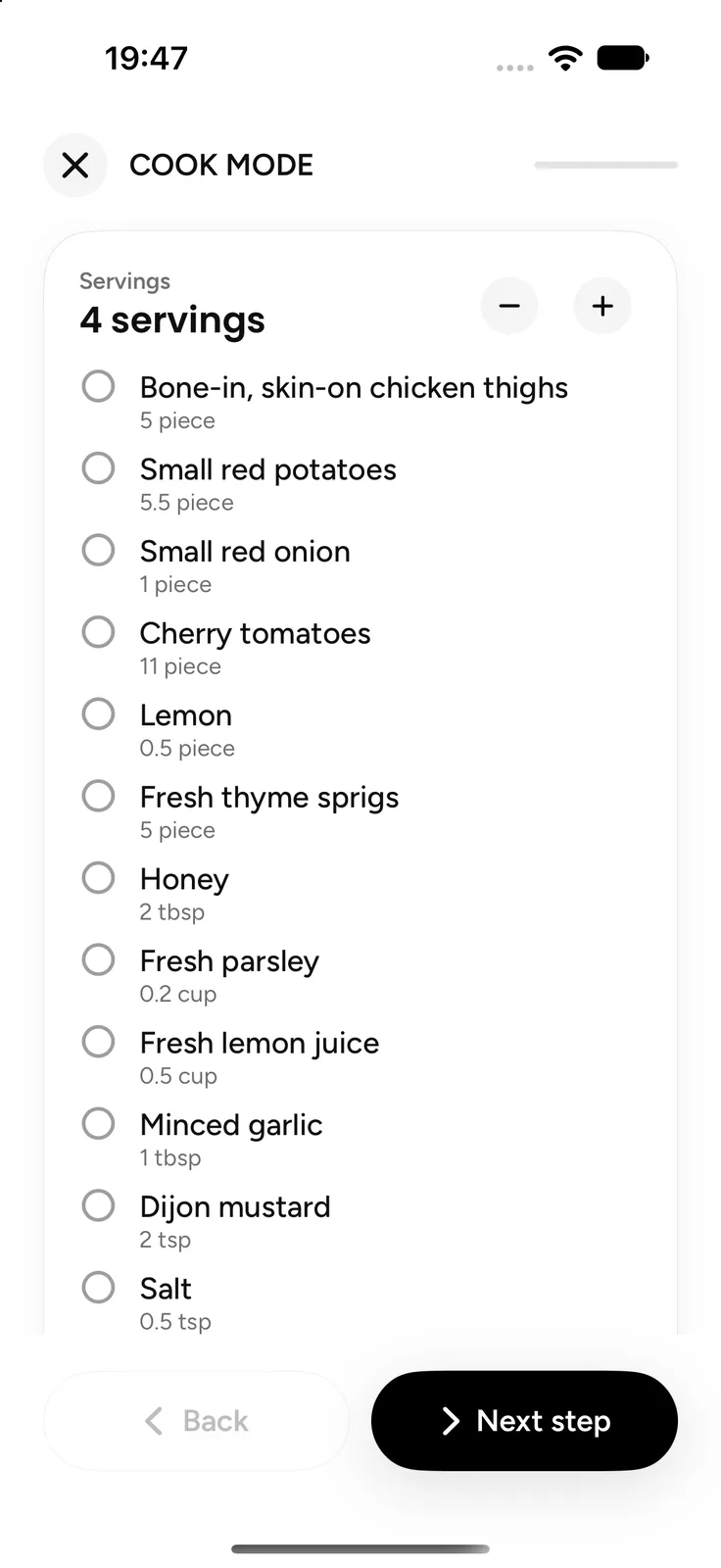
Plate's Cook Mode opens on a servings card above a tickable ingredient checklist, before step 1. Set the servings first and the amounts change to match. Then tick each ingredient as you gather and measure it.
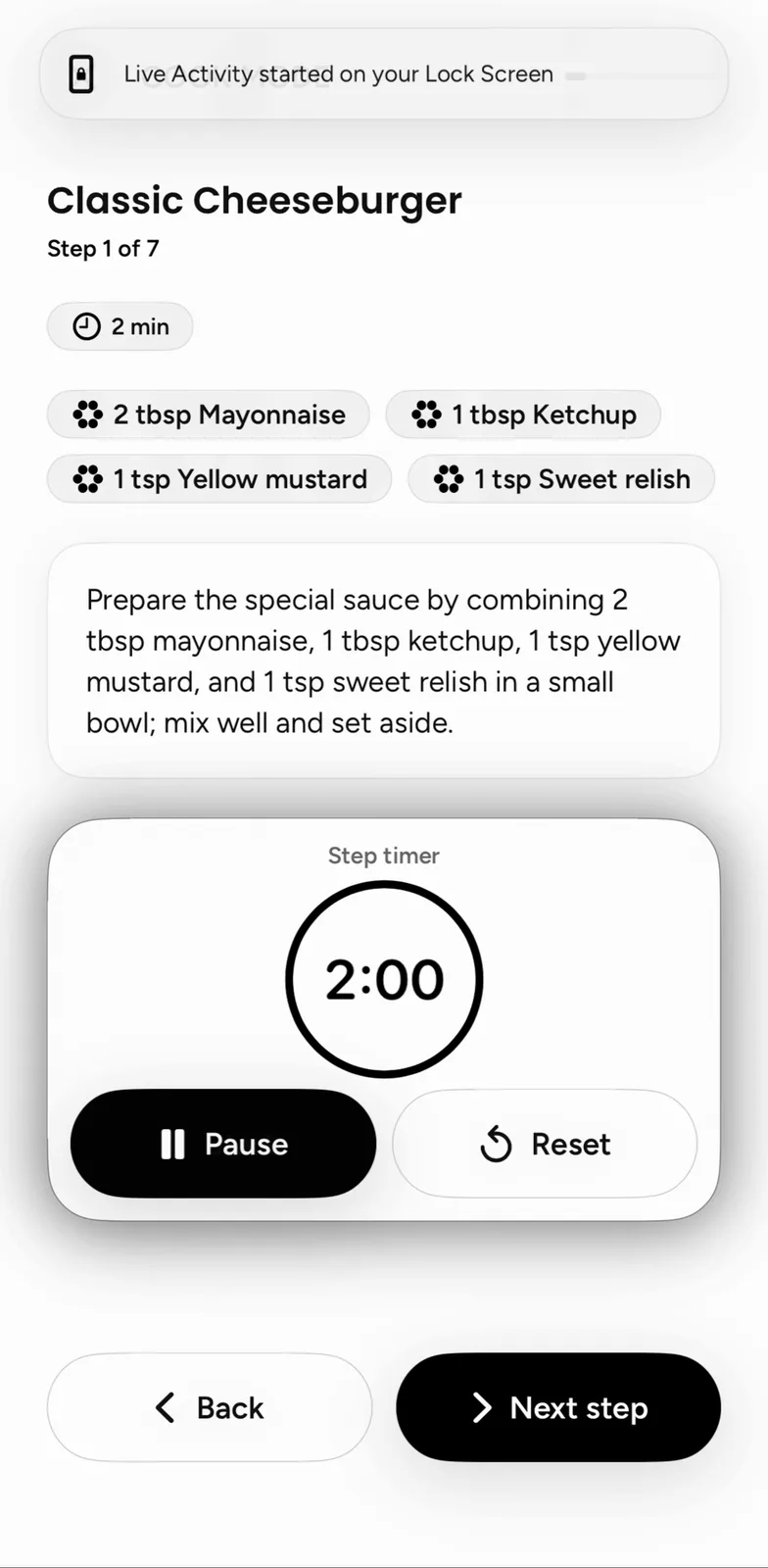
Once you start cooking, Cook Mode goes one step at a time, and each step shows the ingredients and amounts it uses, plus a step timer. It doesn't plan your prep: the order and the knife work are still yours. If you cook from your phone, here's how to keep the screen on while cooking. More guides are in the Plate category.
FAQ
How do you pronounce mise en place?
Say "meez ahn plahs," with the stress on the last syllable. The IPA that Wikipedia gives is [mi zɑ̃ ˈplas]. The "en" is nasal, as in many French words, so don't sound a hard "n."
What is an example of mise en place?
For a stir-fry: rice already cooked, the sauce mixed in a jar, garlic and ginger in one bowl, vegetables cut and grouped by cooking time, and sliced meat kept cold in the fridge until the wok is hot. Every step after that is just adding a bowl.
Is mise en place worth it for simple recipes?
Partly. For a five-ingredient pasta, you can skip the bowls, but still read the recipe and gather everything first. Full mise en place pays off when steps come fast, when you're baking, or when the recipe is new to you.
How long can prepped ingredients sit out?
The CDC says to refrigerate perishable food within 2 hours, or within 1 hour if it's above 90°F, and to keep the fridge at 40°F or below. Prep perishables last, or keep them in the fridge until you need them.
Get started
Pick tonight's recipe, read it twice and set out your bowls before the pan goes on. If your recipes live on your phone, Plate is free to start on the App Store, and the Plate page shows what else it can do.