PlateCooking tips8 min read
Cups to grams: a baking chart for flour, sugar and butter
Cups to grams for flour, sugar, butter and more from USDA data, why US, metric and Japanese cups differ, and how to measure a cup when you have no scale.

There's no single number, because a cup measures volume and grams measure weight. In a US recipe, 1 cup of all-purpose flour weighs about 125 g, 1 cup of granulated sugar 200 g and 1 cup of butter 227 g, according to USDA FoodData Central. Check whose cup the recipe means, then weigh.
We make Plate, a recipe keeper for iPhone that turns links, cooking videos, food photos and paper cards into written recipes. This guide covers why cups differ, a chart of gram weights, and how to measure without a scale.
How many grams are in a cup?
A cup holds a fixed volume, so what it weighs depends on the ingredient and on how you fill it. Flour is airy, sugar denser, honey heavier still. USDA FoodData Central, the US government's food composition database, lists one US cup of all-purpose flour at 125 g, granulated sugar at 200 g, butter at 227 g, whole milk at 244 g and honey at 339 g. Water weighs 237 g a cup, since a millilitre of water weighs about a gram. That's why no single "grams in a cup" figure works for every ingredient. The cup itself also changes from country to country: about 237 mL in the US, 250 mL in Australia and 200 mL in Japan. So two things set the weight: the ingredient, and whose cup the recipe means. Get both right and the chart below gives a number you can bake with.
Why do cups to grams charts disagree?
Different cups, different filling, different ingredients. The US National Institute of Standards and Technology warns in its Metric Kitchen: Culinary Measurement Tips that "customary" measures such as teaspoons and cups "mean different things in different countries."
- The cup. Metric charts use 250 mL, Japanese ones 200 mL, US ones about 237 mL.
- The filling. USDA lists a cup of brown sugar at 145 g loose and 220 g packed, and powdered sugar at 120 g unsifted and 100 g sifted.
- The ingredient. A cup of bread flour weighs 137 g, all-purpose 125 g and whole wheat 120 g.
How big is a cup in the US, UK, Australia and Japan?
A US cup is about 237 mL, an Australian metric cup 250 mL and a Japanese cup 200 mL. US nutrition labels round the cup to 240 mL. British recipes mostly give grams; when one says cup, look for grams alongside it.
| Measure | Volume | Where you'll meet it |
|---|---|---|
| US customary cup | 236.6 mL (8 US fl oz) | US recipes |
| US nutrition label cup | 240 mL | US food labels |
| Metric cup | 250 mL | Australian recipes |
| Japanese cup (カップ) | 200 mL | Japanese recipes |
| Japanese rice cup (合, gō) | 180 mL | Rice cookers |
NIST's Handbook 44, Appendix C defines the cup as exactly 8 fluid ounces of 29.573 mL: 236.6 mL. The FDA's rule 21 CFR 101.9 says that "for nutrition labeling purposes" a cup means 240 mL, the cup you meet when reading a nutrition label. A Counting Carbohydrates fact sheet from the Government of South Australia lists 1 cup as 250 mL. Japan's National Institute of Health and Nutrition uses a 200 mL cup in its weight guide, and a Hiroshima City guide puts one gō of rice at 180 mL, about 150 g.
Do a few millilitres matter? The metric cup is about 6% bigger than the US cup, and NIST says metric cups "can often be used interchangeably" with US ones. The Japanese cup is about 15% smaller, too much to ignore in a cake.
Cups to grams chart for common baking ingredients
These weights are for one US cup, from USDA's SR Legacy data. Fractions are divided and rounded to the nearest gram, except butter, where USDA lists a half-cup stick at 113 g.
| Ingredient | 1 cup | ½ cup | ⅓ cup | ¼ cup |
|---|---|---|---|---|
| All-purpose flour | 125 g | 63 g | 42 g | 31 g |
| Bread flour | 137 g | 69 g | 46 g | 34 g |
| Whole wheat flour | 120 g | 60 g | 40 g | 30 g |
| Granulated sugar | 200 g | 100 g | 67 g | 50 g |
| Brown sugar, packed | 220 g | 110 g | 73 g | 55 g |
| Powdered sugar, unsifted | 120 g | 60 g | 40 g | 30 g |
| Butter | 227 g | 113 g | 76 g | 57 g |
| Cocoa powder, unsweetened | 86 g | 43 g | 29 g | 22 g |
| Oats, regular or quick, dry | 81 g | 41 g | 27 g | 20 g |
| Long-grain white rice, raw | 185 g | 93 g | 62 g | 46 g |
| Cornstarch | 128 g | 64 g | 43 g | 32 g |
| Semisweet chocolate chips | 168 g | 84 g | 56 g | 42 g |
| Honey | 339 g | 170 g | 113 g | 85 g |
| Whole milk | 244 g | 122 g | 81 g | 61 g |
| Canola oil | 218 g | 109 g | 73 g | 55 g |
| Water | 237 g | 119 g | 79 g | 59 g |
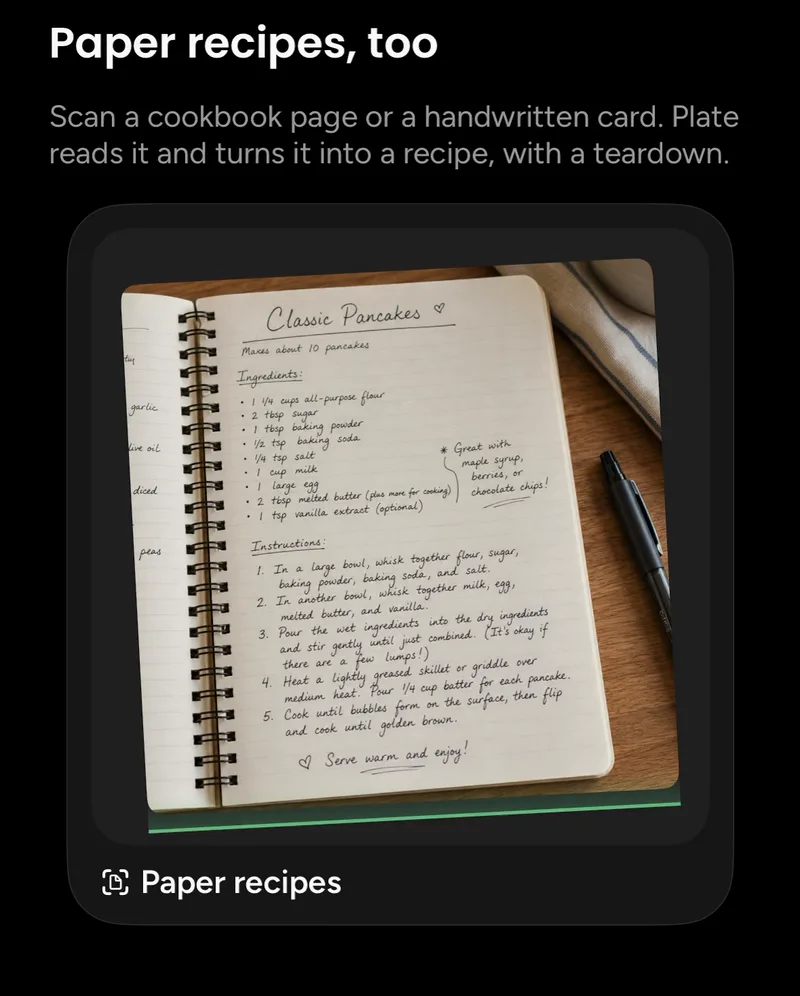
For a 250 mL metric cup, multiply by about 1.06; for a 200 mL Japanese cup, by about 0.85. On the pancake card below, 1¼ cups of all-purpose flour comes to about 156 g, 1 cup of milk to 244 g and 2 tablespoons of melted butter to about 28 g.
How do you convert tablespoons and teaspoons to grams?
Use the ingredient's own weight per spoon, and check the spoon. US and Japanese tablespoons hold 15 mL and teaspoons 5 mL, but the South Australian fact sheet lists a tablespoon as 20 mL. USDA gives these spoon weights:
- Table salt: 6 g per teaspoon, 18 g per tablespoon
- Baking powder or baking soda: 4.6 g per teaspoon
- Granulated sugar: 4.2 g per teaspoon
- Butter: 14.2 g per tablespoon
- Honey: 21 g per tablespoon
An Australian tablespoon is four teaspoons, not three. Measure an Australian recipe's "1 tablespoon" of baking powder with a 15 mL spoon and you add three-quarters of what it meant. For leaveners and salt, use four 5 mL teaspoons instead. Japanese recipes call their spoons 大さじ (15 mL) and 小さじ (5 mL), the same as US spoons.
How do you measure a cup properly without a scale?
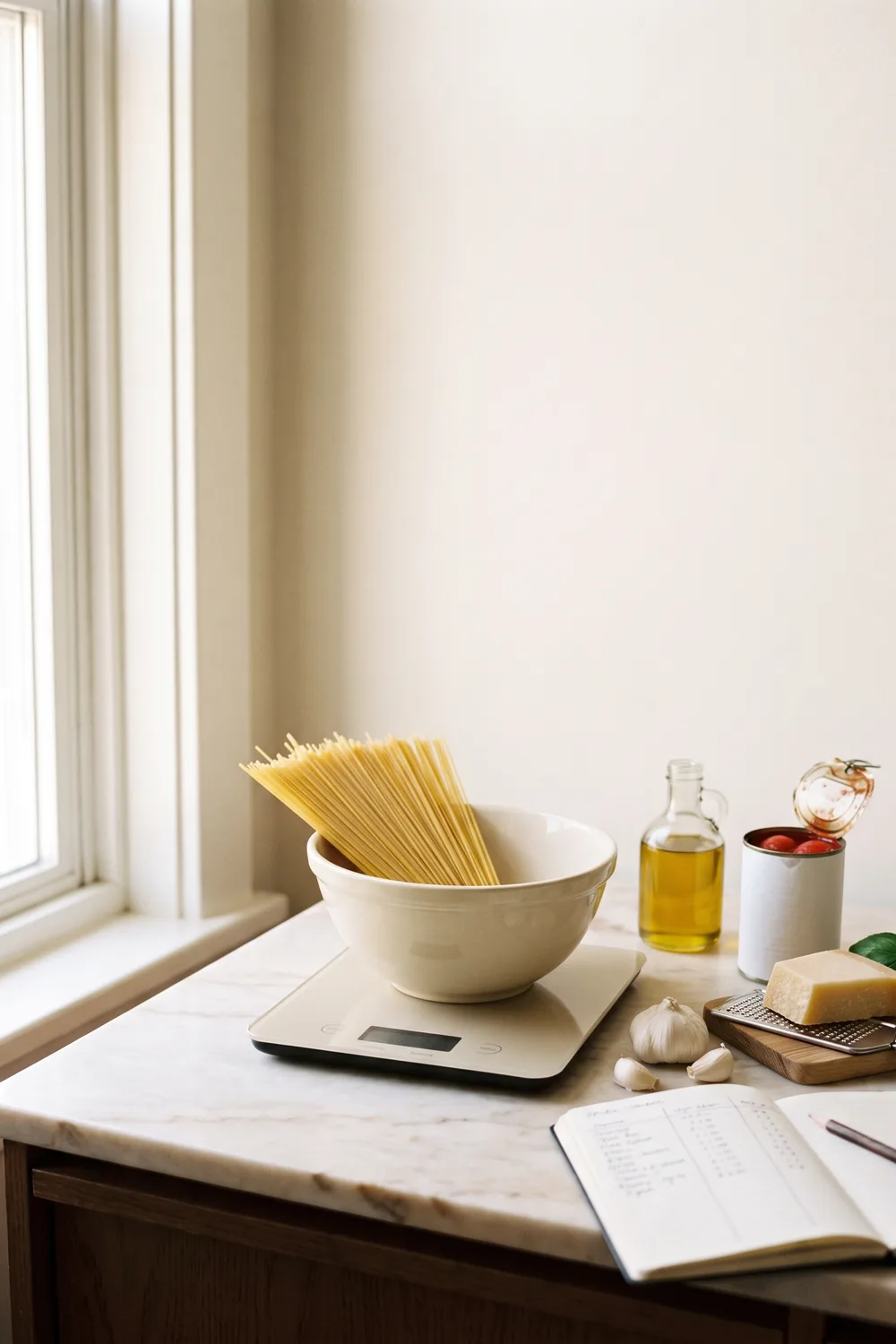
NIST calls weighing on a kitchen scale "a best practice to improve recipe accuracy." Without one, fill cups the way the recipe's writer did:
- Use dry cups for dry ingredients and a liquid cup for liquids. NIST names mixing them up as a common source of error.
- Spoon flour into the cup and level it. NIST says to "strike off excess" dry ingredients. Scooping from the bag packs in more.
- Pack brown sugar only when the recipe says packed. That's 220 g against 145 g loose.
- Sift only when the recipe says sifted. Powdered sugar drops from 120 g to 100 g a cup.
- Read liquids at eye level, with the cup on a flat surface.
- Match the cup to the recipe's country.
Got a scale but a recipe in cups? NIST's tip: measure once with a traditional measuring tool, "then weigh the results in grams." Write the grams down.
When does converting cups to grams matter most?
When small errors change the result:
- Baking. Flour, sugar, fat and leavening work as ratios; a heavy cup of flour throws them off.
- Recipes from abroad. They need their own cup and spoon, and maybe an oven temperature conversion too.
- Family cards. Weigh each line once when you preserve handwritten recipes.
- Recipes from videos. A cooking video turned into a written recipe may say "a cup" without saying whose.
- Batch changes. Grams multiply cleanly when you scale a recipe up or down.
- Calories. Nutrition data is per gram, so calculating calories in a recipe starts with weights. This is general cooking information, not medical or dietary advice.
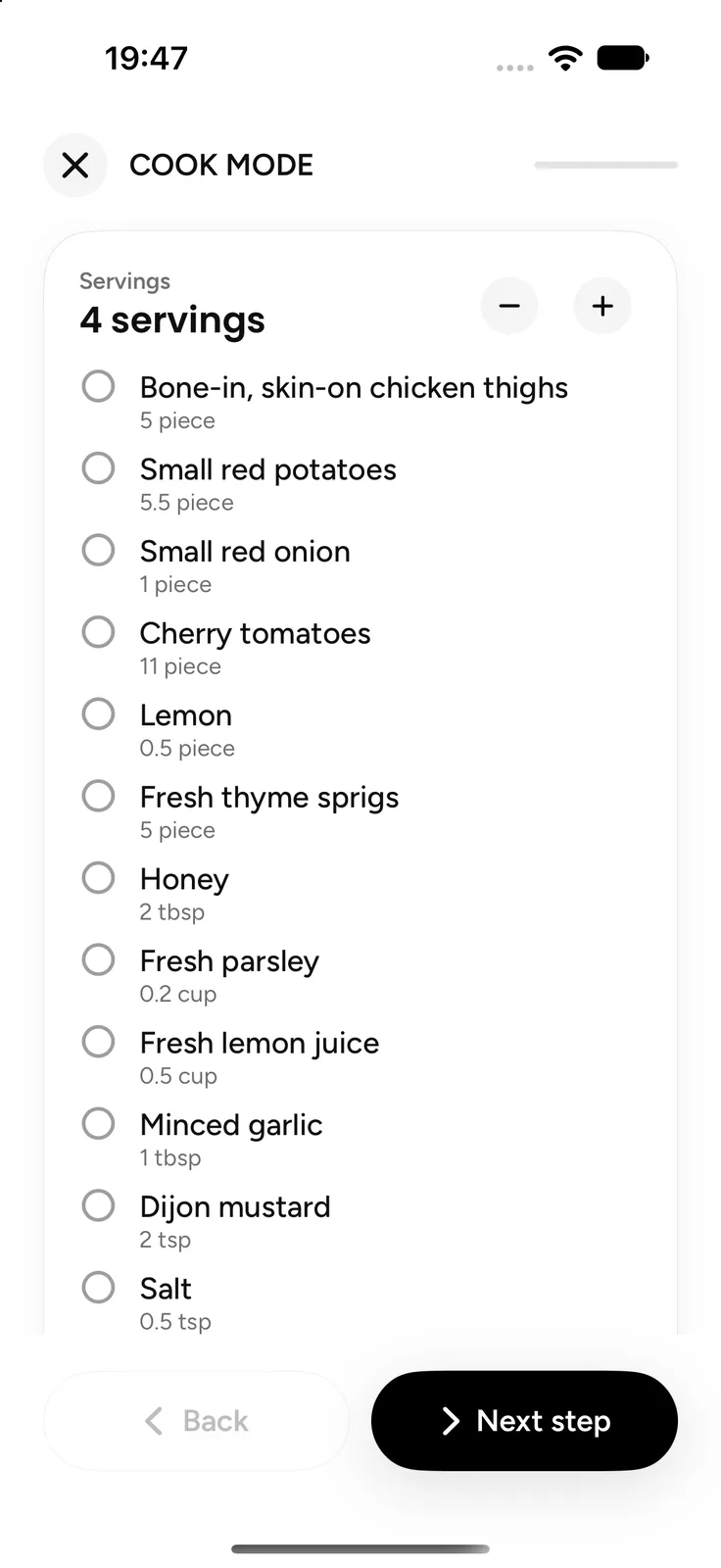
Plate handles the capture. Share a link or a cooking video, snap a photo of a dish, or scan a paper card, and Plate writes the recipe with each ingredient and its quantity in your private cookbook. Cook Mode scales the servings and keeps the screen on. The grams are still your call, so keep the chart handy. More guides are in the Plate category.
FAQ
How many grams is 1 cup of flour?
One US cup of all-purpose flour weighs about 125 g, according to USDA FoodData Central. Bread flour weighs 137 g and whole wheat flour 120 g. A 200 mL Japanese cup of soft wheat flour weighs 110 g in Japan's national nutrition survey tables.
How many grams is 1 cup of sugar?
One US cup of granulated sugar weighs 200 g, according to USDA FoodData Central. Brown sugar weighs 220 g packed and 145 g loose, and powdered sugar 120 g unsifted or 100 g sifted. Check for packed or sifted before converting.
How many grams is 1 cup of butter?
One US cup of butter weighs 227 g, according to USDA FoodData Central. USDA lists a stick, which is half a cup, at 113 g and one tablespoon at 14.2 g. So 1 cup of butter is two sticks, or 227 g.
Is a US cup the same as a metric cup?
No, but they're close. A US cup is 236.6 mL and a metric cup is 250 mL, about 6% bigger, and NIST says metric cups can often be used interchangeably with US ones. The 200 mL Japanese cup is about 15% smaller.
Get started
Pick the recipe you bake most, measure each ingredient as written, weigh it once and note the grams beside the cups. Plate is free to start on the App Store, and the Plate page shows everything it captures.